Bill Farrow
Fictional. Generated by AI — not a real person, and no likeness of one is intended.
49, field archaeologist in Los Angeles · rolled by @colin.hasbrook · card — no film
History
who has worn him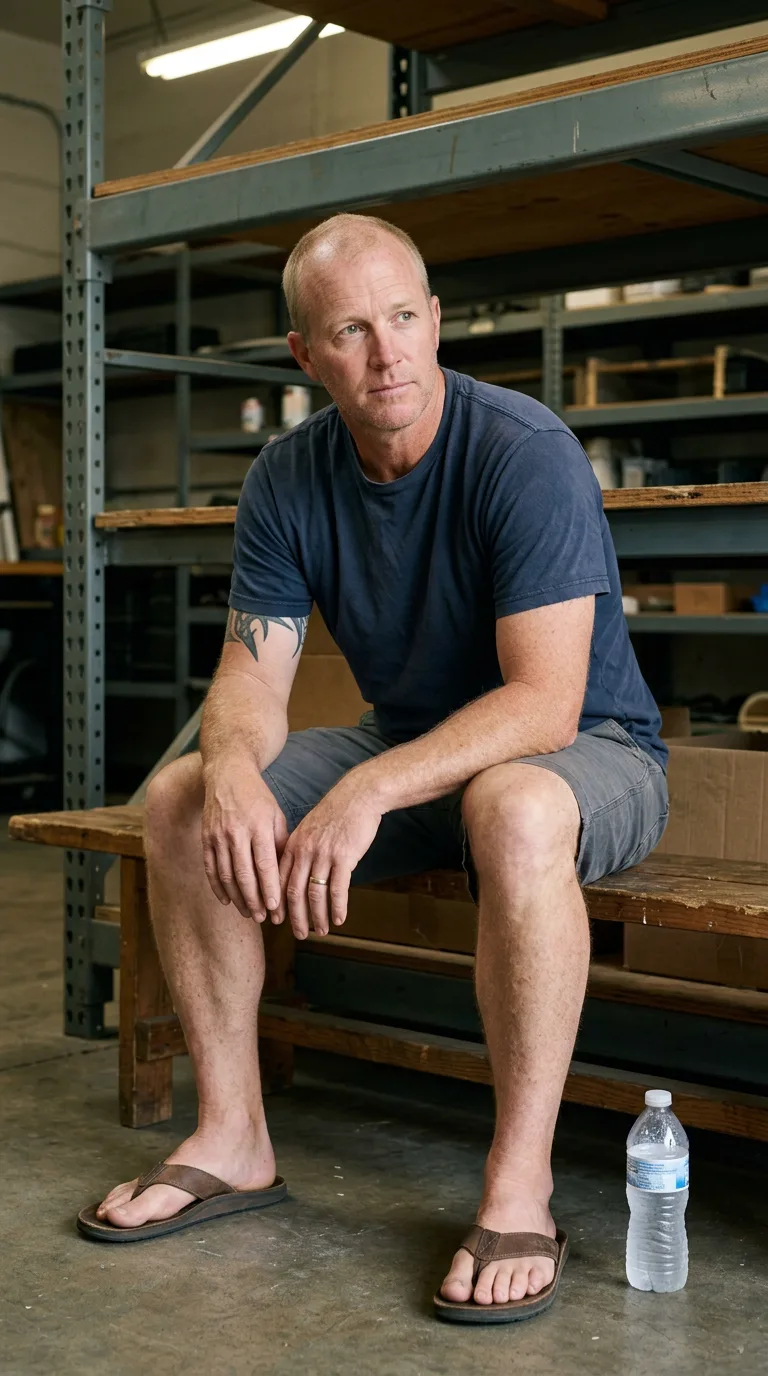
Rarest thing about him: Hindu — rare, 1 in 66
Season 0seed 352396231 · engine v10
Character card
lineage 2NZHHJ
His body-swap story
@colin.hasbrook, wearing Kenji Arakawa, rolled the wheel on and woke up as Bill Farrow, spent under a minute in him, then spun the wheel and woke up as Suresh Pillai
You are Kenji Arakawa for the length of a hallway.
Forty seconds ago you stood up off a cot in a crew berth somewhere under a cruise ship's waterline, felt the particular ache of a lifeguard's shoulders, and thought: no. Not this one. Not the smell of chlorine baked into the skin, not the tinny announcement system through the wall, not the sunburn line at his collar that itches when he moves. You had wanted young and easy and it had given you young and easy and it was, somehow, unbearably small — a body built for standing at the edge of a pool eight hours a day. Before that you were Roger Kesselman for less than a minute: a heavy, gray-haired man with a cleft chin, house paint under his nails, a phone in his hand still warm from a call to somebody named Bill. You barely got to be him. You didn't need to. You already knew him — his kitchen, his knees, the migraine he was nursing that morning, the friend he was calling. That's enough sometimes. That's the whole reason you go back.
So you found a screen belowdecks, logged into vessel.cards under fluorescent light that made Kenji's tan look green, and spun again before the taste of Roger left you.
The gym bar goes wide in your hands two inches before you've decided anything, and your body — his body — grinds through a rep that should have been the last of the set with no strain showing in the face at all. Water bottle sweating on the rubber floor. Bar cold and knurled under your palms. Somewhere behind your sternum a breath stops a beat early, and doesn't finish.
The shirt isn't on you yet — that comes later, hangs on a hook by the lockers — but the sleeve of a different shirt, khaki, sun-faded, folds up out of a memory the second your palm feels the bar's grip tape: an arm going into it this morning, cuff rolled twice, the tribal ink on the biceps catching gray morning light through a bathroom window. Marisol's voice down the hall, half-laughing about the kids being late again. You — Bill, you're Bill now, the name arriving with the shirt-memory like a name always does — buttoned it one-handed while brushing your teeth with the other, spat, said something about the trench needing to be squared before the county inspector came by ten. That's this morning. That's hours behind this body, not ahead of it — the shirt's already hanging up, sweat-through and shed for the gym, and touching the bar brings back only the version of your hands that buttoned it.
The bar again — cold, textured, honest — and under it comes the site: a half-dug trench, string lines pulled taut over squares of dirt, kneeling in full sun with a trowel that fits your palm the way nothing else in your life fits anything, decades of it, since before Marisol, since before the kids, since a professor in an intro class said the word stratigraphy and you felt something in your chest agree to a life. You have shaken dirt through a sieve until your shoulders forgot how to do anything else. Migraines started around forty-four, come maybe twice a month, arrive like a hand closing slowly over the left eye, and you have quit almost everything for them one by one — coffee first, then the two beers on Friday, until there was nothing left to quit, and still they come.
The water bottle sweats against your foot and gives you children — a boy who wants to be an astronaut and only an astronaut, a girl who thinks digging in the yard for "artifacts" is a game you invented for her — and a wedding band, plain, worn thin at the underside where it rubs the trowel handle, that gives you Marisol's face turned sideways on a pillow, unhappy with you exactly once in a decade over money you didn't tell her about, and never again after. Twenty-five to seventy-five thousand dollars sits somewhere in an account neither of you spends. You built an altar in the hall closet nobody but you uses anymore, small brass Ganesh going dull, incense you burn on the anniversary of your father's death and no other day. You do not drink, haven't in years, didn't quit so much as walked slowly out of the habit the way you walk out of a room forgetting why you went in.
And under all of it, threaded through the grip and the trowel-callus and the ring, is Roger. Best friend since a dig site in your twenties where Roger showed up as a volunteer with a truck and no training and stayed twelve years anyway before the knees put him on ladders instead of trenches. You called him this morning. You call him most mornings. You do not know, cannot know, what just happened forty seconds ago in a house in Atlanta with paint on its hands — that something wearing your best friend hung up the phone and thought about you, specifically, by name, before it went looking for a screen.
Your hand comes off the bar. You look at it — thick-veined, sun-spotted at the knuckle, a pen not there but the muscle already twitching to click one — turn it front to back like it's new stock you're pricing.
You look up into the mirror across the gym floor, into green eyes that are, for the first time in forty years, not entirely his.
"Bill," you say to the reflection, testing it, the way you'd test a name you weren't sure you'd earned yet — and somewhere behind that, not spoken, the wheel keeps spinning whether you touch it again tonight or not.