Ben Okonkwo-Reyes
Fictional. Generated by AI — not a real person, and no likeness of one is intended.
21, janitor in New York · rolled by @marco.villagrana · card — no film
History
who has worn him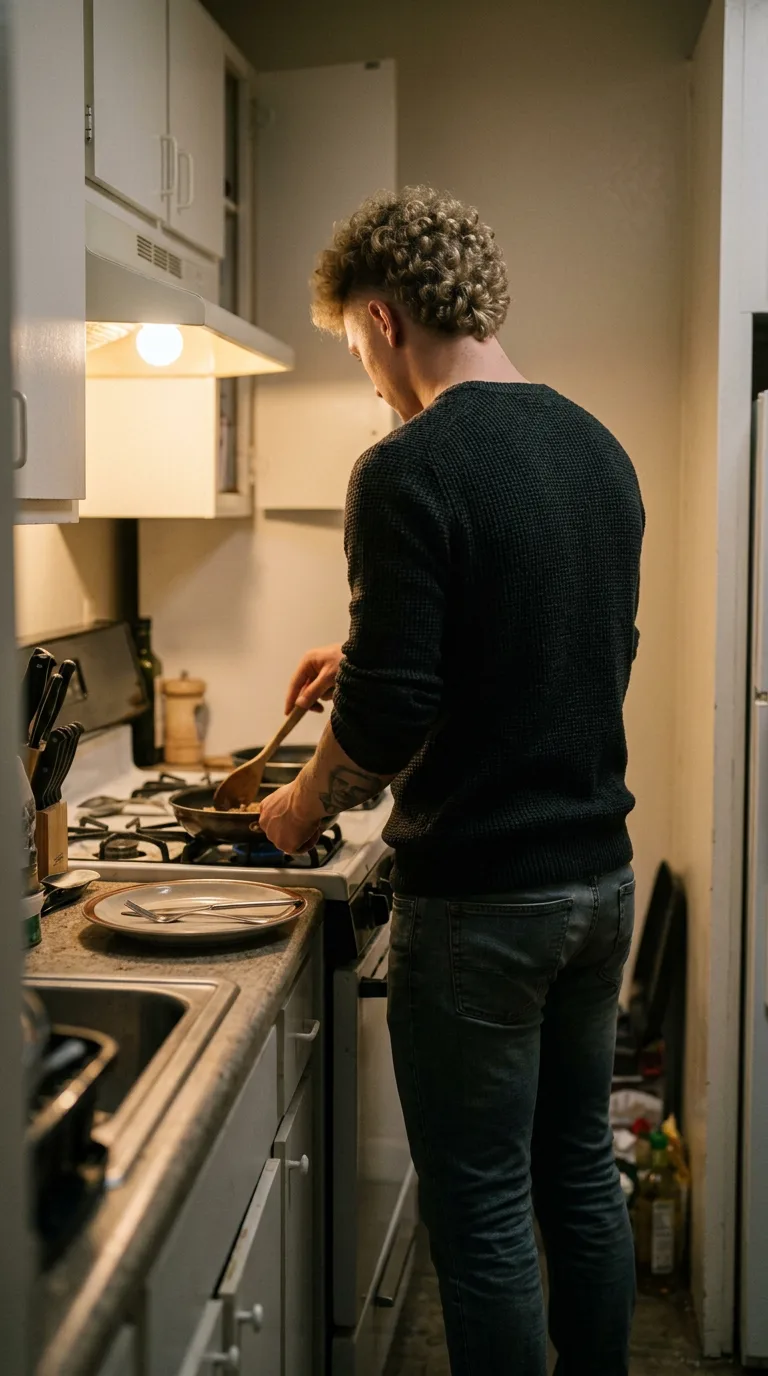
Rarest thing about him: An old injury that never healed right — epic, 1 in 86
Season 0seed 1382565975 · engine v10
Character card
lineage LJL8SV
His body-swap story
@marco.villagrana, wearing Nathan Ostrowski, rolled the wheel on and woke up as Ben Okonkwo-Reyes, spent 22 hours in him, then spun the wheel and woke up as Philip Wachowski
You have been Nathan Ostrowski for two minutes and it is already wrong on you. The bald head catches the last light through his condo window like a bulb. The beauty mark on his jaw. The hands — a surgeon's hands, clean, no callus on them anywhere, soft in a way that makes you feel, absurdly, like you're wearing gloves made of a stranger's patience. Denver is doing its long gold Sunday thing outside, and somewhere in this body there's a dinner reservation he was supposed to keep, a life with a schedule you don't want to learn. Thirty years old and every part of him already finished, arrived, no give left in it. You spun for a surgeon and got a man who probably alphabetizes his spice rack. You did not even unpack his memories before your thumb was back on the site, the wheel already spinning, because two minutes was enough to know: not this one, not tonight, give me someone with something still happening to him.
The wheel gives you a kitchen.
Not Nathan's kitchen — small, close, the smell of onions gone soft in oil and a hood fan ticking with heat. Your hand — his hand — is mid-turn on a wooden spoon, stirring one way, and you feel the exact second the wheel drops you into the motion and the hand, without asking you, reverses the circle. Salt goes into the pan from a shaker still in the fingers, and nobody in here tastes it. The body under you is shorter, tighter, twenty-one years of muscle wound into 5'4" of it, weight low and quick, a sweater against the back of it, worn soft. A radio isn't on. A girlfriend isn't home yet. The second plate comes down off the shelf above the stove before you've decided to want it, set down next to the first, clean stainless catching the one bulb over the hob, and some reflex older than you is already setting a second place at a table for one.
Then it comes, the way it always comes: through what you're holding.
The spoon first — worn wood, a nick along the handle where he chips at it thinking, and with it: a kitchen this size but a different apartment, younger, a woman's laugh from the next room, a smell of someone else's cooking that isn't his own tonight, and a hollow going through your chest that is entirely his, not yours, grief with edges still sharp on it. Her name comes half-formed and slides away — recent, recent enough that the second plate on the counter is a habit his hands haven't unlearned yet, a year of cooking for two and only weeks of cooding for the one who's here now, the new one, asleep or out or running late, it isn't clear, only that she's not this shirt against your back and not this pan.
The sweater gives you more — cheap, waffle-knit, bought two winters ago in a store with fluorescent light and a friend laughing at the curls fighting the collar. Your fingers — his fingers — know this stove without looking: three knobs, the middle one sticks, you have to lean into it. Muscle memory does it before conscious thought can, and there's a whole year of after-shifts in that lean, coming home smelling of bleach and floor wax and other people's mess, standing here at eleven at night eating standing up because sitting felt like giving the day too much.
The floor under your feet — bad linoleum, a cold patch by the sink — brings the job all the way up: fluorescent tube light down an empty corridor, the particular quiet of a school after the last bus pulls out, a mop bucket's wheel that always pulls left, a keyring heavy on your hip that you can still feel even barehanded in this kitchen. You like the quiet of it, mostly. You like being the only living thing in a building built for six hundred kids. There is an ache in one knee that has nothing to do with the mop, an old thing — a fall off a half-pipe at sixteen that never set right, the kind of hurt that tells you weather before the weather arrives — and it is a small, private, almost fond kind of pain, the way an old dog is fond.
The forearm gives you the last of it, skin against the sweater's rolled cuff: ink there, black and gray, a face you know is a grandfather's although the story of him only comes in pieces — a man who raised him some of the years that mattered, gone now, worn into the arm so he'd never have to try to remember the face on his own. Your thumb finds the raised edge of it without meaning to.
And under all of it, plain and unhurried, the fact of the body itself: twenty-one, compact, strong through the shoulders in the particular way of somebody who's on his feet all shift, quick reflexes, a knee that complains on stairs, curls that never behave no matter what he does to the sides. Straight, steady, unfamous, comfortable enough in his own life that a second plate on the counter is the biggest thing that happens in it tonight.
You look down. His hands — small compared to what you just left, quick, a callus already forming where a mop handle sits — are still holding the spoon over the pan, salt not yet stirred through, the second plate gleaming under the hood light like it's waiting on somebody who was never going to walk in.
You lift your eyes off them, into the low bulb, into the window's reflection where his face is doing something you didn't put there.
"Smells better than it did a second ago," you say, to no one, in his voice, and set the spoon down beside the plate he doesn't remember choosing to get out.