Anil Bhagat
Fictional. Generated by AI — not a real person, and no likeness of one is intended.
59, plumber in Small-town Ohio · rolled by @marco.villagrana · card — no film
History
who has worn him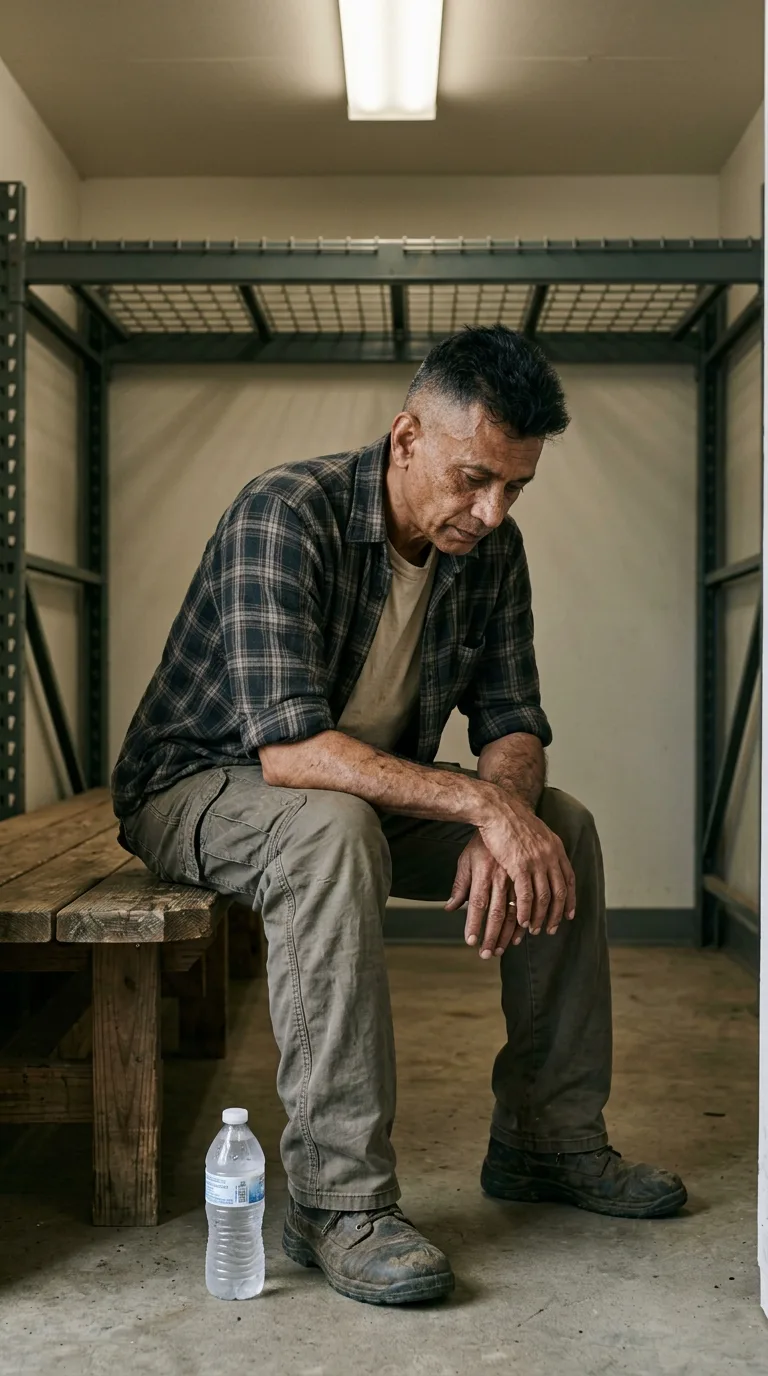
Rarest thing about him: Seriously rich — $3M to $10M — epic, 1 in 137
Season 0seed 663127785 · engine v10
Character card
lineage LJL8SV
His body-swap story
@marco.villagrana, wearing Douglas Kimura, rolled the wheel on and woke up as Anil Bhagat, spent 4 minutes in him, then spun the wheel and woke up as Ronald Speight
You are sitting in the dark under an outcrop in Eastern Kentucky, wearing Douglas Kimura like a coat you tried on and immediately regretted, and the trowel is still in his hand, or your hand, the distinction already tiresome. Three minutes ago you were a plumber's stranger fifty years old with a bad knee. Now you are a field archaeologist with a soft middle and a headlamp and the particular ache of a man who has spent forty years crouched over test pits, and it is Sunday evening here, and the site is closed, and there is nobody to see you sitting on an overturned bucket doing nothing at all. Douglas liked this. You can feel that he liked this — the quiet, the dirt, the small satisfactions of provenance and stratigraphy — and that is exactly the problem. Liking is his. You put the trowel down in the dust, take out the phone that is technically his, and open the page with the wheel on it, because three minutes of contentment that isn't yours is worse, somehow, than three minutes of misery. You didn't come back for the money or the glamour. You came back because stillness in someone else's skin feels like drowning in it, politely.
You spin.
You are kneeling. That is the first thing — knees on a folded towel on cold tile, a wrench heavy and exact in your right hand, forearm slick to the elbow with something like grease, and a smell of old pipe and mildew filling a stranger's bathroom. Your back — his back — complains the way a fifty-nine-year-old back complains, a low continuous note under everything else, and your knees answer it, and for one whole second you are only that: ache, grip, damp collar at the back of your neck, a bathroom you have never seen with a window blind half down against the last of a Sunday evening light. The wrench is warm from your hand already. It has been warm from this hand for thirty years.
The shirt is what opens first — plaid, worn thin at the elbows where the sleeves are rolled, and rolling them this morning comes back whole and unbidden: standing in a bedroom with the ceiling fan on low, buttoning up while Priya's voice came from the kitchen asking if he'd eaten, and him saying yes around a wad of gum he wasn't supposed to have this early, and her not believing him, correctly. The overalls next, denim gone soft and pale at the knees from a thousand kneelings just like this one, the bib pocket holding a folded receipt he keeps meaning to throw away and doesn't, a habit that isn't sentiment exactly, more a superstition he'd deny having. Putting them on this morning was nothing, was everything — the suspenders over the shoulders, the little grunt at forty pounds of gear belt, gum going from the pack on the dresser into his mouth before his socks were even on, the day starting the way every day starts, in his mouth before it starts anywhere else.
The wrench in his hand knows this pipe before his eyes do — thirty-some years of the trade living in his forearm, in the callus along his palm, in the way his wrist turns without him deciding to turn it. He hated it at twenty-two, thought he'd do something else, something with a desk, and then he didn't, and somewhere in there the hating turned into just Tuesday, into just the sound of water running clean where it hadn't before, into a satisfaction so quiet he never once called it that out loud to anyone, not even Priya, not even after twenty-six years of her.
Money doesn't come from the touch of a wrench, but a wedding band does — plain gold, worn thin on the inside from four decades of gripping tools, and the flash it gives is the wedding itself, a hall in Cincinnati, his mother crying for reasons that were half joy and half something else she never explained, and then years folding forward fast: three kids, then somehow four, birthdays overlapping in his memory like photographs left in the sun, a daughter's wedding he paid for outright and never mentioned the number to anyone, not because he's private about money but because money was never the part that mattered to him. What mattered was Priya's hand finding his under a restaurant table the week after the youngest left for college, both of them startled to be alone together and finding they still liked it.
There is an ex in there too, arriving sideways off nothing at all — off the smell of this stranger's bathroom, cheap soap, a smell that isn't right but close enough to drag up a girl named Deb from thirty-eight years ago, a college girlfriend, laughing on a dorm balcony, gone so long ago she shouldn't still have a door in him, and yet she does, small and closed and never opened on purpose, the way an old address still means something years after you've moved.
His knees are what tell you the rest — the ache that treated depression sits right behind, medication in a cabinet at home he thinks about every morning and resents every morning and takes every morning anyway, a private arithmetic nobody in his family has ever seen him do. Freckles you cannot see but can feel are there, scattered warm across a nose that has been sunburned a hundred times on rooftop jobs. And under the tongue, the gum, going now, always going, jaw working without him, the last quit thing that never quite quit.
You look at your hands. Grease-dark, freckled at the knuckle where the glove ends, a wedding band catching the last light through the blind. You turn them over once, like they might explain themselves, and they don't.
"Wrong pipe," you say, to no one, in his voice, and it is the truest thing you've said all night — because you don't know yet if you mean the one under this sink.