Douglas Kimura
Fictional. Generated by AI — not a real person, and no likeness of one is intended.
54, field archaeologist in Eastern Kentucky · rolled by @marco.villagrana · card — no film
History
who has worn him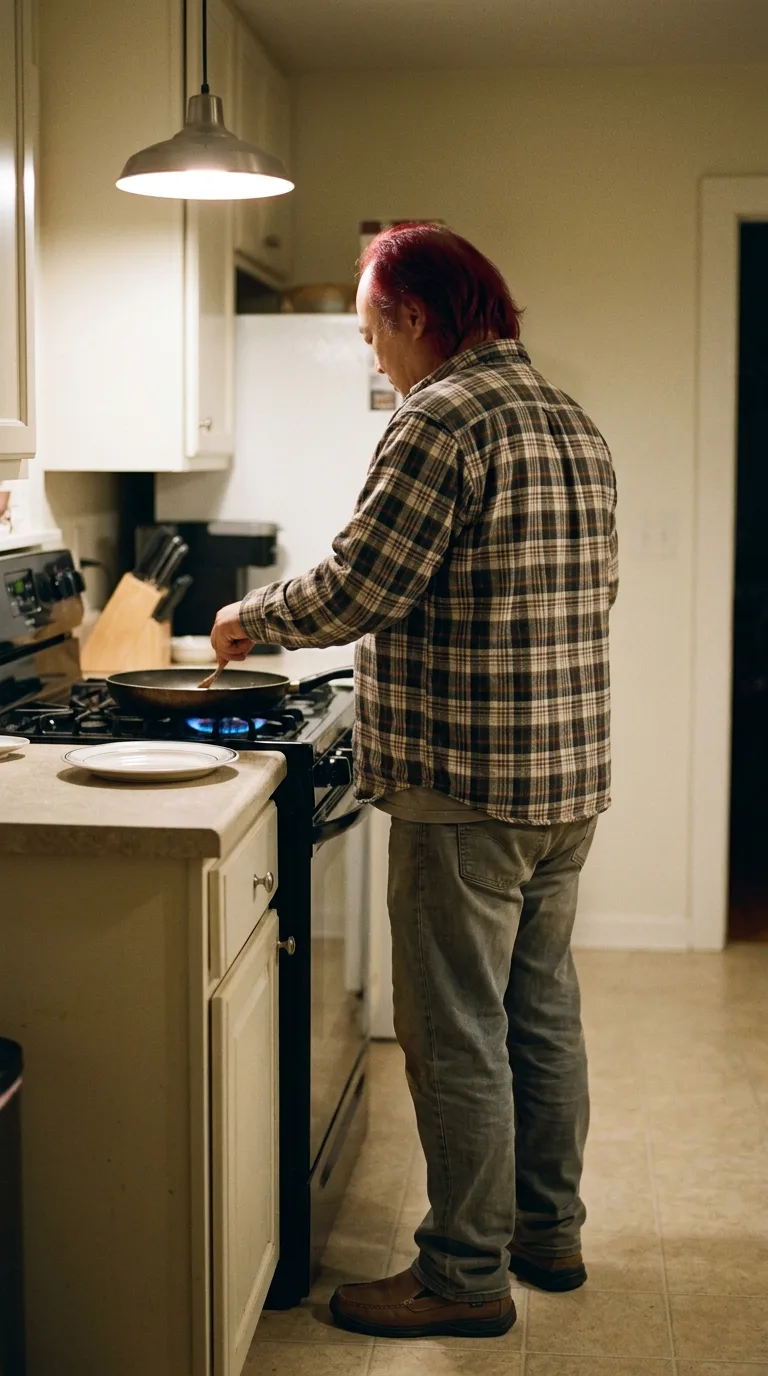
Rarest thing about him: Dyed red — legendary, 1 in 208
Season 0seed 187647046 · engine v10
Character card
lineage LJL8SV
His body-swap story
@marco.villagrana, wearing Warren Petracek, rolled the wheel on and woke up as Douglas Kimura, spent 4 minutes in him, then spun the wheel and woke up as Anil Bhagat
You are three minutes into being Warren Petracek and already you know it was a mistake.
Not the body — the body is fine, better than fine after a hundred and five other men, this narrow lawyer's frame that never did an honest day's labor and has the hands to prove it. It's the apartment. Sunday evening light through blinds he never opens, a law degree in a frame he never dusts, a phone on the counter that has not buzzed since you arrived in him mid-decision, mid-life, mid-nothing. Warren was already alone before you took him and he is alone now with you inside him too, which is a special kind of quiet. You stand at his window a moment, wearing his beauty mark and his hazel eyes and his freshly shaved scalp, and you feel the specific boredom of a man who has everything arranged and nobody to show it to. That's the itch. Not violence, not grief — just the flatness of a Sunday that has no bottom to it. You go to the site because the site is the only door in the room.
You pay. You spin.
The kitchen light is not Warren's — it's warmer, hung low over a stove, and the smell that arrives before you do is garlic going soft in oil. Your hand is already moving, wrist deep in somebody else's motion, a wooden spoon dragging a slow circle through a pan. You feel the stop before you understand it's yours to make: the spoon halts mid-arc, hangs there a half-second like a record skipping, and then you turn it the other way. Salt from a shaker goes into the pan by feel, not by tasting — his habit, not yet your knowledge, just his hand already knowing. You reach up without looking and your fingers find a second plate on the shelf, white, chipped at one edge, and you set it down next to the first one on the counter as if someone is expected. Nobody told you to do that. You did it before you had a name for why.
Then the why comes, and it doesn't come gently.
The shirt is flannel, soft at the elbows from years of forearms wearing through the weave, and touching your own sleeve gives you the morning: pulling it off a hook by the back door, past a dozen shirts just like it, choosing this one because it still smelled like the creek. Kentucky red clay under your nails that never fully comes out no matter how you scrub, and you feel — his feeling, not yours — a small, stubborn pride in that dirt, like it's a credential. Douglas Kimura. The name arrives with the belt buckle, worn shiny at the notch he uses, and after it comes the trowel-callus low on his palm, a permanent ridge that has nothing to do with Warren's soft lawyer hands and everything to do with forty years of kneeling in the ground looking for what other people dropped and forgot.
The site: a shallow trench off the Kentucky River, string lines pulled taut and squared over red dirt, full sun laying itself across his bent back like a hand pressing down. His knees ache in a way that has become so constant he mostly doesn't notice it until he stands, and standing is when it announces itself, both knees at once, a low complaint he answers by rocking onto his heels before he lets himself feel it. His inhaler rides a pocket he does not think about until dust kicks up wrong and his chest tightens like a fist closing — that memory arrives sharp and recent, some site last month, red dust and a wheezing hour in the truck cab waiting it out, three younger grad students pretending not to watch him.
The stove's warmth against your front brings his kids — three of them, grown or nearly, scattered across two states, a group text he checks more than he'd admit, a daughter who calls him about grad school and a son who doesn't call at all and a youngest who sends him bad archaeology memes at midnight. A whole marriage comes up through the handle of the spoon itself, worn smooth where a wedding ring used to sit before there wasn't one anymore — a woman's face he can't quite hold onto except that she liked the trowel work better than the paperwork, liked him better in the field than at home, and eventually didn't like either. Divorce, amicable enough, years old now, softened at the edges like a stone in a creek.
Then the newer ache: a recent ex-girlfriend, a woman named Renee who left three months ago over something he still turns over some nights — his hours, her patience, the two of them wanting different shapes of company. And under that, closer to the surface than the divorce, warmer: a girlfriend now, a woman he's been seeing since spring, someone who teaches at the community college in Whitesburg, who likes his cooking more than she lets on. He was making this for her. Two plates. She was supposed to come tonight and something came up — her sister, a flat tire, you don't have the memory of the call, only the plate already out before the world told him no.
You feel his body carrying all of it at once, standing at his own stove — the give in his stomach when he breathes, dad-bod soft over a frame that used to be all knee-and-shoulder work; the dye job at his hairline, red gone a little brown at the roots, done at a mirror in a bathroom with the fan broken, a small vanity he'd never call one; the particular quiet click of joints fifty-four years old make when nobody's listening. Catholic guilt lives somewhere low and permanent in him, unexamined, present at every meal like grace he doesn't say out loud anymore but still feels the shape of. He hasn't smoked in eleven years and still, some nights, misses the five minutes alone it used to buy him.
You look down. Your hand — his hand — is broad, sun-spotted at the knuckle, a trowel-shaped notch worn into the pad of the palm that will never fully soften no matter how long you keep him. You turn it over slowly in the stove light, and it does not feel like a stranger's hand exactly — it feels like a hand that has been doing one honest thing for a very long time, and you have just walked into the middle of it uninvited.
You lift your eyes to the window over the sink, where the glass throws back just enough of the room to hold your face.
"Guess it's just me tonight," you say, and reach over, unhurried, to put the second plate back.