Anand Chaudhary
Fictional. Generated by AI — not a real person, and no likeness of one is intended.
53, butcher in Nashville · rolled by @marco.villagrana · card — no film
History
who has worn him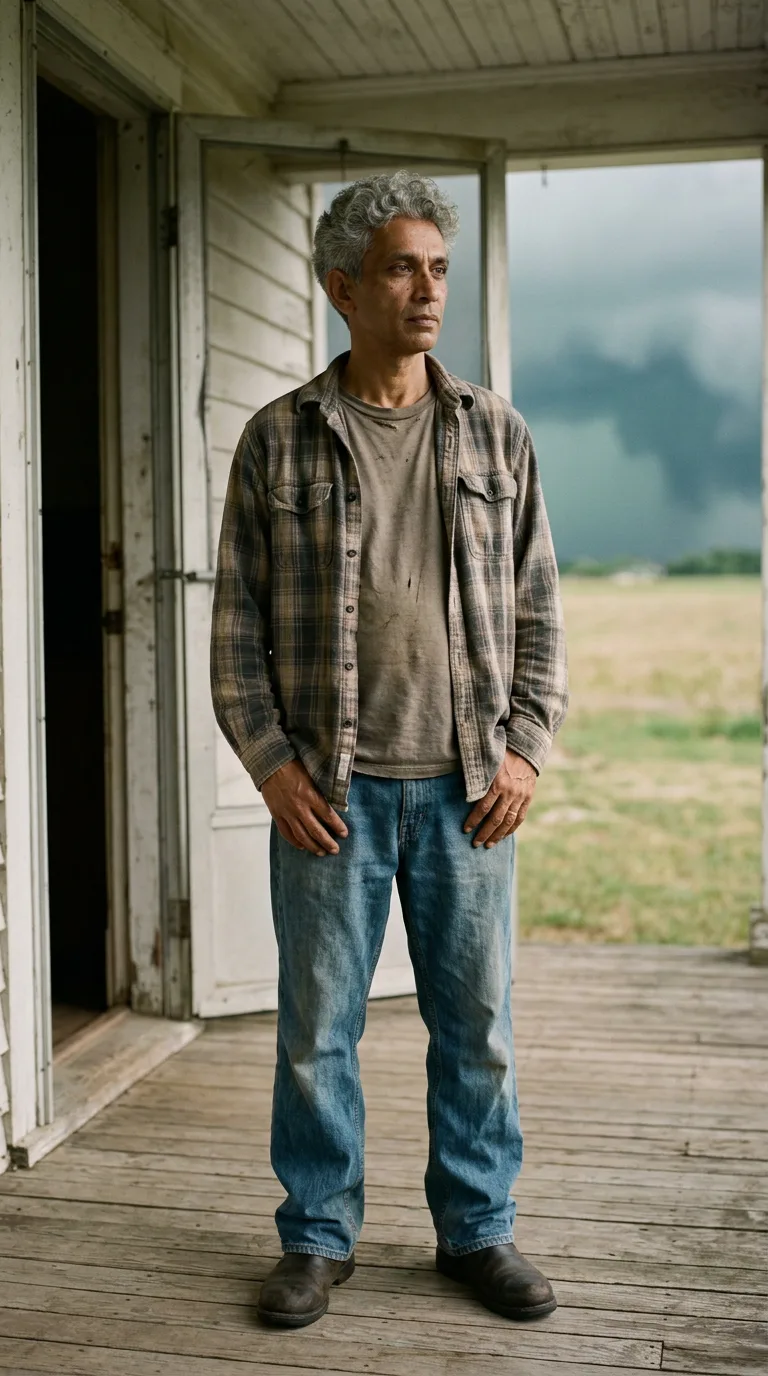
Rarest thing about him: Watching a storm come in — rare, 1 in 168
Season 0seed 1140497171 · engine v10
Character card
lineage LJL8SV
His body-swap story
@marco.villagrana, wearing Gerald Lindqvist, rolled the wheel on and woke up as Anand Chaudhary, spent 3 minutes in him, then spun the wheel and woke up as Ronald Speck
You are three minutes into being Gerald Lindqvist, and already you know it was a mistake.
Sunday, middle of the day, Houston sun coming flat through the blinds of a bus you're not driving because it's your day off, which is the whole problem — you spun for a day off, some idiot restlessness in the last body that thought a rest would feel different than the ten thousand rests you've already had in other men's lives. Gerald's apartment smells like instant coffee gone cold in the pot. His knees ache getting up from the recliner. He's fine. He's nothing. Fifty-nine years of a nothing you already own, and the boredom of it sits in the chest like a swallowed stone. Three minutes and you're already reaching for the phone, already typing the address into the browser you know too well, because there was never any plan except more.
You do not choose Nashville. You do not choose him. You choose the wheel, and the wheel, indifferent, hands you weather.
The wind stops.
That's the first thing — not a sound but the absence of one, the whole green-black sky holding its breath, and you're standing on old porch boards with your knees loose and easy, no ache in them at all, a screen door somewhere behind you still swinging on its spring. Bare field ahead, grass silvering sideways a half-second ago and now dead still. Storm coming on like a wall with a mouth in it. Your body — his body — is already moving, already down the porch steps, chin up, walking toward the thing the porch was built to keep out, and you are along for it before you are anything else, wearing him mid-stride with no seam to the moment at all.
It is the middle of the day here too, the facts will insist, though the light says otherwise to you — the cloud has eaten most of it, and there's a texture to your tiredness that doesn't belong to noon, a heaviness behind the eyes like a double shift only just come off. Later you'll understand: night work, day sleep, and something pulled him out onto the porch before he ever got to it, some old habit of watching weather instead of sleeping through it.
The shirt is what opens him. Plaid, soft with age, one sleeve rolled and the other not, and touching your own forearm through it gives you a morning — not this morning, some other one, years back, standing in front of a mirror in a small room off a kitchen that smelled like cardamom, buttoning this same shirt one-handed while a woman's voice called from the next room that the idli were getting cold. Meena. You get her name off the shirt before you get anything else, the way you get names off things that were chosen with somebody else in the room. She used to say the plaid made him look like a rancher who'd never ranched. He wore it anyway because she'd said it, and he wears it now, divorced eleven years, because some things outlive the reason.
The jeans give you standing — the knees, the low ache in them that is real ache, not Gerald's manufactured stiffness but the accumulated hours of a man who stands on a rubber mat behind a counter for ten, eleven hours at a stretch, weight always a little forward onto the balls of the feet, spine slightly apologetic. Skinny frame, not much between the skin and the bone, and yet the forearms know something — you can feel it sitting coiled in them even now, doing nothing, the specific readiness of a hand that has spent thirty years finding the exact place a joint wants to come apart. Not violence. Just knowledge. A boning knife's whole geometry lives in this wrist whether or not there's a knife in it.
The boots on the porch boards give you the shop — Nashville, a name he never quite made into a marquee, just CHAUDHARY MEATS in red paint that's mostly pink now, a bell on the door that a run of tourists three doors down at the honky-tonk never hear over their own noise. Neon bleeding faint through the back alley window some nights when he locks up too late, humming its colors onto the wet pavement. He likes the quiet after. He likes, more than he'd say, the sound of the saw going still.
The tan line on his ring finger gives you nothing directly — it's absence that speaks, a groove worn into memory the way the porch boards are worn into the shape of feet — but the plaid against the back of the shirt gives you the last of it anyway, because Meena is the one who bought the ring and Meena is the one, seven years married, who finally stopped defending the drinking to her own family and then to herself. Not loud. Nothing thrown. Just a decision made in a kitchen much like the one from the mirror morning, and a daughter — Priya, seventeen then, unimpressed with both of them equally — splitting her holidays ever since between two quieter houses.
He is standing on a porch that isn't his kitchen and isn't his shop, some rented weekend place out past the city he took for reasons that have nothing to do with the story you're being given — maybe just to be somewhere the storm could reach him without a roof of concrete over it, maybe just to watch something bigger than his own week come apart on schedule. The screen door bangs. The field is a held breath. He walked toward it because he is fifty-three and tired in the specific way of a man who has spent his whole life being sensible, and some nights sensible feels like a debt he doesn't want to keep paying.
You feel the shape of him fully now — thin shoulders, curl of gray hair damp at the temple with the day's early humidity, the low hum behind the sternum that is either thirst or the memory of thirst, since it's a problem and everyone who has ever loved him has said so at least once. No cigarette ache, never had that particular one. Just the other one, patient, always somewhere in the room with him.
The wind starts again. Late. Rain arriving sideways.
You look down and turn your own hand over in front of your face, palm up, the way you always do, the way every man's hands are unfamiliar to you for exactly as long as it takes to remember they aren't yours to keep either.
"Storm was supposed to miss us," you say, out loud, to no one, in his voice, and you don't know yet if that's a lie he told himself or a lie the sky told him, and it doesn't matter, because you're already wondering, underneath it, how many storms this one gets before you spin again.