Gerald Lindqvist
Fictional. Generated by AI — not a real person, and no likeness of one is intended.
59, bus driver in Houston · rolled by @marco.villagrana · card — no film
History
who has worn him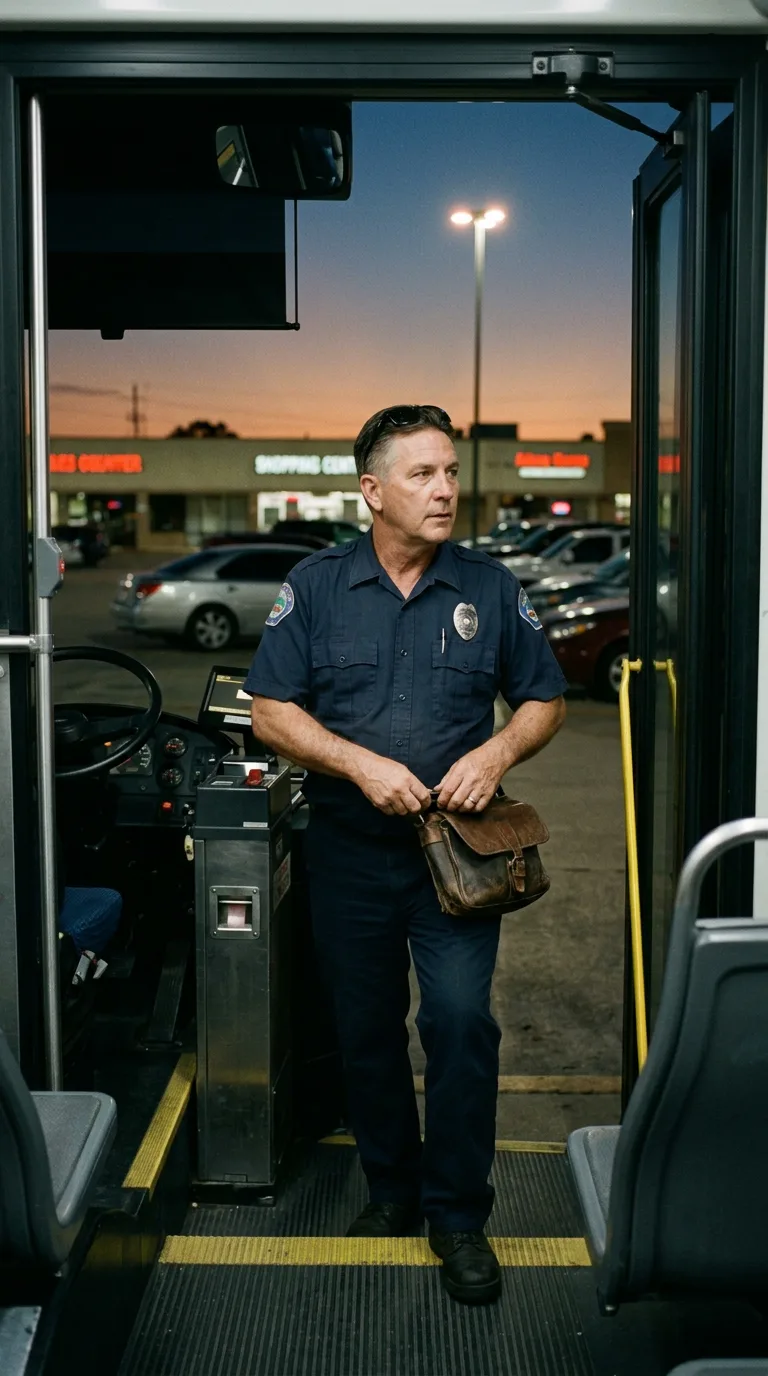
Rarest thing about him: Unitarian or liberal faith — epic, 1 in 99
Season 0seed 794763749 · engine v10
Character card
lineage LJL8SV
His body-swap story
@marco.villagrana, wearing Malik Osei, rolled the wheel on and woke up as Gerald Lindqvist, spent 3 minutes in him, then spun the wheel and woke up as Anand Chaudhary
You are three minutes into being Malik Osei, standing barefoot on his balcony in Los Angeles, and the coffee in his hand already tastes wrong to you — too bitter, brewed for a palate you don't have. Sunday late morning, marine light coming flat off the hills. His guitar leans in the corner where he left it, and you can feel, faintly, how much he loves it, how much of him is folded into that shape, and it makes you restless instead of grateful. Three minutes is nothing. You haven't even learned his hands yet and already you're bored of learning them — this is the itch you always get, the wanting-what-you-don't-have arriving before you've finished wanting what you do. You set the mug down on the rail. You go back to the site because the site is always there, a wheel on a page, patient as a slot machine, and you have never once been able to leave it at thirty-six.
The wheel spins and it does not care that it is the middle of a Sunday afternoon in Houston, that a man is mid-shift, that his rhythm has not needed checking in years.
The fare box is under your right hand and your hand does not know what it's doing for exactly half a second — the motion comes out wrong, a stutter over the card reader, and then correct, then slow, then correct again, ten times, each one checked like a new driver's, like a man learning his own bus. Nobody on the bus notices. It is dusk in this body's clock, not noon — the sky through the windshield the color of a bruise healing, sodium lights flickering on over a strip-mall lot, a nail salon and a pupusería glowing behind tinted glass. You are 5'7" in this one, thicker through the middle than Malik was, and something in the lower back announces itself immediately, a dull permanent ache that has clearly been there for years, riding along under everything else like tinnitus. Gray at the roots under a bad home dye job. A wedding band, worn smooth, on a hand still resting on the fare box.
The bag strap is in your other hand — a leather satchel, cracked and dark with handling — and it opens first, the way the door of a house opens before the rooms behind it.
*Gerald.* The name arrives with the weight of the bag, the way his fingers know exactly where the buckle sticks. Twenty-two years driving for the same transit authority, four different routes, a commendation somewhere in a drawer he never looks at. The shirt against your back gives you the morning: buttoning it in a bathroom with bad fluorescent light, wife's radio going in the kitchen, the specific weary satisfaction of a shirt that still fits close enough not to embarrass him, sleeve by sleeve, the left cuff always sticking a half-second on the wristbone where he broke it playing softball at twenty. Coffee, black, too much of it. A cigarette on the back porch before Marnie was awake, the pack already three deep by noon, an old ritual he's stopped apologizing for. The badge-shaped patch on the shoulder isn't a badge — transit officer insignia, some ceremonial nothing from a supervisor who liked pageantry — but his hand goes to smooth it anyway, unconscious, forty years of uniforms doing that to a man.
The wheel under his other hand, when you finally touch it, gives you the whole shape of the life at once: a house in Alief with a lemon tree that never fruited right, two kids grown and mostly gone — a son in Austin who calls on Sundays, a daughter in Beaumont who doesn't, not because of anything, just distance doing what distance does. Marnie, thirty-one years married, who still leaves his lunch in the same blue cooler bag by the door, who he still, unfashionably, calls his girl. Church every third Sunday, more out of her wanting it than his believing it, though he likes the minister, likes that nobody there tells him what to think. A knee that clicks going up bus steps. A liver he doesn't examine too closely and a doctor he's overdue to see. The particular good ache of pulling into the last stop of a shift and shutting the doors and being, for one second, entirely alone.
You feel all of it arrive checked, careful, the way his hands are checking the fare box — as if some part of him noticed the half-second wrongness and is still, quietly, making sure of itself.
You look down at Gerald Lindqvist's hand on the wheel, and it is not the hand you had three minutes and one body ago, and it is not any hand you have ever actually owned. You turn it over. The ring catches the dashboard light.
"There you are," you say, to no one, to the empty aisle behind you, to the lot going purple outside the windshield — and you don't know yet if that's relief or the first note of the boredom that will send you back to the wheel, or how long you'll let it take.