Adrián Pacheco
Fictional. Generated by AI — not a real person, and no likeness of one is intended.
29, lawyer in Chicago · rolled by @colin.tarwater · card — no film
History
who has worn him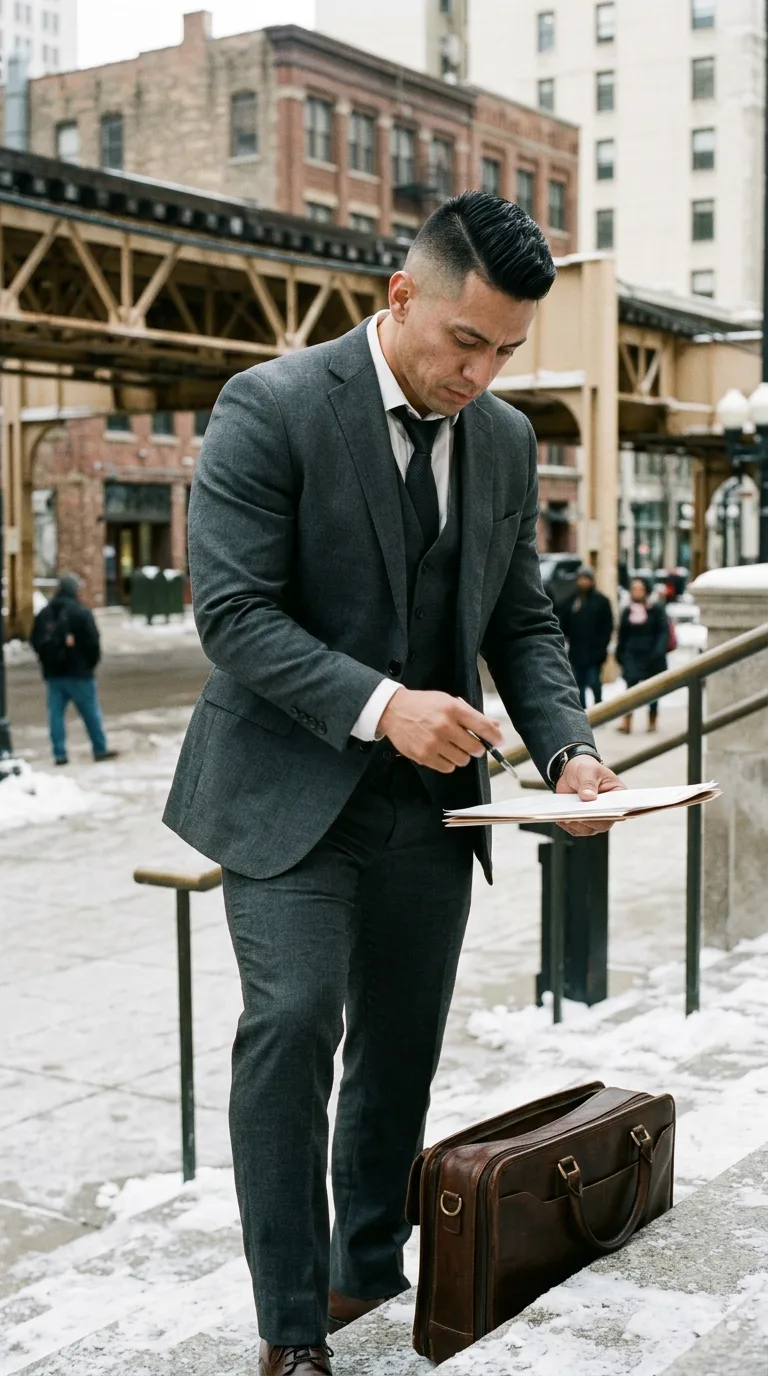
Rarest thing about him: Type 2 diabetes — epic, 1 in 68
Season 0seed 938961435 · engine v10
Character card
lineage COEU7T
His body-swap story
@colin.tarwater, wearing Ernesto Villagómez, rolled the wheel on and woke up as Adrián Pacheco, spent 3 minutes in him, then spun the wheel and woke up as Colton Marsh
Ernesto's hands smell like film cement and cigarettes he doesn't smoke anymore, and you have been him for sixty seconds and already you know everything worth knowing: the projection booth, the same reel threaded a thousand times, the ache low in his back from a stool that doesn't fit him. Heavy hands. Slow hands. Somewhere down in him is a whole marriage, a whole grief, but you didn't come here for Ernesto's grief, you came here because the wheel is the only thing that has ever felt like Tuesday should feel, and this — this booth, this smell, sixty seconds of a stranger's tired knees — this isn't it. You set down the reel he's holding mid-thread. You don't finish the thought. You go back to the site with his thumb, because it's his thumb now, and you spin.
The pen is between two fingers, the paper is angled against a knee that is not bending far enough because it never has to, twenty-nine years of this knee working exactly right — and then it isn't right, for half a second the pen drags wrong across the page, a stroke gone sideways, and it stops. Starts again. Slower. Correct. The cold comes in through wool at the shoulders, snow-glare off the courthouse steps, an L train grinding somewhere overhead loud enough to feel in the teeth, and none of it is anything you know yet, only weight and height dropped six inches from where you're used to standing.
The briefcase strap is the first thing that talks. Worn smooth on the left side, not the right — he always carries it wrong on purpose, some client joke from years back, *carry it on your good side, counselor*, and it stuck. The leather is his father's, actually, or close enough — bought secondhand at a shop on Milwaukee Avenue the week he passed the bar, because new leather looked like it was trying too hard and he was already trying hard enough for both of them. His father never saw him sworn in. That's in the strap too, folded down small so it doesn't come up every day.
The pen is a giveaway from a bank that failed nine years ago, and holding it gives you a courtroom, fluorescent and too warm, a judge losing patience, his own voice steadier than his stomach — and under that, quieter, the four-plus, five-plus after five figures he doesn't say out loud to Marisol, the number that sits behind his sternum some nights like a stone he swallowed on purpose. Law school did that to him. He'd do it again. He tells himself that on the steps some mornings, out loud, once, like a vitamin.
The shirt gives you this morning — his morning, hours behind yours, dark still outside their window when he stood at the closet. Marisol's voice from the bathroom, toothbrush in her cheek, asking if he took his metformin, and him lying, *yeah*, because the truck of a day ahead of him didn't leave room for the fight about his blood sugar again. Sleeves first, always sleeves first, cuffs that catch faintly at wrists thick from nothing in particular — he was never an athlete, just built low and dense and stubborn, 5'4" and used to being underestimated by men a foot taller who learn better in a deposition. The vest over that, buttoned bottom to top wrong out of habit then corrected, a joke he makes to no one every single day. The tie last, the same length of silk knotted the same way ten thousand mornings, hands that don't need his eyes anymore, needle and thread of it done from feel — which is the exact motion that broke a second ago and had to be redone, and neither of you noticed it as anything.
Two kids' voices come up through the coat, through a crayon smear near the inside pocket nobody's ever gotten out — Sofia, six, insisted on drawing him a courthouse once, and it lives in there now, a ghost of orange wax. Diego is younger, still afraid of the L, and Ernesto — no, not Ernesto, *him*, whoever he is under your hands right now — carries that fear home sometimes without meaning to, quiets the train down for the kid at bedtime with a story that isn't true. There's love in that, plain and unglamorous, the kind that doesn't announce itself, the kind Adrián Pacheco has never once in his life stayed still long enough to actually feel all the way through before moving on.
The cold in the fingers is the diabetes, a little, numbness that isn't quite numbness yet, something he's been told to watch and mostly doesn't. The strong parts are the forearms, the low center of him, a build made for being harder to move than people expect. Nothing hurts exactly. Something in the joints keeps a running tally anyway.
You look down. The paper is still in the left hand, pen in the right, both entirely his, dense and brown and sure of themselves in a way your last hands never were. You turn the right one over once, like checking it's real, and the watch slides a half-inch on the wrist — his watch, not yours, not anyone's now but yours.
"Okay," you say, to the cold, to the tracks rattling above you, to nobody. "Let's see what you're worth."