Colton Marsh
Fictional. Generated by AI — not a real person, and no likeness of one is intended.
18, welder in Dallas · rolled by @colin.tarwater · card — no film
History
who has worn him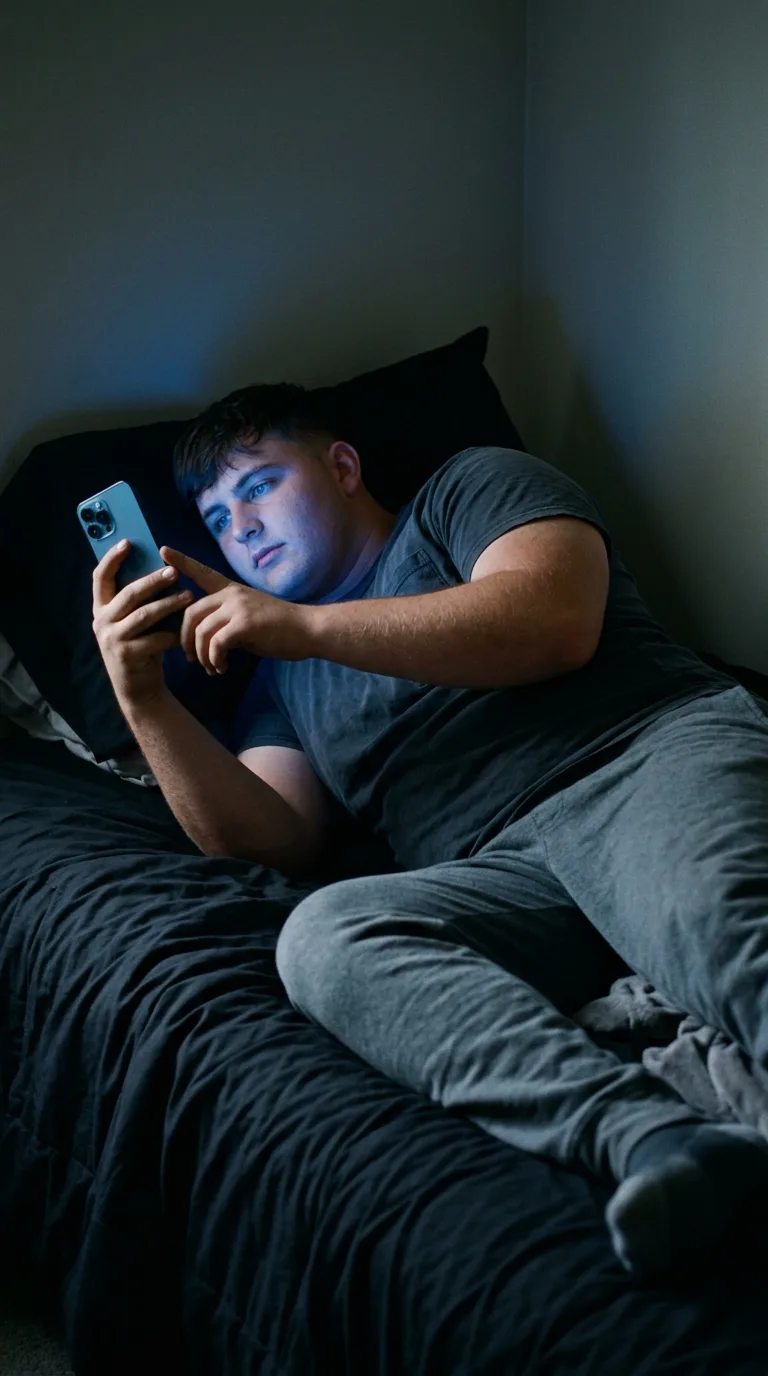
Rarest thing about him: Dip or chew — rare, 1 in 39
Season 0seed 177063352 · engine v10
Character card
lineage COEU7T
His body-swap story
@colin.tarwater, wearing Adrián Pacheco, rolled the wheel on and woke up as Colton Marsh, spent under a minute in him, then spun the wheel and woke up as Raymond Duckworth
You are Adrián Pacheco for the length of a phone call you didn't take. Three minutes ago the wheel gave you this — a lawyer, thirty floors up, dress shirt sweated through at the collar because Chicago in this season doesn't cool down just because the sun's gone. You stood where he'd been standing, in front of a window with the lake turned to a black sheet below, and you felt his heart already going before you got there, some argument he'd been having with himself before you arrived, and you thought: that's not mine to finish. Hazel eyes in the glass, not yours. Muscle you didn't build. A voicemail light blinking red on a phone that isn't going to get answered by either of you. Three minutes of a stranger's unfinished tension is a long time when you didn't do anything to earn it and don't intend to inherit it. You want the ordinary kind of tired instead — someone else's, further off, further down.
You open the laptop still logged into vessel.cards from the last time, and the wheel is already spinning before you've decided anything, which is its own kind of honesty.
The blue light doesn't move first. The thumb does. It was slow, hunting, half-asleep over something it had already scrolled past twice — and now it goes fast and flat and certain, thumbing through a stopped video without watching it, because you don't care what he was looking at. Weight comes down into you all at once, heavier through the middle than Adrián was, heavier through the shoulders too, a body built out of steady meals and standing labor instead of gym mirrors. The mattress takes the new weight of you like it's used to it. Somewhere behind your sternum a thing thuds low and it isn't panic, it's just how a heart this size sounds in a room this quiet.
The phone is the first thing that gives him up. Warm from his cheek, a case worn smooth at the corners — and there's a flash of a truck bed, county fair lights, a girl laughing at something on this same screen months ago, gone before you can hold it. The shirt against your back next — thin gray cotton, a size too honest about the belly it covers — and that pulls harder: a Sunday morning, hot iron of Texas light through a bedroom window, pulling this exact shirt off a hanger because it was clean and close and Megan was already yelling that they'd be late for the second service. You feel his arms go into the sleeves in memory the way his arms did it for real, the practiced two-second motion of a man who's dressed himself the same way ten thousand mornings, not thinking about it, thinking instead about whether his father would notice he hadn't shaved.
More comes; touch keeps giving it up. The waistband of sweatpants at your hip — softened elastic, worn thin from being pulled on over boots at six a.m. before it's this soft from being slept in — and that's the shop: sparks curling off a bead of weld like they're falling upward, the visor's dark glass and the particular held-breath quiet of laying a clean line down angle iron, the ache that settles into your right shoulder by three o'clock every day and never quite leaves by morning. Colton Marsh, and the name arrives with it, stitched nowhere but known anyway, the way your own name doesn't need a label. Nineteen months at Brannigan Fab off Stemmons, a foreman who calls him "big man" without unkindness, a paycheck that covers half of a rent he splits with Megan in a subdivision so new the sod hasn't taken in the yard yet.
Megan. The pillow under your — his — head still holds a little of her shampoo, and that's where the ache sits deepest: she's asleep three feet away and doesn't know you're not him, wouldn't know how to know. And underneath her is the other one, the woman who got away, Brianna, gone two years now to Tulsa with somebody who wasn't him, and you feel that old bruise the way he feels it, dull and permanent, the kind of hurt that's just weather now instead of a wound. There's a tin of dip somewhere on the nightstand, its ghost taste already at the back of your tongue. There's the low hum in his blood that is the diabetes, the discipline of it, the finger-stick every morning he mostly keeps up with and sometimes doesn't. There's church — early service, his mother's insistence, a faith worn like the boots, unremarkable and load-bearing. And there's this exact moment before you arrived: eleven at night, day shift tomorrow at six, telling himself two more minutes on the phone and meaning it less each time he says it.
Your thumb — his thumb — stops moving. You bring the hand up in front of the phone's blue glow and turn it, knuckles then palm, calluses like a second skin along the base of the fingers, a burn scar's ghost of toughness you didn't put there and don't need to name because the facts already have. It doesn't look like a hand doing anything. It just is heavy, and yours now, until it isn't.
You say, to no one in the dark room, low enough not to wake her: "Wrong number," and you don't know yet if you mean the call he never took or something else, and you don't spin again tonight, but you don't put the phone down either.