Warren Suggs
Fictional. Generated by AI — not a real person, and no likeness of one is intended.
63, butcher in Miami · rolled by @colby.nash · card — no film
History
who has worn him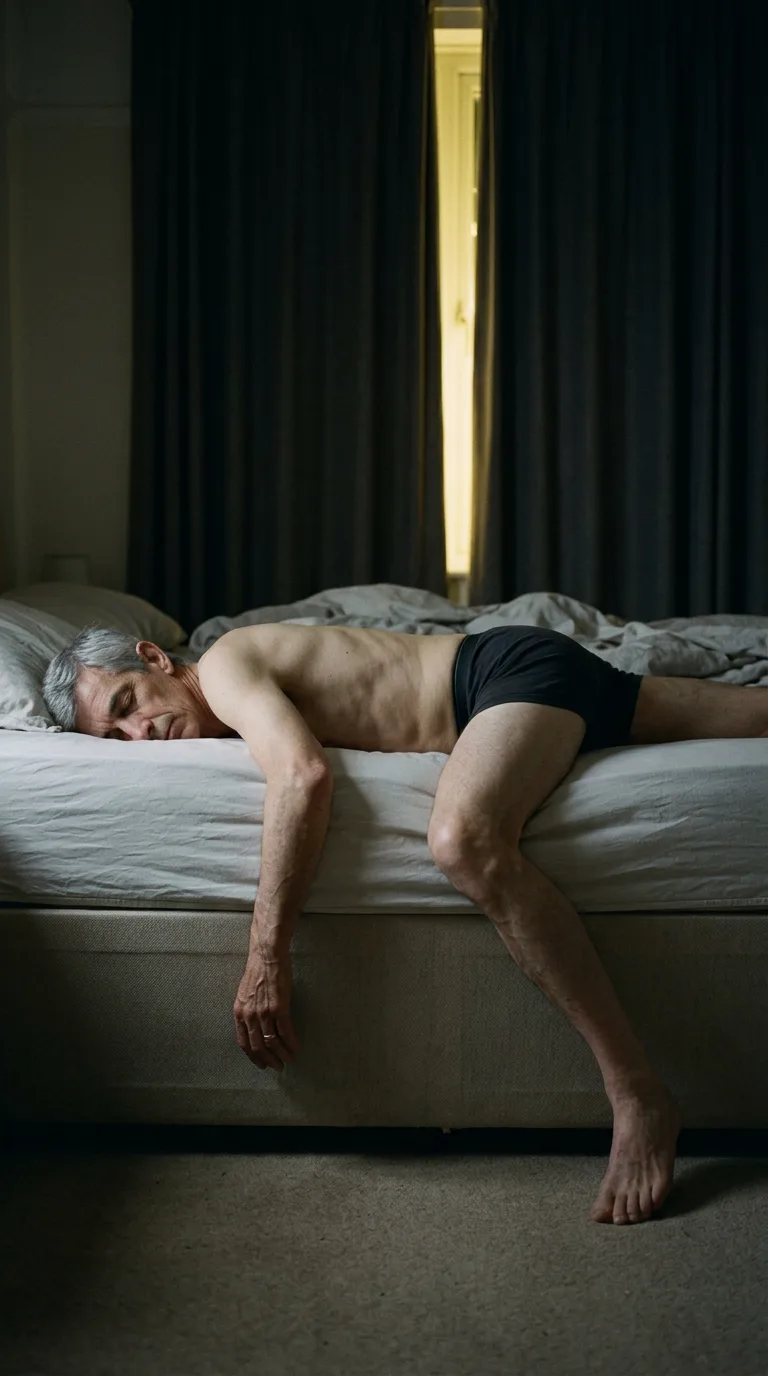
Rarest thing about him: Butcher — rare, 1 in 101
Season 0seed 691968689 · engine v10
Character card
lineage E1W54H
His body-swap story
@colby.nash, wearing Rigo Casillas, rolled the wheel on and woke up as Warren Suggs, spent 1 hour in him, then spun the wheel and woke up as Colby Nash
---
Rigo Casillas's knees ache from the crawl space under a Queens brownstone, and that's the whole problem with him, really — the ache. Four minutes in a body and already you know its complaints: the beauty mark you keep catching in the truck's side mirror, the wrench weight unfamiliar in a hand that isn't yours yet and never will be. Somewhere behind his eyes there's a man who spent thirty-nine years learning to sweat a copper joint, and you inherited none of that, only the joints themselves, only the ache. It's a Saturday afternoon and the light through the client's basement window is flat and gray and you think: this is not worth having. Four minutes and you're already reaching for the phone in his coverall pocket, already pulling up vessel.cards on a cracked screen, already feeling the small mean thrill of it — not wanting to be Rigo, not wanting to be anyone in particular, just wanting the wheel to turn again, the way a man at a slot machine doesn't want the cherries so much as the turning. You pay. You spin. The screen goes white the way it always does, and Rigo Casillas's knees stop being your problem.
The breath changes first — that's always how you know. Ragged, then even, one long pull of Miami air that tastes like salt and old cigarette and something coppery underneath. The arm that was hanging off the mattress lifts itself, folds up with the other across a bony chest, and you are lying face up now in a bed that isn't yours, in sheets gone cool and twisted, with a streetlight coming thin through a gap in the curtain like a blade laid flat on the ceiling. Your heart — his heart — is doing something slow and steady that Rigo's never did. Sixty-three years of a body settling under you like a coat someone else already broke in.
You don't move yet. You don't have to. The bed is warm where a wife's weight isn't, and that absence arrives before anything else does — a flash of her side empty, a Saturday shift, the shape of her gone hours ago to a friend's for coffee and errands, and under that a whole marriage folding open: thirty-one years, a small house near a canal, her laugh at something on television, the two of them never once talking about children because by the time it might have mattered neither of them brought it up, and somehow that not-bringing-it-up became its own kind of peace.
The wedding band is the first thing you actually feel, plain gold on the left hand resting on his chest, and it opens like a door — her hand in a jewelry store thirty-one years ago, her voice saying it doesn't need to be fancy, Warren, and his own voice agreeing because he never wanted fancy, he wanted her. Nicotine memory comes up sour and immediate, a phantom ache at the inside of his lower lip where a pinch of dip usually sits by mid-morning, gone now because he's asleep, but the wanting is already there, ambient, always there, the way it's been there since he was nineteen. And under that, further down, a colder thing: a doctor's office, fluorescent and beige, a word said flatly that took eleven months to argue back down into remission, and the drinking that started before the diagnosis and never really stopped after, just got quieter, a glass at eleven a.m. instead of five p.m., his wife's face doing that thing it does when she smells it on him and decides, again, not to say anything.
The sheets under this body are cheap cotton gone soft with washing, and they give you the apartment itself — the balcony two rooms over with its pastel rail gone salt-dull, the ocean haze that sits over Miami like something exhaled, neon down on the wet tile at night when he comes home off a shift smelling of cold rooms and blood he's stopped noticing. The work comes up through the ring, through the tendons of a right hand that already, asleep, twitches faintly with the memory of a blade's weight — thirty years behind a counter of trays, the saw's whine and then its silence, customers who call him by name because he's been there since before some of them were born. He is good at it and has never once been proud of it out loud, because pride is something you confess in a church basement on Wednesdays, not something you wear.
He is a skinny man, all along tendon and old muscle, six-foot-one of him laid out diagonal across a mattress too big for one person on a Saturday morning that is, for him, closer to noon, the kind of late sleep a man allows himself only when his wife is out and there's no one to see him do it. His back holds a low ache that isn't the cancer, just the decades, just the standing. His mouth is dry with sleep and old whiskey from the night before, and somewhere under the ribs there's a scar tissue memory of the surgery, healed over, quiet, remission a word he touches maybe twice a day and otherwise leaves alone, same as the bottle he tells himself he'll leave alone.
You feel all of it arrive in the shape of a Saturday he hasn't started yet, and for one more second you just lie there being sixty-three, being tired in ways Rigo's thirty-nine-year-old knees never taught you, being someone with money enough that none of this — the shift, the ache, the drink — is about need. It's about habit. It's about a life that got laid down groove by groove until it played itself without him choosing much of anything.
Then you lift the left hand off your chest and look at it — thin fingers, ring loose enough to turn with a thumb, a faint tremor that's either age or a body wanting its dip already — and you turn it over slow in the streetlight like it's something you're checking for a nick.
"There you are," you say, to no one, to the empty side of the bed, to the ceiling, and you don't know yet if that's four minutes of talking or the next thirty years of it.