Rigo Casillas
Fictional. Generated by AI — not a real person, and no likeness of one is intended.
39, plumber in New York · rolled by @colby.nash · card — no film
History
who has worn him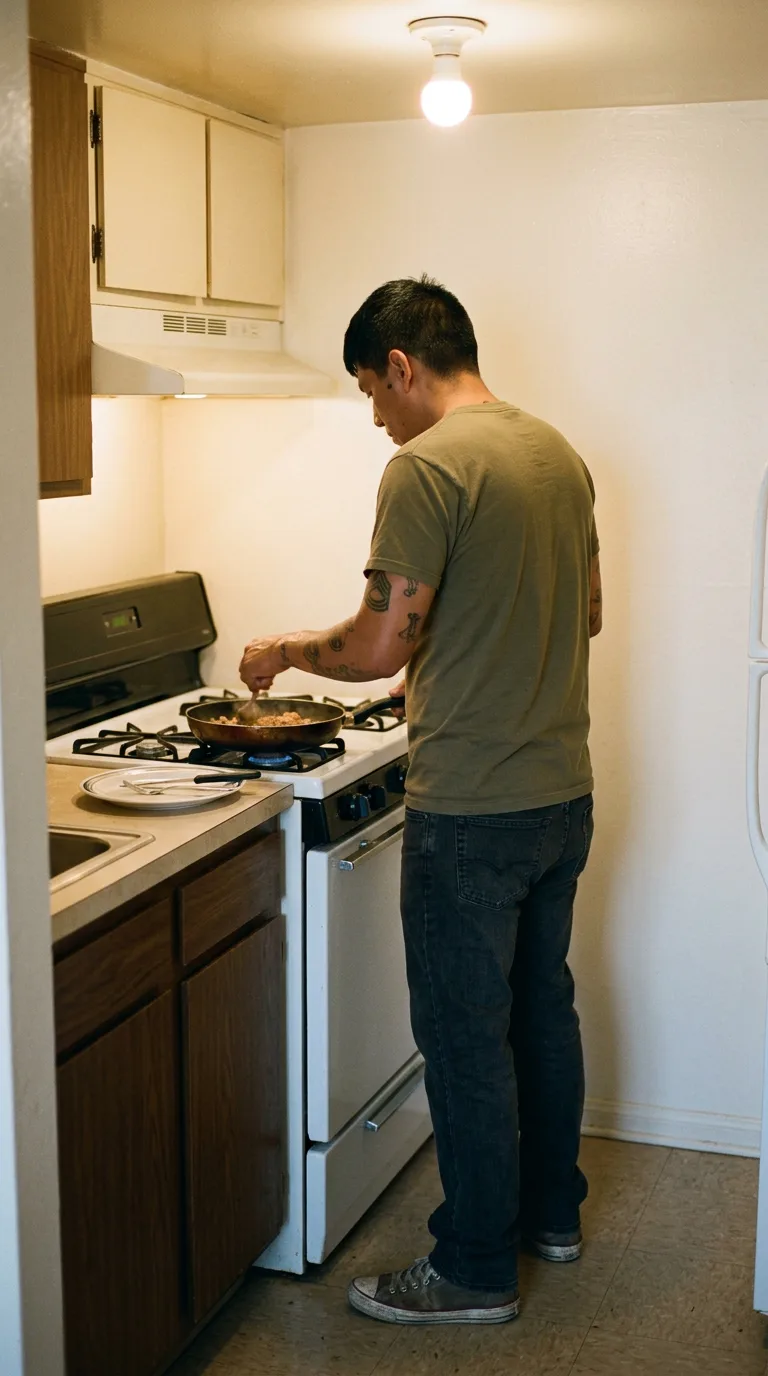
Rarest thing about him: A few, scattered — rare, 1 in 13
Season 0seed 187620960 · engine v10
Character card
lineage E1W54H
His body-swap story
@colby.nash, wearing Gary Belletire, rolled the wheel on and woke up as Rigo Casillas, spent 4 minutes in him, then spun the wheel and woke up as Warren Suggs
Gary Belletire's whistle is still in your mouth, and it tastes like plastic and other men's sweat. Sixty seconds ago you spun the wheel and became him — a wrestling coach, cleft chin, gray hair, a gym full of teenage boys running suicides on your command — and it took exactly that long to know it was nothing. A whistle. A clipboard. A body that aches the ordinary way old bodies ache, with nothing underneath it worth keeping. You stood on the mat feeling how little there was to a life spent yelling *pin him, pin him* at kids who will forget your name. One minute was enough to know you'd rather be almost anyone else. Your leg is bouncing — his leg, some old tic of Gary's you inherited without asking for it — and you take the phone out right there in front of the boys, thumb already moving, and you spin again.
The gym goes. The whistle-taste goes. What arrives instead is steam, and garlic, and the small close heat of a kitchen that isn't yours.
You are standing with your back to a room, mid-stir, and the wooden spoon in your hand is already turning the wrong way — clockwise, then you correct it without deciding to, some plumber's tidy instinct taking over before you've even arrived all the way. Your shoulders are narrower than Gary's were. Your knees complain in a different key. There's a low ache set into the small of your back like it's furniture, always there, never leaving. You salt the pan by feel and don't taste it, and your hand — his hand — reaches up into the cabinet on pure memory and brings down a second plate, sets it beside the first, and you don't know yet why you did that.
Then his life starts coming in through your fingers, the way it always does — not given, just touched into being.
The spoon handle first: worn smooth where a thumb has pressed it a thousand times, and with it comes a flash of *this exact stir*, this exact pan, some other evening, some other week, all folding into this one. Then the shirt — you feel it drag against your back as you shift your weight, and it opens like a door. Rigo Casillas, pulling this shirt over his head this morning in a room with a mattress on the floor and a Saints calendar on the wall, favoring the left arm because the shoulder's been bad since Thursday, since he had to lie flat under somebody's vanity in Bensonhurst wrenching at a P-trap that hadn't moved since Reagan. The coveralls hung on the door hook, waiting for tomorrow. He'd dressed slow. He always dresses slow now — the back doesn't forgive fast anymore, hasn't since he was thirty-four, and he's thirty-nine, and some mornings he does the math on that and doesn't like the answer.
The tattoos on the forearm rise up warm under your own attention: the unit insignia, and under it the specific weight of 2009, sand and diesel and a sergeant named Ochoa who used to sing badly on convoy, who is not dead, who Rigo just doesn't call anymore, and the guilt of that sits exactly where the ink sits, permanent, itchy in weather like this.
The floor under your feet gives you the apartment itself — the cheap tile, the landlord who won't fix the buzzer, the ceiling light he changed himself because of course he did, because his hands know pipe and drain and sixty years of bad wiring better than they know almost anything else. Kneeling under strangers' sinks all day, being thanked and paid and forgotten, coming home to kneel under nothing, just this stove, this one pan.
And the plate — the second plate, already down before you understood — that's the one that hurts going in. Marisol. Eight months gone and he still, some nights, sets two places before he catches himself, before the catching itself becomes its own small ritual of grief he doesn't examine too closely. And the kids — a boy and a girl, hers on the weekends he doesn't get, whose drawings are still on his refrigerator held up by a magnet shaped like a shrimp from a trip to Florida nobody talks about anymore. He goes to Mass some Sundays for them more than for God, asks for the ordinary things — the shoulder, the kids, her, not necessarily in that order, not necessarily convinced anyone's listening.
He is, you understand now, a man who works hurt and eats alone and still can't stop setting a second plate, and there is nothing dramatic in any of it, which is exactly what makes it unbearable to be standing this close to.
You look down. His hand — your hand now, for as long as this lasts — is still holding the spoon, knuckles scarred small from pipe threads, and it isn't bouncing, isn't doing anything, just holding still in a way that feels wrong on this body, like a held breath.
You set the spoon down. You look at the second plate like it's a question somebody left on the counter for you specifically.
"Okay," you say, to the empty kitchen, in his voice, "just me, then."