Warren Puckett
Fictional. Generated by AI — not a real person, and no likeness of one is intended.
51, bus driver in Coastal Maine · rolled by @colin.hasbrook · card — no film
History
who has worn him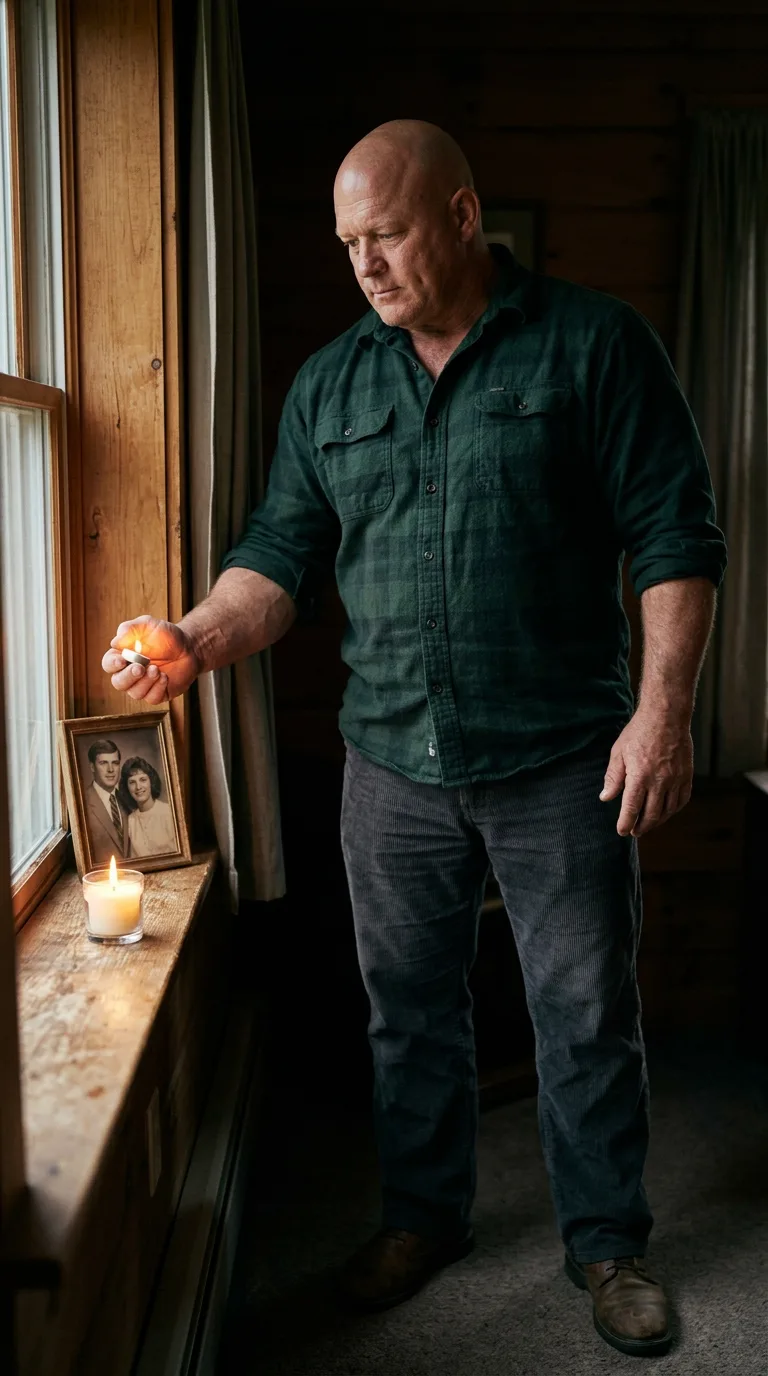
Rarest thing about him: Reading something he was not meant to — rare, 1 in 157
Season 0seed 243858918 · engine v10
Character card
lineage 2NZHHJ
His body-swap story
@colin.hasbrook, wearing Gregory Podolski, rolled the wheel on and woke up as Warren Puckett, spent 4 hours in him, then spun the wheel and woke up as Father Marco Villalobos
You are standing in Gregory Podolski's kitchen holding a mug of coffee that has gone cold in his hand, and you have been him for less than a minute and already you know the whole shape of the problem: this apartment. Off-white walls, a poster for a train museum somebody gave him as a joke, a lease that has his name on it and nobody else's. Thirty-four, blond, decent shoulders, a body that works fine and owes nothing to anybody, and it is exactly as interesting as a body that works fine and owes nothing to anybody ever is, which is to say for about forty seconds. You didn't even unpack him. You spun into the middle of his shift change, his hand still smelling of the vestibule door handle, some argument with a dispatcher already fading out of his face like breath off a window — none of it yours, none of it worth keeping warm. You have had two hundred and forty-eight men. You know within a minute whether you're going to live in one or just visit, and Gregory Podolski, no offense to him, wherever he is now, which is nowhere, is a visit. You set the coffee down on his counter without drinking it and you open the laptop that is already open, because some part of every man you've worn leaves a machine logged in, and you go to the page with the wheel on it.
You pay. You spin.
The candle is already leaning by the time you arrive, and so are you.
You are big in a way Podolski never was — the width comes first, shoulders and gut both, a body that has carried weight for fifty-one years and stopped apologizing for it decades ago. Your hand is cupped an inch above a tea light, heel of the palm going warm, and the flame bends sideways into the cup of your fingers like it wants in. A window in front of you, cold light off water somewhere close, a photograph propped against the glass — man in a tie, woman with a soft perm, both of them younger in the picture than you are now. Your mouth is already moving. "Hi, Ma," you say, except it comes out warmer than you meant it, warmer than a stranger's mouth has any right to make it, and you feel your own — his — chest do something underneath the flannel, some old ache finding its groove again like a record needle. You put the candle out with a breath that keeps going a half-second past where your lungs should have quit, and the wick smokes, and nothing about your face tells anyone in the room, because there is no one in the room, that you are not who lit it.
The shirt is the first thing. Green-black flannel, soft at the elbows from wear, and it comes back to you the way he put it on this morning — not this morning, you correct, some other morning, the mornings blur into one weather system in a man like this — sleeve over the left arm first always, some old habit from a shoulder that used to click if he did it the other way. Under it your chest is heavy and warm-blooded, a gut that has muscle laid in under the fat like rebar in concrete, forearms scarred by nothing but forty years of rope and cold and hot coffee spilled in a hurry. Your feet are in boots that know the porch boards outside this window by their creak, the third one from the door being the loose one, and your knees already ache faintly with a specific, permanent ache that has nothing to do with today.
The corduroys give you the drive — his truck, heater blowing lukewarm, the bus yard at five-forty in the morning, the particular hiss of the door folding open for the first rider of the route, old Ev Cormier with his thermos, same seat every day, "morning, Warren," and you feel the dimples pull without being asked to, the way they always pull, the thing everybody in this town comments on the first time they meet him and never again after because it just becomes his face. You feel how the route bends along the water and how he loves it and has never once said so out loud to a living soul, how the diabetes makes him tired by two some afternoons and he chews the glucose tabs from the glove box like they're nothing, like it's not a small daily proof that his body is quietly, patiently going somewhere without him.
The photograph gives you the rest, fast and total, a whole life dropping through your hands like a rope let out all at once: his mother's kitchen, this same window a different decade, her laugh that filled a small house past its capacity, the phone call eleven months ago, the hospital smell that never came all the way out of this flannel no matter how many times he's washed it, the funeral where he didn't cry and the drive home after where he did, alone, both hands on the wheel, nobody to tell. No wife ever in this house. No kids' shoes by the door. A beer most nights, one, sometimes a second, poured out on the dooryard step while the traps sit stacked and rusting from an uncle's old boat he never got around to selling. He talks to her on the anniversary and on Tuesdays for no reason he's examined, because Tuesday was her day off, back when days off meant anything to either of them.
You are not sad in this. That is his, and it is enormous, and you are only standing in it the way you'd stand in a house that isn't yours, admiring the joists.
You look down. The hand is thick, the knuckles broad and weathered, a thin white scar of wick-smoke curling off two fingers. You turn it over once, palm up, like you're checking it's real, which — you have done this two hundred and forty-nine times now and it is always real.
"Sorry, Ma," you say, and the dimples show even though nothing on your face is smiling, "I gotta go a minute" — and you lift your eyes off your own hand into the window's reflection, into the room, into wherever this is going next, and you hold there, because you don't know yet how long you get to be a man who talks to his dead mother on a Tuesday, and you're not going to spend it deciding.