Father Marco Villalobos
Fictional. Generated by AI — not a real person, and no likeness of one is intended.
32, priest in Dallas · rolled by @colin.hasbrook · card — no film
History
who has worn him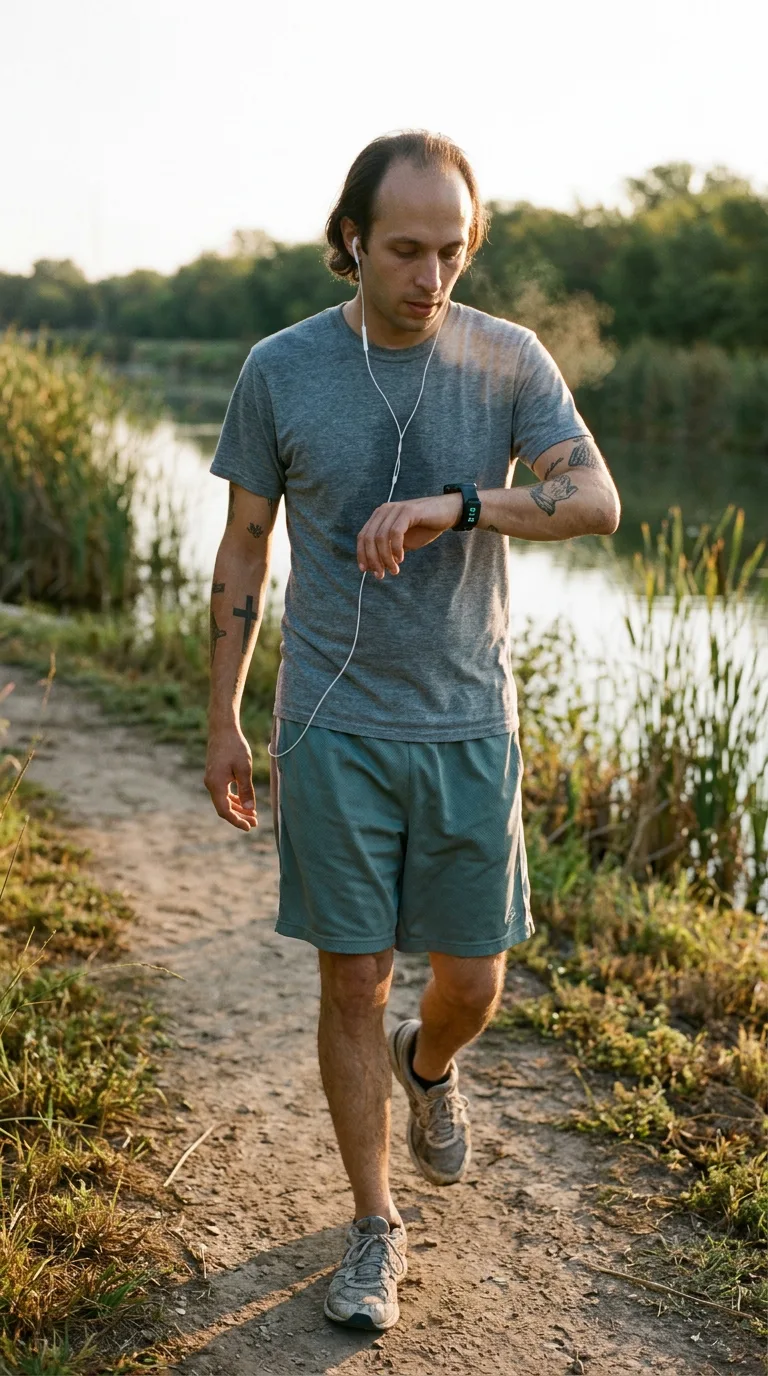
Rarest thing about him: Receding, grown out long — rare, 1 in 129
Season 0seed 621336519 · engine v10
Character card
lineage 2NZHHJ
His body-swap story
@colin.hasbrook, wearing Warren Puckett, rolled the wheel on and woke up as Father Marco Villalobos, spent 3 minutes in him, then spun the wheel and woke up as an unnamed body
You are counting the bus. Not the route, not the fare box — the bus itself, the shape of it in the lot at the depot, the low diesel groan you have been hearing for four hours and seven minutes now, and you already know you are done with it. Warren Puckett's body is good to you: strong through the gut and shoulders in that soft, padded way, dimples that make riders smile at him without meaning to, bald head catching the last of a Maine evening through the windshield. But his knees ache getting down off the step, and his radio only gets two stations, and there is a particular tiredness in him that isn't yours, that belongs to fifty-one years of driving the same 12 miles past the same lobster shacks. You didn't take him to keep him. You took him last time because the wheel gave him to you and there was nowhere else to be that hour. Now there is the itch again, the one that has moved you through two hundred and forty-nine other men, and Warren's phone is right there in the cupholder, and vessel.cards loads fast on a bus depot wifi. You spin sitting in his driver's seat, engine off, lights of the lot bleeding orange across the dash.
The wheel stops and the world does not travel — it simply becomes a canal path, dawn instead of dusk, breath instead of exhaust. Your foot is already coming down wrong, a stumble that never quite lands, and then the next foot catches you, and you are running. Thinner legs. A tightness across the chest that isn't fear, just built-in, just how this chest holds itself. Earbuds feed you a psalm playlist mid-verse. A watch on the wrist buzzes a split time it has no memory of you setting.
The shirt is not on you — it's a grey running tee, damp at the collar, and that's the first thing that opens: not this shirt, but the one under it in another closet, black, banded collar, and your hand there (his hand, always his hand first) buttoning it from the bottom up because the top button is the one that chokes if you rush it. Six-forty in the morning, three years ago and also every morning, the mirror in the rectory bathroom fogged at the edges, and Marco doing what he always does, which is check the collar is straight and then not look at himself again. He doesn't like his own face doing nothing. He likes it doing something — blessing, absolving, laughing with old Mrs. Duarte in the vestibule after the ten o'clock, her hand dry and light on his forearm over the tattoo of the praying hands, which she has told him three times looks like her late husband's rosary hands, folded just so.
The praying hands tattoo — you feel the needle-memory of it, seventeen years old in a shop off Jefferson, his mother finding out and not speaking to him for a week, and the cross on the other arm two years after that, penance and pride tangled into one sitting. His arms remember the weight of vestments, the particular drag of a stole across the back of the neck, the smell of incense that never fully leaves a black shirt no matter how many times it's washed. His hands remember the Eucharist, small and practiced, thumb and forefinger only, a discipline so old in him it isn't thought anymore.
The running shorts are new information too — polyester, a size he bought when he decided the pack a day and the two drinks most nights were catching up with him at thirty-two, when a doctor with kind eyes and a pen that clicked too much put a small pill into his life alongside the wine and said this isn't instead of, this is with. He remembers the diagnosis with more shame than the tattoos ever cost him, remembers telling no one in the parish, remembers his sponsor priest saying grace is not embarrassed of you, and not quite believing it. He runs at dawn because it is the one hour nobody needs him to be Father Villalobos. He runs alone because there has never been anyone waiting at the end of the path — no wife, no kids, an old girlfriend from seminary years who is a memory with no weight left in it — and this, too, he has made a kind of peace with, the particular clean loneliness of a life given elsewhere.
The watch buzzes again against the wrist, a mile marker with no history, foreign in a way nothing else here is. Your foot — his foot — finds the dirt path automatically, muscle doing what it has done four mornings a week for years, breath finding its rhythm past the panic of two stumbled steps that never fell.
You lift your hand off the swinging rhythm of the run and look at it — his hand, spare and thin-fingered, a small white line of a ring's absence around no ring, though something in the muscle wants to turn one that isn't there, a habit worn into him from turning his ordination ring in idle moments during long confessions. Skinny fat, soft in the middle under the shirt, strong nowhere in particular and getting steadily stronger from these mornings he never mentions to anyone.
You stop running. The path is quiet, the water beside it flat and pink with first light, and you say it out loud to no one, testing his own voice from inside it:
"Lord, forgive me — I don't even know what for yet."