Warren Ostrander
Fictional. Generated by AI — not a real person, and no likeness of one is intended.
60, between jobs in Houston · rolled by @colby.streeter · card — no film
History
who has worn him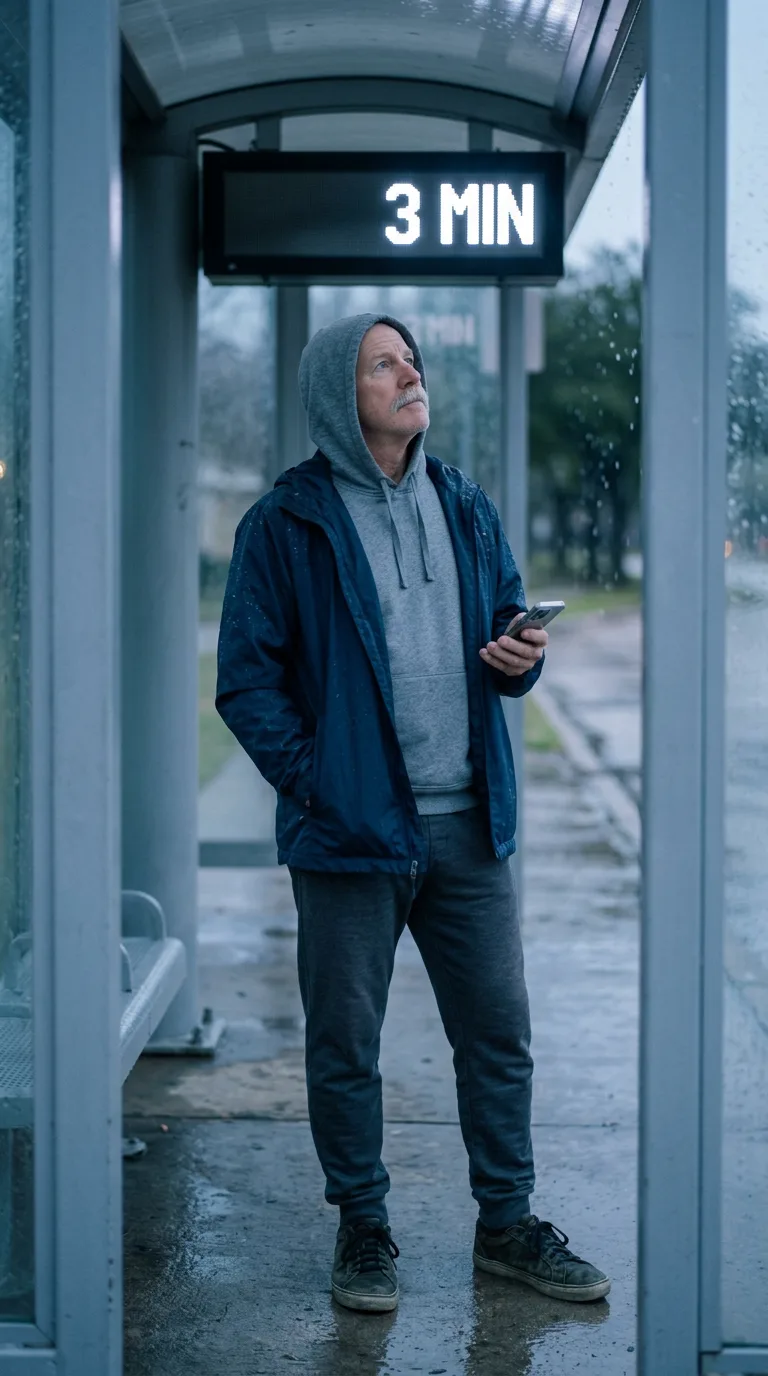
Rarest thing about him: Buddhist — common, 1 in 49
Season 1seed 1632926617 · engine v11
Character card
lineage KEPHG1
His body-swap story
@colby.streeter, wearing Curtis Halvorsen, rolled the wheel on and woke up as Warren Ostrander, spent 38 minutes in him, then spun the wheel and woke up as Denny Faucheux
You have been Curtis Halvorsen for two minutes, and already you know it was a mistake.
Not the body — the body is good, better than most of what the wheel has ever handed you, thirty-five and broad through the shoulders, a beard still damp from the shower, forearms that ache pleasantly the way a man's do when he has spent years being useful with them. You are standing in his kitchen in Anchorage, dark outside the window because it is always dark here this time of year at this hour, and there is sawdust in the creases of his knuckles and a mug of black coffee going cold by the sink that he has not touched since you arrived in him. His life is sitting right there behind his eyes, unclaimed, an offer you have not opened yet — a woman's photo on the fridge held up by a magnet shaped like a halibut, a call log with someone named Dutch in it three times this week, a body that knows exactly how to swing a hammer without being told. Two minutes ago this felt like enough. It still might be. But you have spun seventeen times before this one, and you know the particular flavor of the itch, the one that has nothing to do with what you have and everything to do with the fact that you can still feel the shape of your own decision to spin again sitting undigested in your chest, like you skipped a step, like the last one doesn't count until you've done it once more on top of it. It isn't boredom exactly. It's closer to checking that a door is locked when you already know it is. So standing in a stranger's kitchen, in a stranger's undeserved strength, you open the laptop that isn't yours, find the site that is always exactly where you left it, and you spin.
The rain arrives before you do — no, you arrive inside the rain, already falling on a face tipped up into it, water running warm off a chin gone gray with a moustache that is not yours and never was. You have his height now, or the lack of it, five-seven and stocky through the middle, standing in runoff up past his ankles with his hood shoved back off a bald head that has no business being bare in this weather and doesn't seem to mind. His arms are down at his sides. His phone is somewhere — his hand finds it in his jacket pocket by habit before you've told it to — and the bus shelter is behind you both, the sign inside it still counting down a number that no longer matters, because he has stepped out from under it and is not stepping back.
The jacket is the first thing that talks. It's a navy shell, cheap and good, zipped to the throat, and the second your — his — hand brushes the zipper pull you get an afternoon at a Ross on Bissonnet, fluorescent and half-empty, turning the tag over twice because thirty-four dollars used to not be a number he'd have thought about. That's new, that thinking-about. There's a flash under it, quick and gone, of a desk with his name on a little plastic placard, a headset, seventeen years at the same logistics company, laid off in a round of forty people in March with a severance check that felt like a joke by June. He has not told anyone how much of the day he now spends waiting for buses he doesn't strictly need to take, just to be somewhere other than the kitchen table and the laptop and the cursor blinking in a box that wants him to explain a gap in employment like it's a wound he did something to earn.
The hoodie under the jacket is his, worn thin at the elbows, and it gives you mornings — a whole rack of them, identical enough to blur, him standing in a bedroom that used to have someone else's clothes in the closet too, before Diane, before the two years of that, before it ended the ordinary sad way instead of any interesting one. No one who still matters. He believes that sentence more than he wants to. He pulls this exact hoodie over his head most days now the way another man might pull on a uniform, and there's a strange comfort files in behind it — a meditation app closed halfway through a ten-minute session because the guy's phone buzzed with a spam call, a small shrine on a bookshelf that nobody visits with him, incense burned down to nothing, a discipline he keeps quietly and without an audience because an audience was never the point.
His sneakers are soaked through already, black canvas gone black-black with water, and standing in them you get his feet — flat, a little too flat, the kind that used to ache after a full shift on a warehouse floor, and don't anymore because there hasn't been a floor to stand on in months. His hands are cold and neither of them is in a pocket. You feel, distantly and completely without being asked, the habit underneath the stillness: nails bitten close, an old smoker's twitch that used to reach for a pack and now reaches for nothing, four years quit and the reaching never fully stopped, just changed targets. Right now it has nowhere to go at all, so it's just his hands, open, empty, turned up a little into the rain like the rest of him.
And the rain itself is the loudest thing he owns. It is running down a face that used to duck away from weather like this, and doesn't anymore, and somewhere in that not-turning-away is the whole shape of the last six months arriving at once — the mornings he stopped setting an alarm for anything except the one interview a week he still, barely, gets; the frantic scroll through listings that all want ten years of experience for money that wouldn't have covered his old rent; the small, stupid mercy of a bus stop with a roof, three minutes out, that he has started standing under not because he's in a hurry to go anywhere but because it's dry and it's paid for and nobody asks him to explain himself while he's in it. He has been, without deciding to, practicing not minding things. The water. The waiting. The cold. He has gotten good at it in a way that looks, from outside, like patience, and feels, from in here, like something closer to letting go finding its dry run.
You look down. The hands are his — pale, blunt-fingered, a white scar of a cuticle where a nail used to be — and for a second they don't feel like they belong to you at all, which is correct, because they don't, not really, not yet, maybe not ever in the way the last one's hands started to. You turn one over in the rain and watch water run off across the lifeline like it's trying to erase something. Then you lift your eyes off it, up and out through the wet, into whatever is watching.
"Guess I get to start over," you say, in his voice, and you don't know yet if you mean him or you.