Curtis Halvorsen
Fictional. Generated by AI — not a real person, and no likeness of one is intended.
35, carpenter in Anchorage · rolled by @colby.streeter · card — no film
History
who has worn him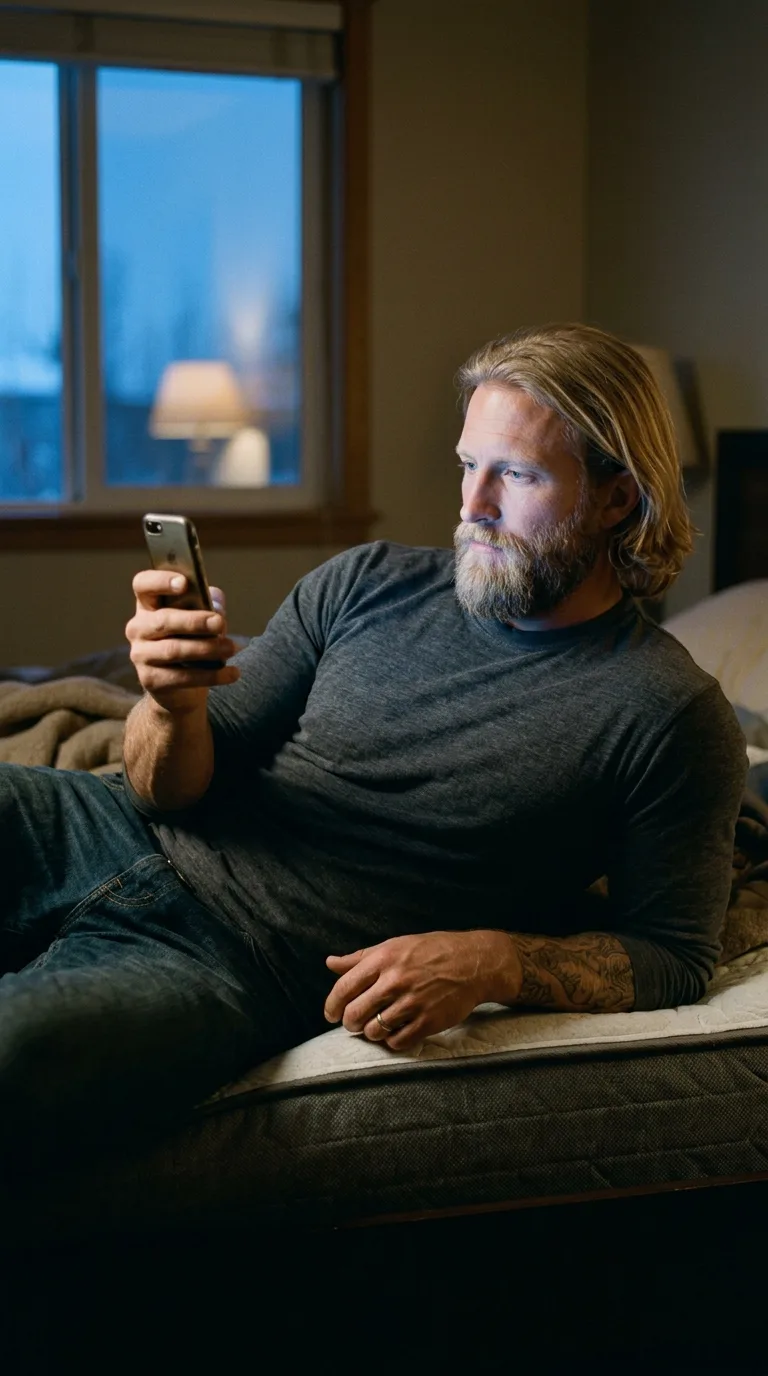
Rarest thing about him: Anchorage — common, 1 in 42
Season 1seed 920063605 · engine v11
Character card
lineage KEPHG1
His body-swap story
@colby.streeter, wearing Colby Streeter, rolled the wheel on and woke up as Curtis Halvorsen, spent 2 minutes in him, then spun the wheel and woke up as Warren Ostrander
---
Colby Streeter's shift starts in forty minutes and his back already aches from a bed too thin for a body carrying fat over muscle, and that's the thing you keep noticing, twenty-four minutes in — the ache. Not the freckles, not the goatee catching on the pillow, not even the size of him after the last one, some rangy thing that ran fast and didn't hurt anywhere. This one hurts in the shoulders already, before work, before anything, and you're lying in his dark rented room in Rural Texas doing the math on eight more hours of pulling boxes off a line in a body that complains before it's asked to do anything. You didn't spin for this. You spun last time for something else entirely and got handed a warehouse and a bad mattress and freckles you don't want. Twenty-four minutes was enough to know. Your thumb is already moving toward the phone on the nightstand before you've admitted it to yourself.
The site loads the way it always does, patient, the wheel just sitting there being a wheel, and you pay and you spin and there's no drumroll, no pause, nothing — just the number registering and then
—the phone is warm and close, six inches off your face, and it's not Colby's phone, it's not Colby's hand holding it, the thumb under your borrowed will is already moving again, faster than whoever this was had it moving, flicking past a photo of a dog, past a group text, past a woman named Renee mid-sentence, and the room around you is dark and cold in a way Texas never got dark and cold, blue coming off the window like the whole sky outside is made of ice, and you are lying on your side on top of a bed too big for one person, and your shoulder against the mattress is heavier than it was a second ago, wider, and there is a beard against your own collarbone that you can feel without seeing it.
The shirt is the first thing. It's thin, worn-soft cotton against your back and it comes with a full morning attached — not this morning, some morning months back, pulling this exact shirt over his head in a house that smelled like coffee and cut pine, his daughter's cereal bowl still on the counter, his wife Dana already gone to drop her at school, the quiet of a house with just him in it for twenty minutes before the truck. His shoulders rolling the sleeves back the way they always do, muscle memory older than thinking, because this body has spent fifteen years lifting things heavier than itself and knows exactly how to carry weight without being told twice.
The phone in your hand is warm from his palm and it gives you Renee's name and a flood that isn't sequence so much as weather — a wedding in a backyard nobody could afford, two years of trying to be married to someone he loved and couldn't live inside of, the specific silence of a car after a fight, and then, later, better: Dana, steadier, the two of them building something slower and less like a fire and more like a house. A daughter. A hospital room smell that comes up out of nowhere and sits behind your eyes for a second, gone before you can hold it.
Your legs know the cold outside this room without you looking at a window — Anchorage in early dark, a shift that starts before the sun bothers to, framing walls on a slab while your breath fogs and the nail gun's hose drags behind you like something alive. Your hands, when you notice them, are calloused in a specific pattern along the first two fingers, a carpenter's hand, blond hair on the forearm gone pale in this light, and there's a ring on the left one, plain, warm from his skin, and it comes with Dana's face turned up at him in a kitchen doorway, unremarkable, ordinary, the kind of moment you only get if you've had ten thousand like it.
Under the blanket your body is bigger than the one you left, thirty-five years settled into it easy, muscle without vanity, an ache starting low in the back that belongs to a man who has knelt on plywood for two decades, and none of it complains the way Colby's shoulders did. This one is tired in the way of use, not neglect. It feels, for a second, almost like enough.
You sit up. The room keeps its blue light on your cheek. You turn your hand over in front of your face, palm up, seeing the calluses like they're new information, which, to you, they are.
"Hell of a Monday," you say, to no one, and you don't know yet if that's true, or how many mornings you get to find out.