Warren Kimo Dillard
Fictional. Generated by AI — not a real person, and no likeness of one is intended.
56, water treatment operator in Honolulu · rolled by @tyler.brandon.kessler · card — no film
History
who has worn him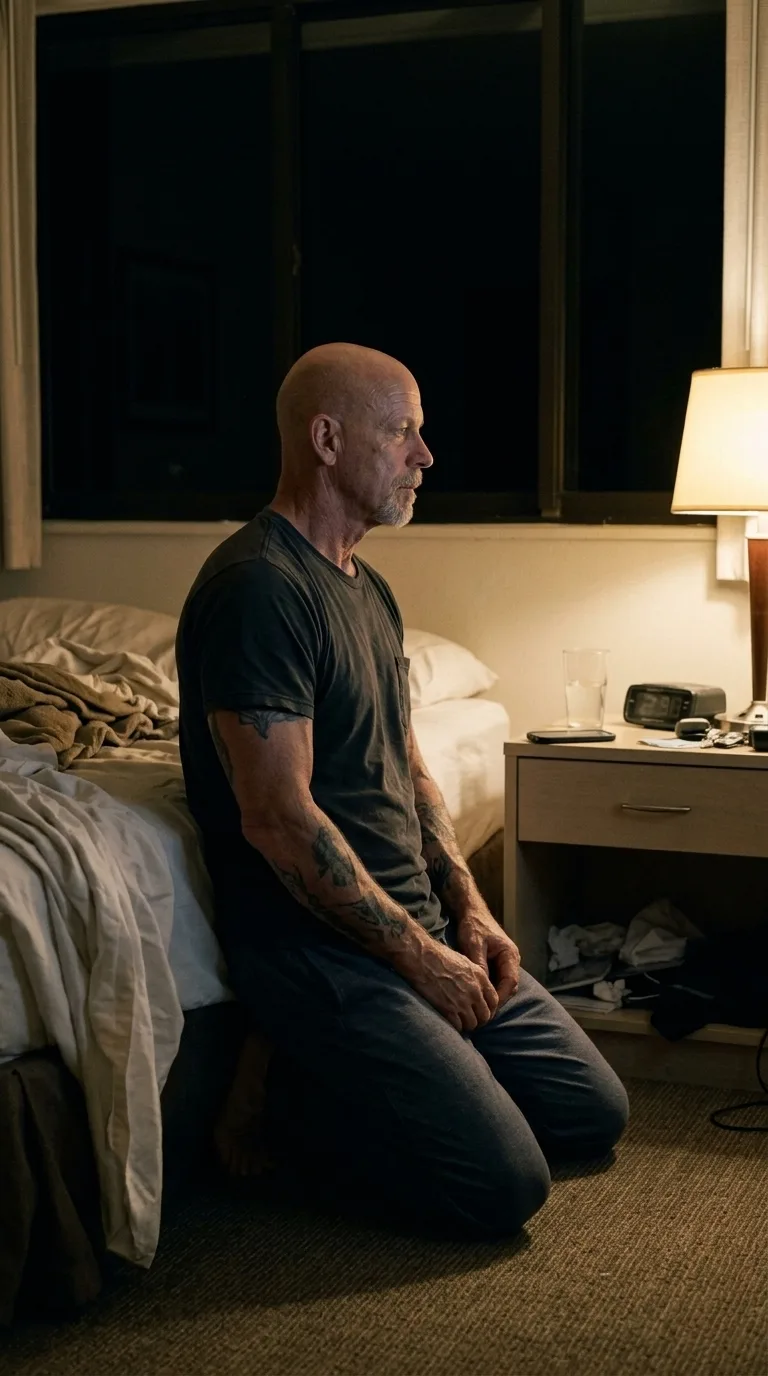
Rarest thing about him: Water treatment operator — uncommon, 1 in 848
Season 1seed 1200726726 · engine v11
Character card
lineage OZ80W3
His body-swap story
@tyler.brandon.kessler, wearing Neil Francis Garrity, rolled the wheel on and woke up as Warren Kimo Dillard, spent 3 minutes in him, then spun the wheel and woke up as Danny Truong Vo
You are standing in Neil Garrity's kitchen with his coffee going cold in his big cooked hands, and the thing that sent you back is the burn on his forearm. It is nothing. A shiny pink stripe from a sheet pan, three days old, and every time the sleeve of his whites brushes it the whole bright line of it sings. Forty-four years of knees and wrists and a shift that ends at midnight and begins again at ten. You have been him for an hour and six minutes. In that hour you reached for the knife block and his hand knew a thing yours never could, and you stood there holding the knowledge like a stranger's wallet. Somebody else's competence, and nothing in it for you. You wanted to be a man who did not already know where everything was. You wanted to not know. So you put the coffee down, and you open the page, and the wheel is already turning.
Then the kitchen is gone and you are on your knees.
Carpet under both kneecaps, rough and warm. Your breath is halfway through a laugh that is not yours, and the laugh dies in your chest like a dropped plate. Your forehead comes down onto a bedspread that smells of cotton and a fan and an old sweetness, laundry soap, and the dark window ahead has a lamp burning in it. The clock on the nightstand glows. The house is asleep. You are fifty-six and something in the left knee says so at once, loudly, a hot wire through the joint.
The t-shirt is the first thing that talks. Thin cotton, worn soft as skin across your shoulders, and with it comes a morning: his thumbs working the buttons of a plaid shirt that will not stay, because the shirt is the one he wears over everything, and the boots by the door, white rubber gone gray, the red dirt of the yard drying on them. Not tonight's morning. Some morning. He stands in a hallway of bare boards and checks his pocket for gum, always gum, a stick folded in half and into his mouth before the door is even locked, and the chewing is a small private metronome that keeps the day from getting too big. Your jaw is working now. There is nothing in it. It is chewing air, and the habit is so deep it is almost a comfort.
The carpet gives you another. A white glare on a tin roof, a walkway over a basin where the water turns white and loud beneath his boots, and the pride of it, quiet and unembarrassed: nobody thinks about what he does, and everybody drinks it. He thinks about it. Chlorine on his hands like a second skin. You flinch from the smell that is not in the room.
Your fingers are laced loosely together and you let them stay. Under the right thumb, a ridge of old tattoo. A portrait in black and gray along the forearm, a face you do not know, and the touch of it opens something that is grief rather than memory, dull and enormous and not yours. A woman, or his mother, the eyes done carefully by a man who took his time. He prayed in front of this face and did not tell anyone. He prayed tonight not very seriously, the way you tap a doorframe passing through, because his mother's church taught him that you do, and some nights the habit is the faith. You feel the grin he had on his face, the gap in the front teeth, his tongue finding it, and the amen he rushed because he was a little embarrassed to be heard even by nobody.
You push up off the bedspread. The knee complains. Your thighs are strong, a thick sure engine, and your back keeps its own ledger of lifted buckets. Your scalp is bare and cool against the room's air, and when you rub it, the stubble of the goatee under your lip is bristle, wiry, gray. You press your tongue to the gap. It is a window. Wind could get through it.
You look at your hands. Broad, scarred across the knuckles, steady. Tattooed vines up the wrist. You turn them over, palms up in the lamplight. Neither of them has ever held a knife for you.
You lift your eyes to the dark glass, where a bald stranger kneels with your face on, and you say, hoarse, "Okay. Hello, Warren."
The clock says it is the middle of the night. Somewhere, a wheel waits, and you do not know whether you will be this man by the time the sun comes up over the red yard, or only until the wanting finds you again.