Neil Francis Garrity
Fictional. Generated by AI — not a real person, and no likeness of one is intended.
44, line cook in New York · rolled by @tyler.brandon.kessler · card — no film
History
who has worn him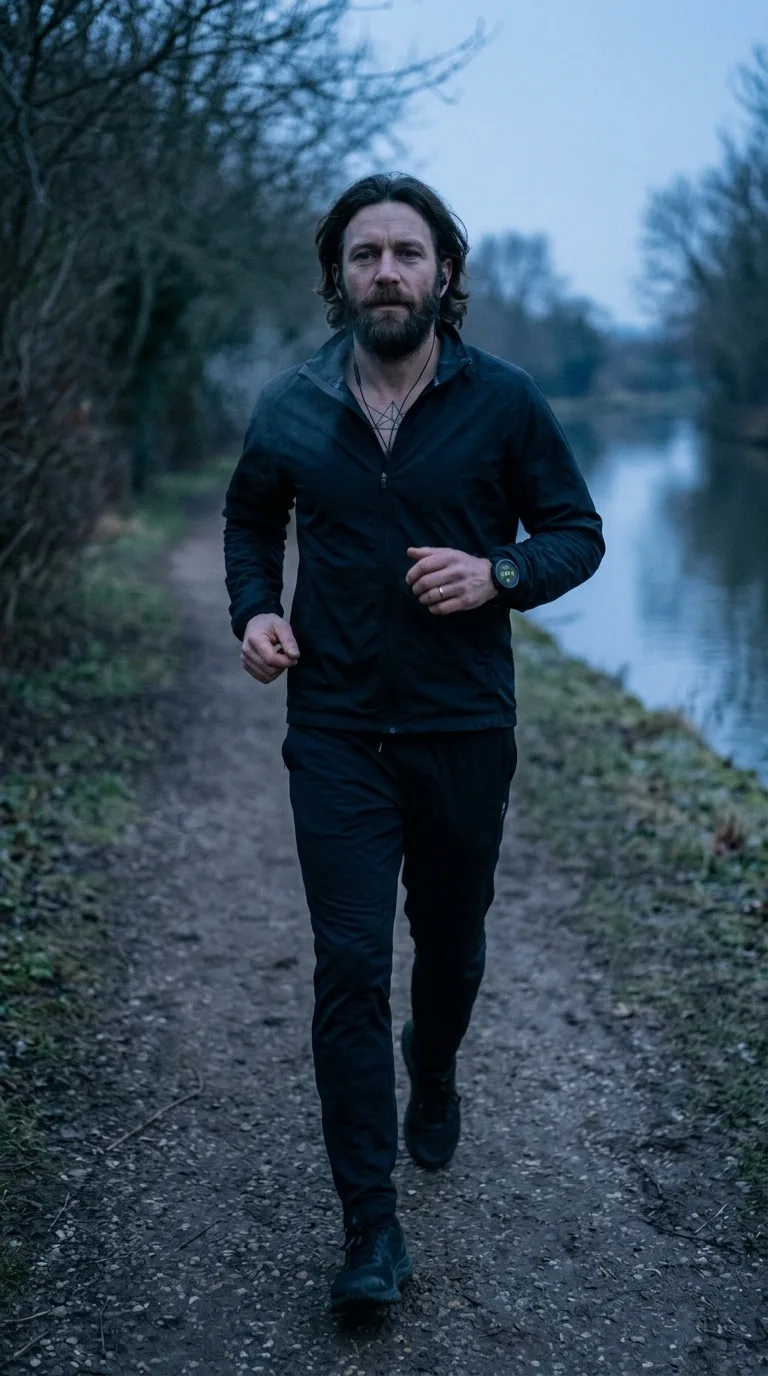
Rarest thing about him: Vapes socially — common, 1 in 44
Season 1seed 218427174 · engine v11
Character card
lineage OZ80W3
His body-swap story
@tyler.brandon.kessler, wearing Peter Lindqvist, rolled the wheel on and woke up as Neil Francis Garrity, spent 1 hour in him, then spun the wheel and woke up as Warren Kimo Dillard
You are leaving Peter Lindqvist because of a phone. It lies face-down on the nightstand in the dark of his Chicago bedroom, and an hour ago you turned it over and read a message from a nurse named Dana, three words long, asking if he was okay. You did not know. You did not know who Dana was, or what the last shift had been, or why her three words sounded like grief. His dimples meant nothing to you. His anesthesiologist's hands, steady and exact, could put a stranger under and bring them back, and could not tell you what she meant. Three days and eight hours of being him, and that was the wall. A man's life does not come with the man. Everyone asleep, the radiator ticking, you stand at the kitchen counter with the screen lit, and you pay, because the wall will not move and you can leave it.
The wheel turns. Nothing goes dark.
You are running. Breath goes out of you in a white rag. Your left foot is coming down and does not land: a stumble that never happens, and the right foot takes the weight instead, and the stride goes on. Cold canal air, a gravel path, bare branches combing the gray. Something small and hard buzzes at your wrist.
Your arms are lower than the last body carried them. Your head stays still. A thin earbud wire is in your ears, and there is a voice in it, a man talking about nothing, and you let it go on.
The jacket is slick nylon, and it holds a morning. The zipper's cold teeth bring it up: a kitchen at two in the afternoon, a rack of sheet pans, and his wife's thumb pressing the collar flat while she says something about the boys' shoes. His feeling is a plain, tired gladness, the kind that never asks to be named. The cord at the waist of the pants gives you the knot he ties each dawn, double, because once it came loose on a bridge. The shoes have the canal in them, a hundred mornings of it, and under that a fourth-grade son asleep against his arm in a pew, the hymn going over both of them. He believes. It is not loud in him. It is a floor.
The pendant against your breastbone, a fine thin triangle of lines, brings a dim room and a woman laughing with her back to him, a long time ago, a woman who got away. The ache arrives and is old, tended, and put down again. His marriage did not take it from him. He simply carries it, the way a cook carries a burn scar.
Your knuckles want to crack. His hands do it without asking, a small pop as you close the fingers, a habit as deep as breathing. You feel the work in the forearms: a thousand onions, a hot pan's weight, the line at nine o'clock when the tickets will not stop. Money is thin. The rent is thin. His calves are tight, his lungs are good, his knees are forty-four. The beard is warm against the cold.
The watch buzzes again, a split you never held.
You look down at your hand, the ring pale on it. You turn it over. You lift your eyes and say, to the gray water, "Mine for now."
Somewhere under the next breath, the question is already waiting: how long.