Warren Eugene Tidwell
Fictional. Generated by AI — not a real person, and no likeness of one is intended.
56, physical therapist in Nashville · rolled by @danny.reyes · card — no film
History
who has worn him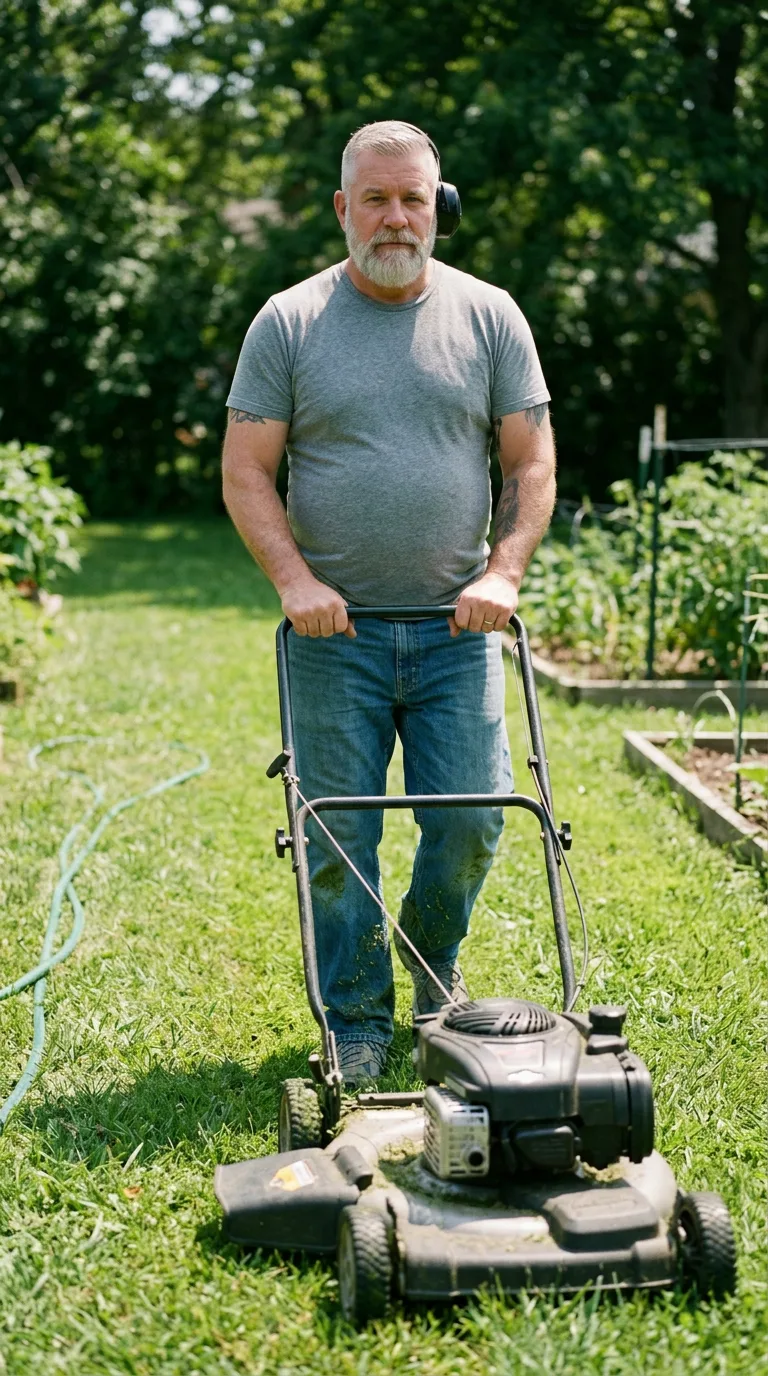
Rarest thing about him: Physical therapist — uncommon, 1 in 839
Face-off rating 1500 · not ranked yet
Season 1seed 1358276205 · engine v11
Character card
lineage QCQIOJ
His body-swap story
@danny.reyes, wearing Rubén Salazar Ochoa, rolled the wheel on and woke up as Warren Eugene Tidwell, spent under a minute in him, then spun the wheel and woke up as Gordon Lyle Haskins
You are Rubén Salazar Ochoa for less than a minute more, and you already know it was a mistake to be him.
It is the hour after lunch in Houston, and you are sitting on the edge of a bed that is not yours. The air conditioner ticks. The wedding ring on this left hand is a thin gold rub of someone else's promise. You have been him for the length of one cigarette you have not smoked, and what sent you back is small: a lunch plate set down by a woman who called you mi vida, and your whole chest went hollow, because it was not you she was calling. The wheel gives you the man and nothing else. You are wearing a stranger's wife's kindness like a borrowed coat, and you want something with no one waiting in it. You thumb the page. The wheel turns. You let go of Rubén Salazar Ochoa the way you step off a curb.
The engine drops a note and catches.
You are halfway down a lawn behind a push mower, and the handle is hot and trembling under both palms. Clippings are stuck wet and green to your shins. One earmuff has slid off an ear, so the world arrives in two volumes, a roar on the left and birdsong and a far-off bass line on the right. The sun is heavy on the back of your neck. The loose earmuff is nearly in your hand, and your hand puts it back over the ear, unhurried, without being asked.
Then the memories come, through whatever you are touching.
The mower handle first. The grip is rubber gone tacky, and it gives you a Saturday: a man, this man, Warren, lining up the first pass along the fence, the way his father taught him. A straight row is a kind of apology, his father said. Warren never found out what for, but he has mowed straight for forty years. Your eyes go down the green stripe in front of you and see every row he ever cut crooked beside it, the ones from the bad winter, the ones after the funeral.
The shirt against your back is soft gray cotton, washed thin. It gives you this morning in his hands: the drawer that sticks, the left sleeve first because of the shoulder, the hem tugged over a belly he has made peace with. Jeans after, the old ones, the pair he keeps for grass. A boyfriend's voice from the kitchen: "You're wearing those again?" Warren laughing, his whole chest, a sound you have never made. The man in the kitchen has a name, and it comes up warm in your mouth like coffee. You do not say it.
Your feet are in worn sneakers that remember the rehab gym. Parallel bars, rubber floor, a woman in her seventies taking four steps and then crying. His hands know the exact weight of a person leaning on them. They know where to hold a hip, how to keep a patient upright without letting them feel held. That knowledge sits in your palms like heat. Your knees ache, the right more, a dull stair-step ache that he stopped noticing years ago. Your lungs are clear, but they remember cigarettes the way a tongue remembers a pulled tooth. Your forearm itches where a tattoo is: a face, black and gray, someone he loved before the man in the kitchen. You do not touch it. It is warm in the sun, and the ache under it is not in your body.
A thing nobody knows about him: on slow nights he drives to the alley behind the honky-tonks, where the neon bleeds pink onto wet brick, and he stands there not drinking, just listening to bands he does not like play songs he does. He is well off and quiet, a good man to nobody's surprise. He cannot say what he is waiting for there. You can feel that he was never waiting for you.
Then it stops, and it is only grass and engine and your own breath, deeper than Rubén's, slower.
You let go of the handle with one hand and look at it. Square fingers, a gold ring, a tan line, grass dust in the creases. You turn it over. Palm, then back. Then you lift your eyes to the light.
"Well," you say, in a voice with Tennessee in it. "Hello, Warren."
The engine runs on under you, patient. You wonder how long this one lasts, and when the wanting comes back, and whether you will still be standing in this grass tomorrow.