Walter Przybylski
Fictional. Generated by AI — not a real person, and no likeness of one is intended.
57, construction laborer in New York · rolled by @glenn.aldercy · card — no film
History
who has worn him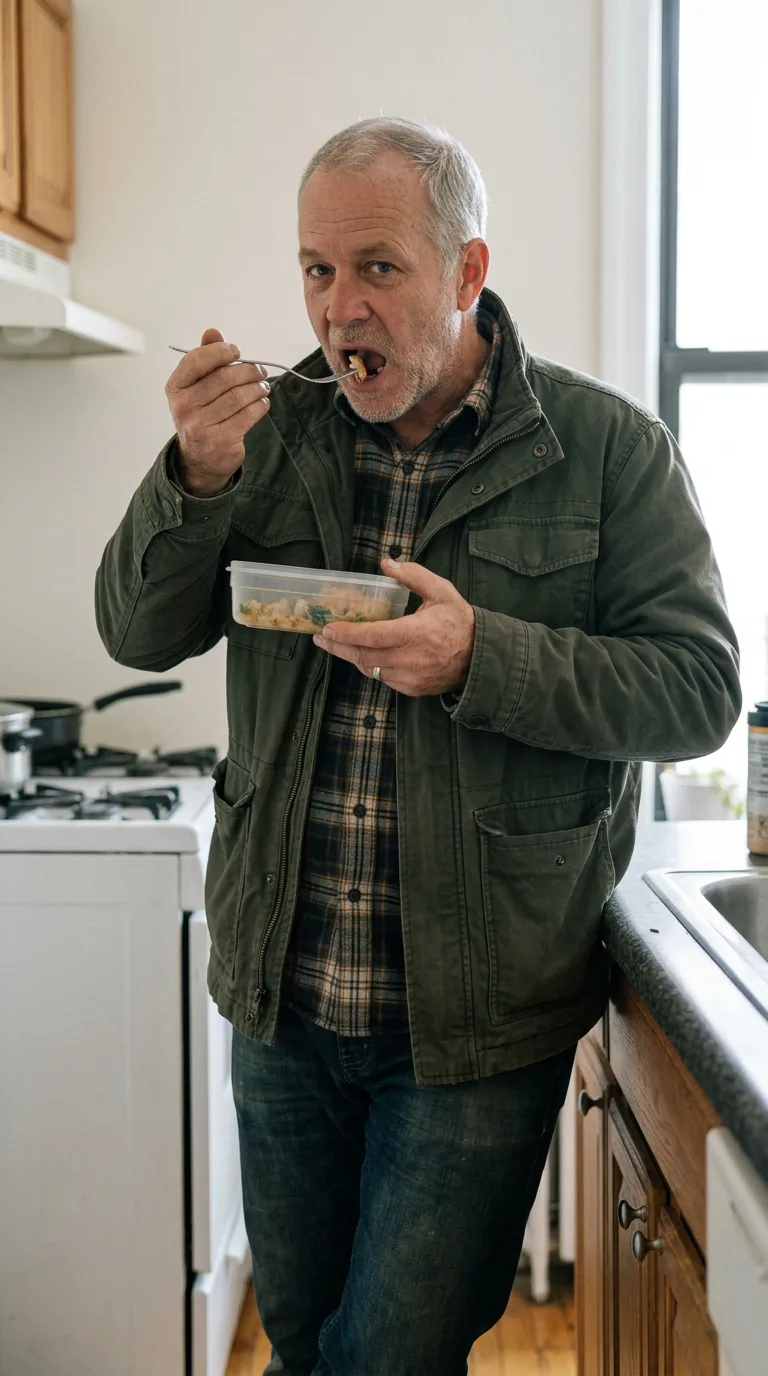
Rarest thing about him: A missing front tooth — uncommon, 1 in 158
Season 1seed 554144534 · engine v11
Character card
lineage EU5SNZ
His body-swap story
@glenn.aldercy, wearing Gerald Whitfield, rolled the wheel on and woke up as Walter Przybylski, spent 1 minute in him, then spun the wheel and woke up as Craig Dillenbeck
---
Gerald Whitfield's hands are not good hands. That is the thought sitting in you, in him, in whatever the two of you have become in two minutes, standing at the kitchen counter of a house in a small Ohio town, the Sunday light coming flat and gray through a window over the sink. These hands are sixty years old and swollen at the knuckle, and the left one aches in a specific, practiced way that belongs to Gerald and not to you — some old injury helping third-graders off a bus, a door that closed wrong once in 2004. You have been him for two minutes and already you know you are not going to spend an afternoon learning to love that ache. There is a card in your other hand, Gerald's phone really, screen already open to vessel.cards, because some decisions get made before the body cools around you. You do not examine why today and not yesterday. It is not boredom with him, not exactly — it is more that two minutes was enough to know how the rest of this one would go, the aide's lounge, the lunchroom smell, the long slow afternoon of being a kind, tired man near the end of something. You want the version of a life that is still being decided. You press pay. You spin.
The wheel turns somewhere behind your eyes and the kitchen in Ohio is gone before you feel it go.
You are standing. There is a counter under your forearm, cold laminate, and a fork is coming up toward a mouth that is not yet entirely yours — then it stops a half-inch from his lips, hangs there a second like a held breath, and comes back down into the container with a small plastic knock. A coat is still on your shoulders, heavy, canvas, smelling of cold outside and someone else's sweat gone dry. You feel the window in front of you before you see it — dark already, or going dark, light bouncing back your own reflection instead of a street. You shrug the coat off one shoulder and then the other, and it drops onto a chair behind you without your watching it fall, an old motion, not yours, already finished before you decided to make it. You sit. There is rice in the container, chicken, something green gone soft, and you eat it in even mouthfuls, looking at nothing in the glass, the fork going up and down on its own rhythm while the rest of him comes up through everything you are touching, all at once and in pieces.
The jacket on the chair behind you gives you first: olive canvas, four pockets, a zipper that sticks a third of the way, and a cold morning eleven — no, more than that — hours behind this one, pulling it on over the plaid shirt because the plaid shirt by itself wasn't enough for a six a.m. that still had ice on the scaffold rail. The sleeve remembers going in wrong, catching at the elbow, him swearing low enough that nobody on the crew heard it, a small private irritation at a jacket that was always a size too snug through the shoulders because his wife bought it two Christmases ago and he never said anything, because you don't tell her his neck's gotten thicker, not after thirty-one years, not when she still folds his undershirts into the drawer herself.
The fork in your hand gives you more: his hand, this hand, which knows a shovel the way it will never again fully know a dinner table, the calluses sitting right where the handle wants them, a half-missing fingernail on the right thumb from a come-along cable two summers back that never grew back quite flat. The hand is fifty-seven years old and strong in the particular way that outlasts the rest of a man — wrist thick, grip sure, the forearm still ropy with the kind of muscle that doesn't come from a gym, that comes from a trench beside a mini excavator, from spoil piled waist-high and a shift that doesn't end because the hole does. Today the hole ended early. Sunday crew, half-day, out by eleven, home before the mosque crowd even let out down on Fourth, though he hasn't made it there himself in longer than he says out loud. He tells people he prays at home now. He mostly means he thinks about praying, standing at this counter, which is its own kind of true.
The ring is the one that opens the widest door. Plain gold, worn thin on the inside where it rubs, and through it comes Yasmin — thirty-one years, a wedding in a hall in Bay Ridge with folding chairs and too much food, her laughing at him for chipping that front tooth two years into the marriage on a dropped length of rebar, him laughing because it was the kind of thing you had to laugh at or you'd mind it forever, the gap when he smiles now just part of his face, the thing people remember him by at the yard. Three kids raised up through this apartment and the one before it, grown and scattered now, one of them calling tonight probably, Sunday is the day they call. And under the ring, quieter, something that isn't Yasmin: a name he doesn't let himself think toward on purpose, a girl before her, twenty-two years old once in another kitchen, in another decade, gone sideways out of his life the ordinary way people go, and still there anyway, the way a before always is, filed somewhere he visits maybe twice a year and never tells anyone he's gone.
The counter under your other hand gives you the money, oddly — not a number so much as a feeling of weight, of accounts that don't scare him, a house that's his outright, decades of overtime stacked into something nobody at the yard would guess from the dirt on his boots. He has never once told a coworker what the house is worth. He likes it that way.
And the body under all of it: fifty-seven, average build going soft at the middle the way men do who used to be only muscle, lower back that announces itself every morning before the coffee does, knees that know the trench is coming before his mind has agreed to go down into it. Strong still, stronger than he looks in a shirt, the kind of strong that surprises people half his age on a job site. Thinning hair under a hardhat he isn't wearing right now, stubble two days gray along a jaw that chews steady, patient, a man finishing a meal he didn't especially taste.
You look at your hand — his hand — turning it over above the empty container, scarred thumb, swollen gold band, dirt still ground into the creases that no sink has gotten out all the way in fifteen years. You lift your eyes off it, into the dark window, where his reflection is the only face in the room.
"Didn't even taste that," you say, out loud, to no one, in his voice, and you don't know yet if that's the last true thing he ever says or the first thing you ever will, wearing him, with no idea how long this Sunday is going to be yours.