Gerald Whitfield
Fictional. Generated by AI — not a real person, and no likeness of one is intended.
60, teacher's aide in Small-town Ohio · rolled by @glenn.aldercy · card — no film
History
who has worn him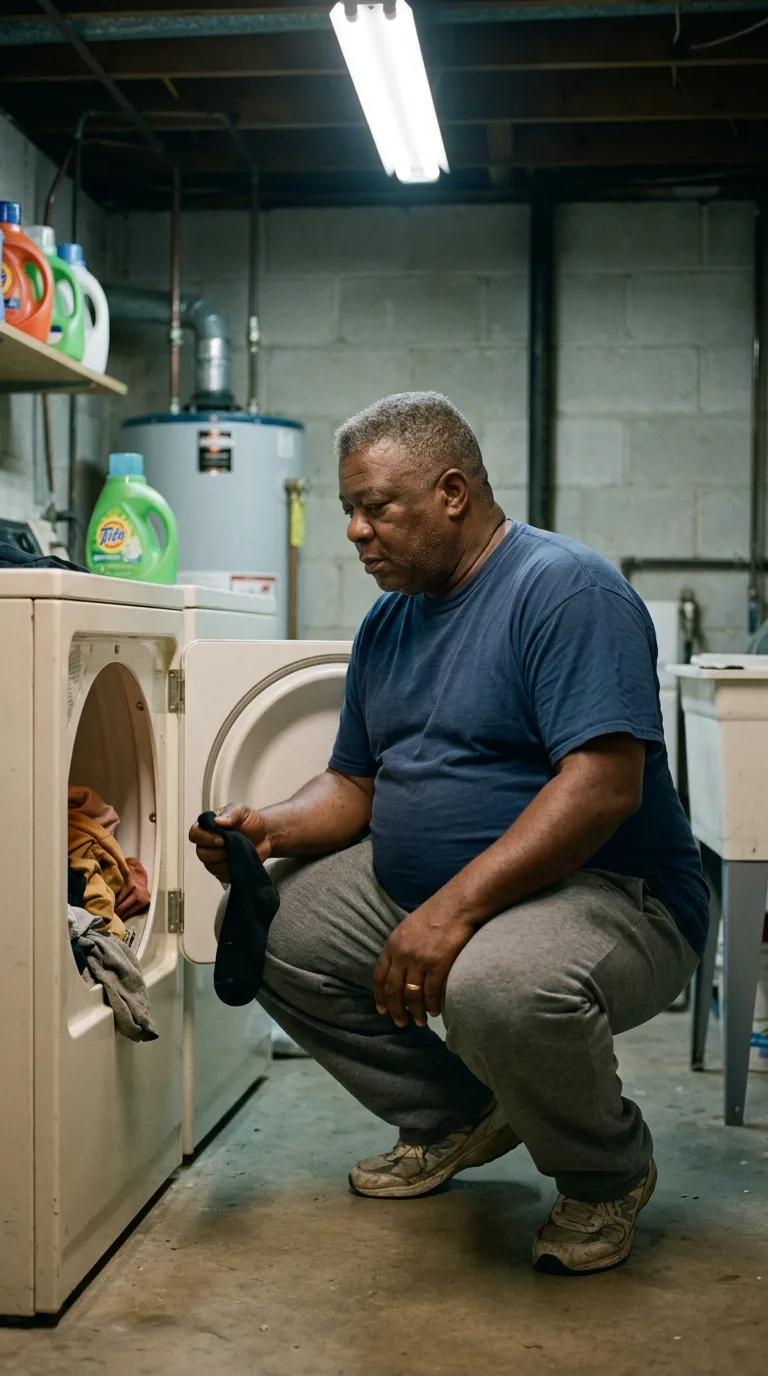
Rarest thing about him: Teacher's aide — common, 1 in 313
Season 1seed 1086571235 · engine v11
Character card
lineage EU5SNZ
His body-swap story
@glenn.aldercy, wearing Ruben Castellano, rolled the wheel on and woke up as Gerald Whitfield, spent 3 minutes in him, then spun the wheel and woke up as Walter Przybylski
---
Sunday noon, and Ruben Castellano's knees ache on the subway stairs before you've even decided anything. Twenty-three hours and thirty minutes in this man — the dad bod, the delivery bag strap worn into his shoulder like a brand, the gray in his short beard that itches when the weather turns. He's fine. He's a good body, actually, better than fine: strong back, easy appetite, a radio in the van that plays salsa he actually likes. But you did two drop-offs this morning in his skin and felt the specific tiredness of a man who has done this exact route eleven thousand times, and somewhere between the second floor walkup and the double-parked van you thought: not this again, not today. Not boredom exactly. More like standing in a hallway you've already memorized. You find the site on his phone, thumb still remembering the cracked corner of the case from some argument years before you arrived in him. You pay. You spin.
The wheel is still turning somewhere behind your eyes when it stops being Ruben's eyes.
You are crouched. Warm air on your forearms. A sock, black, damp-warm, between two thick fingers. Fluorescent light humming white and flat overhead, and under your knees the particular give of old sneakers on a concrete floor. The dryer door is open in front of you like a mouth. Somewhere above, floorboards creak — a house, not an apartment, a whole house over this basement — and the stillness of it, the Sunday-ness of it, lands in your chest before anything else does: this is a day with nowhere to be.
The sock is the first key. It turns, and something turns with it.
Laundry on Sundays, always, because the church clothes need to be ready and Charlene likes the towels done before the Lions game. Forty years of this, near enough — different machines, different houses, same ritual. Your hands — his hands — already know the fold before you tell them anything: shirt laid flat, sleeves crossed behind like arms in prayer, collar up, fold once, fold twice, a crease you could cut yourself on. Habit older than thought. You feel the weight of him now, all of him, settling into you like water finding its level — heavy through the middle, strong through the forearms, a lower back that complains going from crouch to standing and has for about six years. Knuckles that ache in the cold. Nails bitten short and uneven, a thing his mother used to swat his hand for and his wife stopped bothering to mention.
The shirt sleeve against your back — his shirt, the one he put on this morning, you're wearing it now from the inside — gives you the morning whole: Charlene already downstairs with the coffee going, the closet door that sticks, him pulling this same navy tee over his head because the church clothes are for later, after, these are the around-the-house clothes, the comfortable ones, gray sweatpants gone soft at the knee from washing. Putting on his shoes by the door, the left one always looser than the right, a seam gone soft from years of the same foot finding the same shoe.
The wedding band on the left hand is warm from his own skin, and it opens wider than the rest — Charlene at twenty-six in a yellow dress outside a church that isn't the one they go to now; before her, Denise, and the particular silence that still sits between him and Denise at their son's graduations, civil, handled, old. The two kids — grown now, one in Columbus, one still close enough to come for Sunday dinner some weeks — and under all of it, quieter, the classroom: the kidney table, the small chairs, a boy named Marcus who couldn't say his sevens right until October and then one day could, and Gerald Whitfield's own private, never-spoken pride in that, bigger somehow than anything on his own report cards fifty years back.
You feel how his body carries all this without complaint — the heaviness of him is not unhappiness, it's just accumulation, forty years of dinners and holidays and standing up out of chairs. The stubble under your palm when you touch your own jaw without meaning to. The freckles across the nose, which he has had opinions about exactly never, which his mother had too, which Charlene calls "the Whitfield spots" like a family crest.
The dryer's warm mouth breathes its last heat against your shins. You lift the basket. The fold that follows is nothing like what waits upstairs — his own drawer, crumpled, careless, a man who can square a hospital corner for other people's children all week and never once for himself. This time your hands do it right without being asked. Corners square. Seams matched. It feels, for one half of one second, like something achieved.
Then you look down at your own hands — his hands, thick-knuckled, nail beds bitten pink, the band loose enough to turn with a thumb — and you turn one over slow, like checking it arrived whole.
You look up, past the water heater, into whatever is watching, and you say, "Charlene, I'll bring the whites up in a minute" — not to her. To nobody. To the lens of a Sunday that doesn't know yet what's standing in it.