Walter Prussick
Fictional. Generated by AI — not a real person, and no likeness of one is intended.
64, machinist in Coastal Maine · rolled by @marlon.etienne · card — no film
History
who has worn him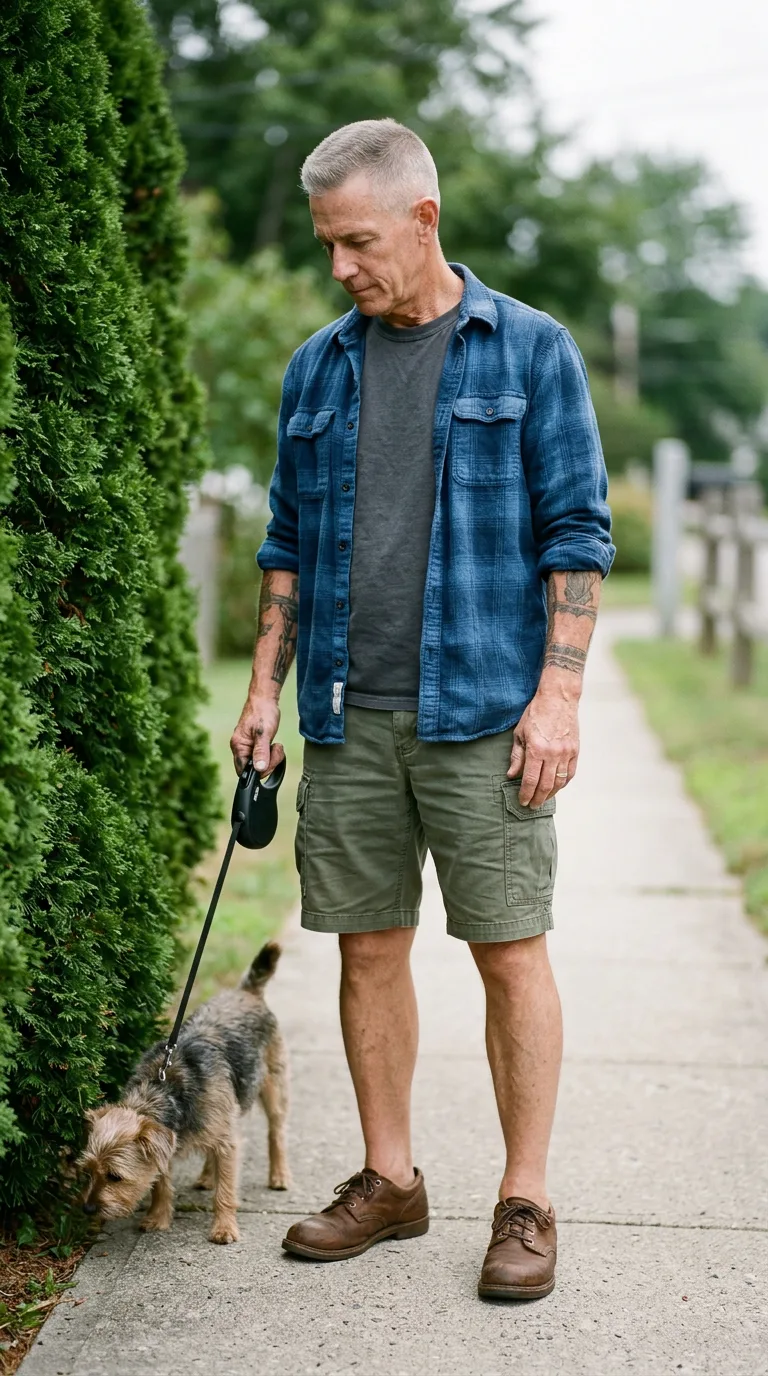
Rarest thing about him: Pipe smoker — epic, 1 in 143
Season 0seed 200352746 · engine v10
Character card
lineage 6PRR5R
His body-swap story
@marlon.etienne, wearing Malik Freeman, rolled the wheel on and woke up as Walter Prussick, spent under a minute in him, then spun the wheel and woke up as Colton Vandermark
The knife has been sitting against the block for eleven seconds and Malik Freeman's hand has not moved. That's what does it — not boredom exactly, more the particular flatness of standing behind a counter at an hour when the walk-in is still ticking cold and the first customer is forty minutes off, holding a boning knife you already know everything about, in a body that has been yours for two minutes and already feels used up. You had this one for two minutes. Two minutes of sawdust-smell and a bad shoulder you hadn't earned and a wedding you'll never attend the anniversary of. That's the thing nobody warns you about the wheel — some of them arrive already spent, already known, and the wanting comes back faster than you'd like to admit before a man's even settled into his own skin. So you set the knife down, take out the phone that isn't yours either, and you go back to vessel.cards while the walk-in ticks.
You spin.
The leash is heavier than it looks, and it stops being slack in your hand mid-thought, the dog's ears already flattening like it noticed something in you before you noticed it yourself. Cold. Not cold like a walk-in — cold like sea-air-through-flannel, gray-morning cold, the kind that sits on forearms with old ink going soft and blue at the edges. Your knees are lower to the ground than they were a breath ago. A hedge smell, cedar and dog and something briny underneath everything, threaded through the whole street. You wind the leash twice around a fist that is not the fist you had. Small hand. Strong hand. Old rings of callus across the palm. The dog looks up, waiting for a decision that isn't coming from where it used to come from, and you start walking anyway, because the legs know how, even if you don't yet.
The shirt is what opens first — old flannel, washed pale, buttons gone soft with handling — and it comes back to you the way a smell comes back before a memory does: Ruth laying it over a chair last night because he'd want it for the morning, her not saying anything about the cold front coming in off the Bay, just laying it there like she's laid a thousand things there over thirty-one years of not needing to ask. His name arrives with the shirt, the way names do, not spoken so much as simply always having been there: Walter. Walter Prussick. He puts it on one sleeve at a time even alone in the dark, out of some habit from a father who wore a uniform, and there's a private, unremarkable pleasure in the middle button, the third one down, the one that always catches, the one his thumb finds without his eyes.
The shorts are newer, a gift, and holding that thought is holding a birthday four months back, Ruth's laugh when he complained they were "a young man's shorts," the paper still in the bag when he wore them out of the store just to make her happy. Cargo pockets heavy with nothing — a rolled poop bag, a spare knuckle of dog treats gone soft with pocket-lint, the little brass compass fob he clips to everything because his father carried one and it means nothing and it means all of it.
The boots are the oldest thing on him and they know the sidewalk before he does — twenty years of concrete and shop floor worn into the same two shapes, steel-toe ghosts under leather that's forgotten it was ever steel-toed at all. Standing in them, your knees remember thirty years of standing at a lathe: steel curling off in bright ribbons around these exact boots, the particular good ache across the lower back that comes not from injury but from having done a thing well and often. There's a name for that ache and men like him don't say it; they just stand a certain way at the sink after, working a thumb into the muscle, saying nothing, same as his own father did.
The wedding band is the loudest thing he's touching and he isn't even touching it on purpose — it's just there, worn thin at the bottom from thirty-one years of a hand closing around tools, and it brings back Ruth whole: not one memory but the sediment of hundreds, her voice through a screen door calling him in for supper decades ago and last week both, indistinguishable now, worn into one continuous sound. And under that, quieter, guiltier, a name that isn't Ruth's — Denise, a version of his life that peeled off sometime in his twenties and kept going without him, still surfacing on nights he doesn't mention, a door he closed and still sometimes puts his hand flat against, not to open, just to feel it's there.
His chest under the flannel does the thing it does at night, the apnea catching him even standing up sometimes when he's tired enough, a held breath that isn't quite his to control, and there's a low, constant, uncomplaining awareness of it, an appointment with a machine he's supposed to use and mostly does. His pipe is at home on the sill, and some animal part of this body wants it now, at this hour, with this cold coming off the water, wants the ritual of the tamp and the first pull more than it wants almost anything else this early — a small, harmless, decades-old hunger that isn't yours and that you feel anyway, foreign and total, like standing in someone else's appetite.
The dog tugs. Small, gray-muzzled, patient with him in a way that suggests years of exactly this corner, exactly this hedge. He does not know his own hand has just been someone else's for the length of an unremarkable morning.
You stop walking. You lift the hand with the ring on it and you turn it over, palm up, and look at the calluses like they're a language you're being handed one letter at a time — this is a hand that has made things, that knows the exact pressure a lathe wants and gives it without being asked, that has held another hand across a supper table ten thousand times without once thinking about how.
You look up, past the hedge, into whatever's watching.
"Well," you say, in a voice you didn't choose and already like better than the last one, "guess we're walking a little further today."
The dog, satisfied, starts off first.