Walter Chiang
Fictional. Generated by AI — not a real person, and no likeness of one is intended.
57, manager (mid-level) in New York · rolled by @connor.waskiewicz · card — no film
History
who has worn him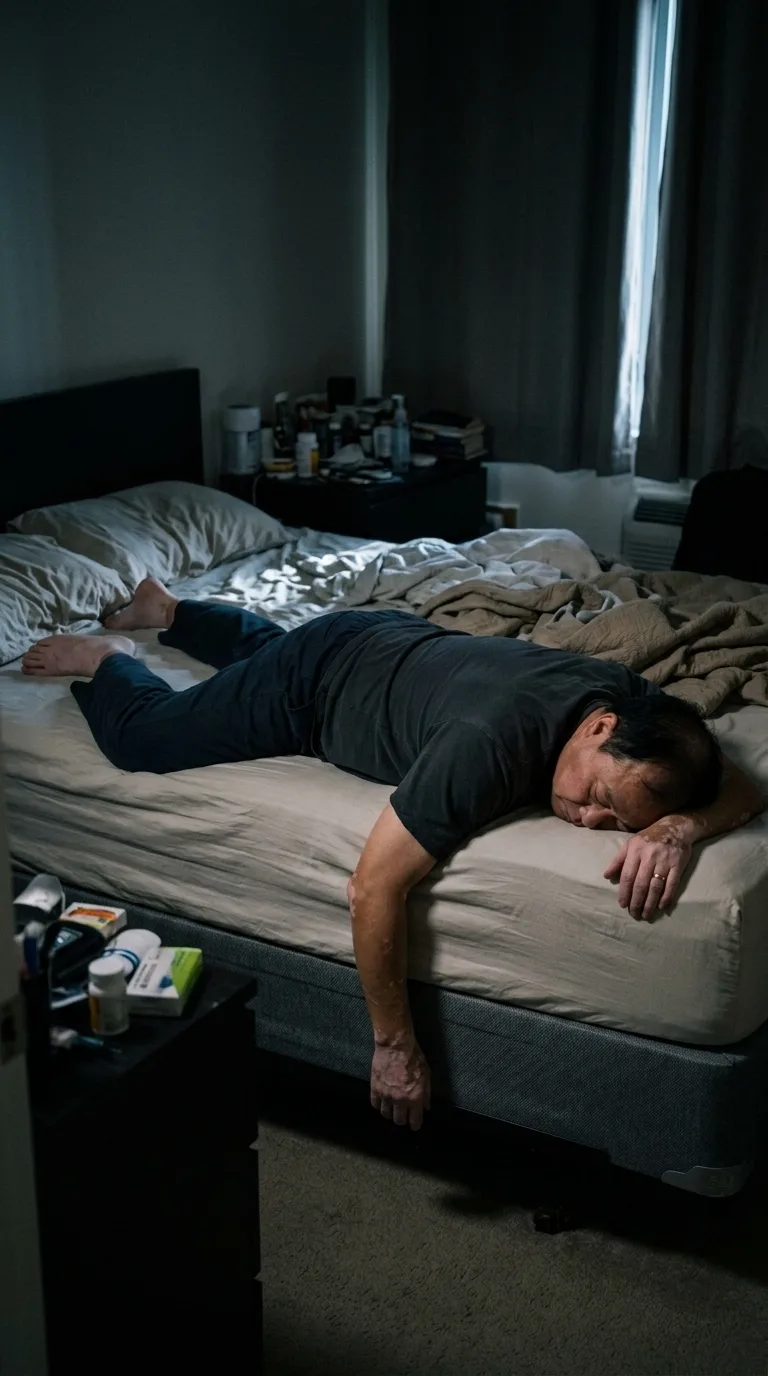
Rarest thing about him: Vitiligo — uncommon, 1 in 123
Season 1seed 947967546 · engine v11
Character card
lineage 2NZHHJ
His body-swap story
@connor.waskiewicz, wearing Douglas Pruett, rolled the wheel on and woke up as Walter Chiang, spent under a minute in him, then spun the wheel and woke up as Mauricio Delgado
You are standing in Douglas Pruett's kitchen in Pittsburgh with the refrigerator door open and the light on your shins. Fifty years of him ache in the knees. The house is asleep. He has been yours for less than a minute and already you know what's wrong: the leftover pierogi in your hand taste exactly like what they are, and you wanted something to be different. You wanted a man who could be surprised. This one came with a mortgage, a mother who calls at six, a quiet that fits like a coat. You set the plate down on the shelf. Somewhere upstairs a floorboard settles. You open the laptop on the counter and the wheel is already there, patient, and your thumb is already moving.
Then the kitchen is gone, and there is no between.
You are face-down. Cotton against your cheek, a sheet knotted under your ribs, your right arm dead weight off the edge of the mattress with the blood pooling in the fingers. Your breath is ragged, and you smooth it in one pull. Orange streetlight comes through a gap in the curtains and lies across the bed like a strip of tape. Wet tires hiss on the street below. A window unit ticks.
You roll over. The arm drags itself up and you let it, and your hands fold on your chest, and they fold easily, as if this were how they had always been put to bed. They have not. Something in the muscle disagrees, a small flinch of habit refused.
The shirt is the first thing that talks. Soft, washed gray-black, the collar stretched by a thumb that hooks it when he thinks. Memory comes up through the cotton: a Sunday, a church basement, folding chairs, his wife's sleeve against his, a pastry he did not want and ate. Then the waistband of the sleep pants, drawstring knotted twice because the elastic died, and under it a different afternoon: a hospital corridor, a daughter's first day in the world, his hands shaking so badly he held them in his armpits. He was ashamed of the shaking. He was never so happy.
Your jaw is clenched. You find it by the ache at the hinge and let it go, and it creeps shut again. Thirty years of that. The sheet under your palms is cool and rough, and through it comes the other woman, the one who got away, a stairwell, a rain-wet umbrella, a sentence he never finished. He still finishes it sometimes in the shower. His wife does not know the sentence. The wedding band is warm and loose over the knuckle, and the memory in it is plain and good: a small ceremony, his own voice steady, and a promise he has kept every day since, even the days he resented it.
Under the nightstand drawer pull, under your fingertips, a bottle. Blood pressure pills. A manager's worry, a glass office with the door always open so no one can say he hides: a whole career of being visible and careful. A man on a Tuesday in the dark, and his pale patches ghosting the backs of your hands in the streetlight, the skin he stopped hiding at forty and never stopped noticing.
He is five-four and soft in the middle, and the mattress holds you. Your heart is slow. Nothing in the room knows.
You lift your hands. You turn the left over, the band catching the orange light, the pale map of it across the knuckles. You raise your eyes and say, quietly, in a voice that is lower than yours has been, "Well. Hello, Walter."
The street hisses. The wanting is not back yet. You lie still and wonder how long that will last.