Wade Corliss
Fictional. Generated by AI — not a real person, and no likeness of one is intended.
56, retired in Dallas · rolled by @colin.hasbrook · card — no film
History
who has worn him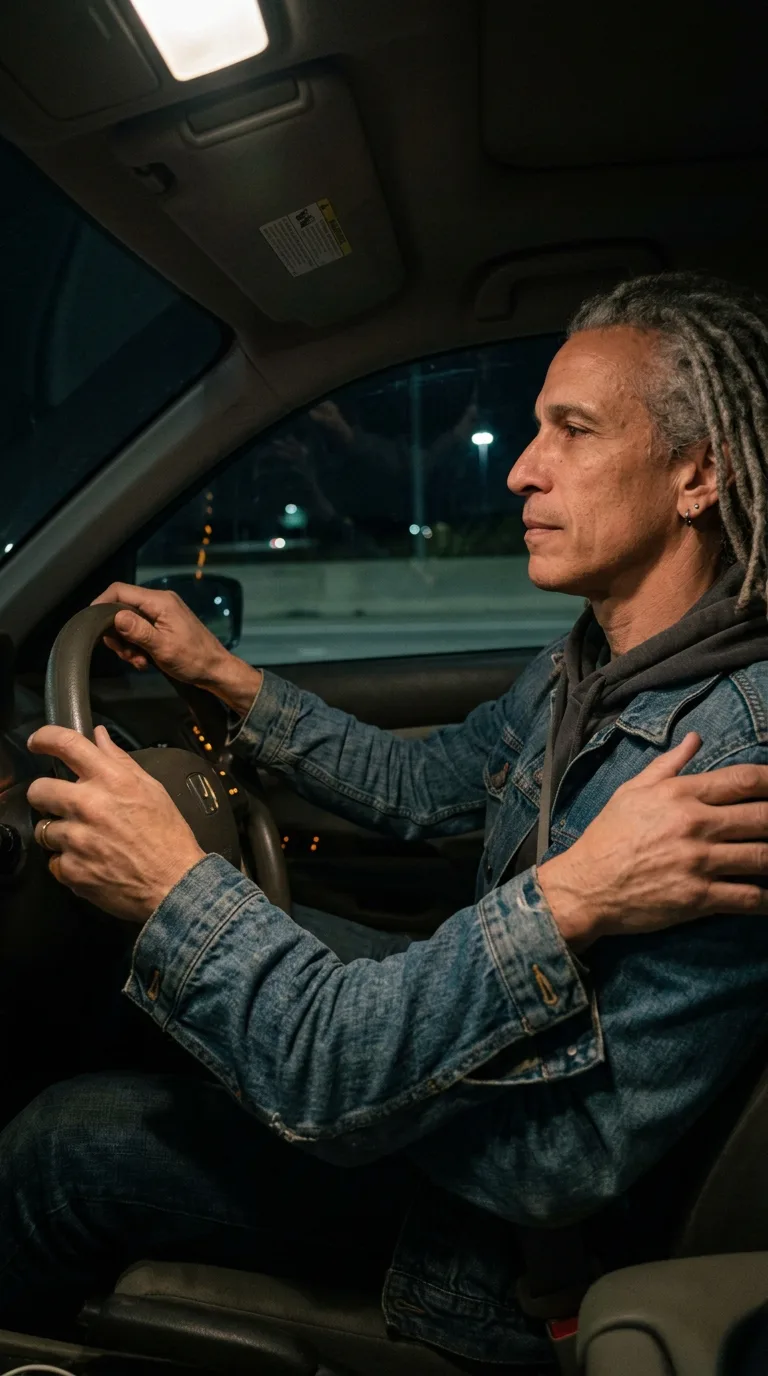
Rarest thing about him: Locs — common, 1 in 91
Season 1seed 180547358 · engine v11
Character card
lineage 2NZHHJ
His body-swap story
@colin.hasbrook, wearing Terrence Odom, rolled the wheel on and woke up as Wade Corliss, spent under a minute in him, then spun the wheel and woke up as Danny Purcell
You have been Terrence Odom for less than a minute, and already you know it was a mistake.
Not the body — the body is fine, better than fine, a 63-year-old man with a gut he's earned honestly and a couch that fits it. It's the porch. It's the light going orange over some stranger's lawn in Los Angeles, the mug going cold in a hand that isn't shaped like your wanting. You spun for a change of scene and got a change of scene: somebody's Thursday evening, somebody's quiet, somebody's actual retirement, no weight in it, nothing pulling. You sat down in Terrence's chair for the first time and felt how little there was to do in it. Bald head warm under the sun. Brown eyes looking at a hedge. That was the whole offer. Forty seconds of a life that had already happened, and you, restless in the leftovers of it.
So you go back in. You don't even stand up all the way — the phone's already out, the site already loaded, muscle memory that isn't your muscle, in a hand still holding the mug. You spin because sitting still in a finished thing is worse than most things you know.
The wheel stops.
—
The hands come off the wheel first, which is how you know something's already wrong, because your body — his body — knows ten and two the way a tongue knows teeth, and instead the hands are dropping, resettling lower, wider, on a wheel gone suddenly unfamiliar in its give. Dark highway. Dash light green-gray on knuckles that aren't Terrence's knuckles, longer, a ring on the left one, catching the glow. The turn signal is already ticking before you have a self to be surprised by it, blink-blink-blink for an exit that means nothing to you yet, and the car is drifting a foot toward the white line and pulling itself straight in the same smooth motion, like the correction happened before the drift finished happening. Your — his — chest is doing something with the seatbelt, a familiar tightness. Sixty-two miles an hour. Radio off. Three miles, though you don't know that's the number yet, only that it's close, the body already leaning toward close the way a body leans toward its own driveway from any distance at all.
The steering wheel is worn smooth at ten and two, a little sticky-slick where his palms have lived for years, and the moment your palm settles into that same worn place it gives you something — not a thought, a season: early morning, this same wheel, coffee steam fogging the windshield, a woman's voice on the phone saying take the 635, not the tollway, and warmth in the chest that isn't yours, that belongs to a marriage you're only now finding out you're standing inside.
The seatbelt against the shoulder gives you church clothes, once, a long time ago, before he stopped going and never told anyone why except that it had stopped meaning anything, which nobody in this family ever asked him to explain twice.
The gearshift under his right hand gives you a name — Denise — and an argument that wasn't really an argument, more a low current they'd learned to run the house on for thirty-one years, and underneath Denise, quieter, another name he doesn't reach for on purpose anymore: Carol. Twenty-five. A porch that wasn't this porch, in a city that isn't this one, and a version of himself that could have gone a different direction and sometimes, on nights exactly like this one, wonders about it without wanting it back.
The denim jacket against your — his — back gives you the morning it went on: sleeve, then sleeve, shoulders settling it like he's settled it a thousand mornings, a green polo underneath because Denise likes him in green, said so once fifteen years ago and he never stopped hearing it. Jeans worn soft at the knee from a recliner he owns and loves unreasonably. New Balances by the door, put on sitting on the edge of the bed, laces already loose enough not to need untying, a habit from a body that decided somewhere in its fifties it would rather bend less.
The nose — you feel it now that you're inside the face of it, a small persistent crookedness when he breathes through it, thirty-some years old, a pickup game, an elbow, a story he still tells wrong on purpose because the true version is boring. The earlobes carry two small studs, put in on a dare from his daughter, who is thirty now, who calls on Sundays, whose name arrives last and softest: Renee.
The wheel gives you the last thing, worn ridge under your fingers, and it's not memory so much as posture — fifty-six years old, athletic still, gray-silver locs he's grown for a decade doing something with the wind through the half-open window, a man three miles from a new-build house with a wife inside it who is not asleep yet, waiting on nothing in particular except the sound of his key.
Your hands come off the wheel. Not the drift — after it. You resettle them low and wide because his hands already knew to, and only now do you catch up to the motion from inside it, a half-second behind your own arrival, which is the strangest thing about any of this and never stops being strange no matter how many times you've done it.
You look at the left hand on the wheel. Plain gold band. A ring you didn't earn and are wearing anyway.
"Wrong exit," you say, out loud, to no one, watching the signal blink on for a road that belongs to somebody else's whole life, and you don't correct it yet.