Wade Bellinger
Fictional. Generated by AI — not a real person, and no likeness of one is intended.
49, barista in New Orleans · rolled by @colin.hasbrook · card — no film
History
who has worn him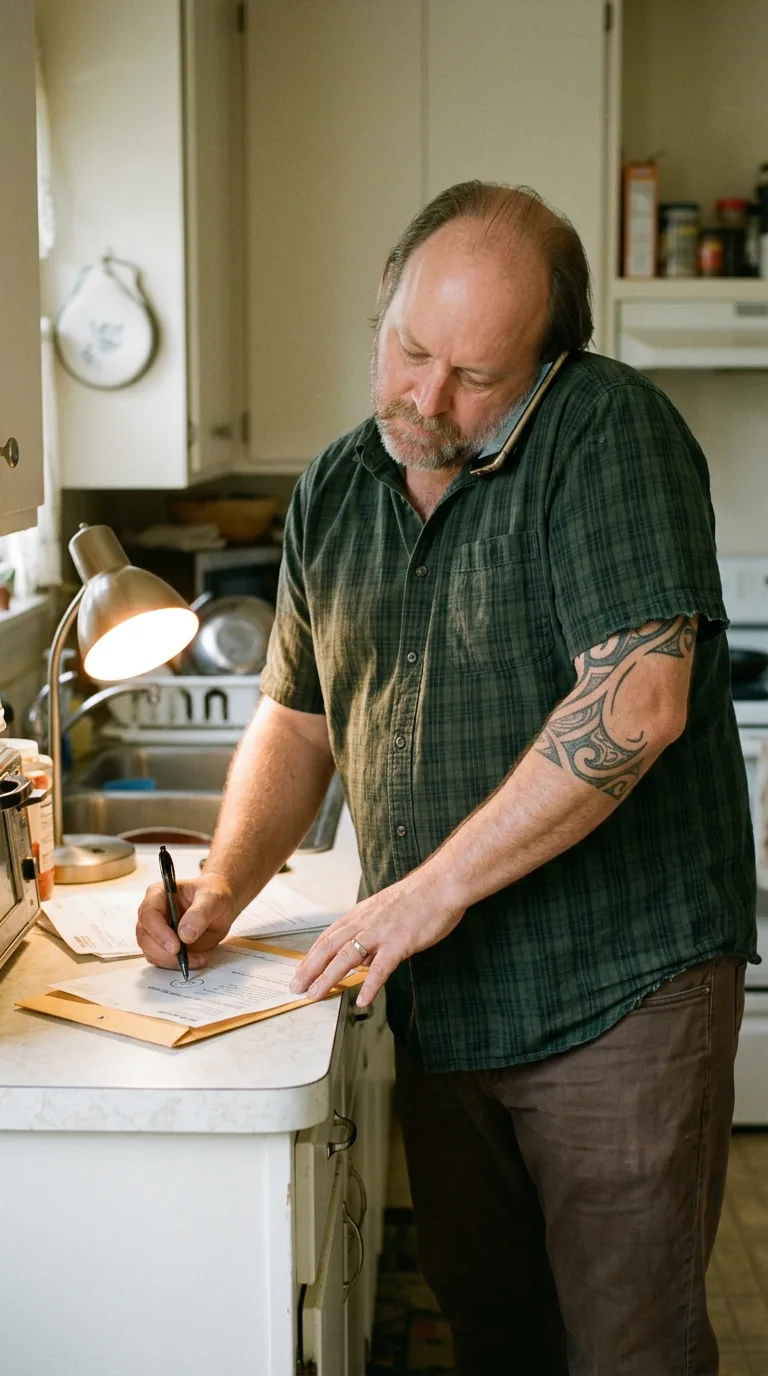
Rarest thing about him: Vapes daily — rare, 1 in 28
Season 0seed 206476402 · engine v10
Character card
lineage 2NZHHJ
His body-swap story
@colin.hasbrook, wearing Sean Dorrance, rolled the wheel on and woke up as Wade Bellinger, spent under a minute in him, then spun the wheel and woke up as Nathan Prilosky
Sean Dorrance's hand aches where the tattoo gun holds it, phantom-tired even though this body has been sitting idle in a Miami apartment for less than a minute of its life. You look at the mirror over the dresser and it is not your face yet, not really — it is his, blue-eyed, bald by razor, that scar splitting the eyebrow into two thoughts. You have been him less time than it takes water to boil, and already the wanting is back, the itch under the itch. That is the thing about the wheel nobody warns you about: it does not satisfy, it just changes the shape of the hunger. You paid for Sean because he could make something permanent on other people's skin and you thought that would feel like enough. It didn't. Thirty-three years old and steady-handed and it still isn't enough. You open the laptop already on the counter, find the page with the wheel on it, and spin, because that's what you do now instead of sitting still with anything.
The kitchen arrives around you already lived in — fluorescent tube light, a lamp with a crooked shade throwing yellow onto paper, the smell of drip coffee three hours cold. The hold music loops back to its first four notes, tinny and stupid, and your shoulder — his shoulder, thick, sloped, familiar to itself if not to you — drops the phone into a waiting hand. The pen is between two fingers of the other hand, stopped dead on a reference number, ink pooled slightly where the nib sat too long on the second digit. You are standing. You are heavy in a way Sean never was, weight settled low and permanent, knees already complaining about the standing before you've done anything with it. Somewhere outside a streetcar bell rings twice and a dog answers it.
The shirt is the first thing that talks to you — green plaid, thin from washing, and it gives you an image before you ask for one: a mirror in a bedroom with a ceiling fan turning too slow to do anything, buttoning this exact shirt three hours ago while Deanna's hairdryer roared in the bathroom, the AC guy already forty minutes late and the insurance people wanting a callback about the compressor before noon. Wade Bellinger's mornings run late; nights at Sable & Rye run later, closing the espresso machine down at eleven, walking the wet dark blocks home past shuttered daiquiri windows while the Quarter still hums two streets over. Working nights and mornings both, the schedule that never lets him sleep past nine no matter how bad he wants to.
The pen in his fingers remembers decades of order pads, backward loops, a signature worn down to a scribble from ten thousand credit slips. The apron — not on him now, hung on a nail by the stove, but his hand already reaches toward its memory — has coffee grounds worked so deep into the black canvas they don't come out anymore, and under it a body that has learned to stand twelve hours without complaint because complaining changes nothing. Steam wand hiss. The particular ache behind his eyes some afternoons that isn't tired, that's the sugar doing what the doctor keeps telling him it's doing, the pills in the cabinet he takes most days and skips some, the vape in his pocket clicked on forty times before lunch out of habit more than want.
The wedding band on the left hand is warm from his own skin and it opens wider than the shirt did — nineteen years of it, Deanna's laugh across a bar that used to be somewhere else, two kids now, a boy who plays trumpet badly and beautifully and a girl who corrects his grammar at dinner. And under that, quieter, an old ex from before all of it, a name that still surfaces some nights for no reason he'd admit to anyone, not guilt exactly, just a door that never fully shut, that he doesn't open and doesn't need to. The half sleeve on his right arm — black tribal, done twenty years back in a shop that isn't there anymore — itches faintly the way old ink does in humidity, and holding still is not something this arm was built for; it wants motion, a portafilter, a rag, anything.
The envelope under the pen is insurance correspondence, a reference number he's been circling for the third time this month, patient and put-upon, and beneath the counter his sneakers — the same ones, always, replaced yearly — hold a stance worn into the linoleum from years of the same three steps to the sink and back. He is spiritual in the way a man is who watches steam rise off a cup at six a.m. and calls it a small proof of something, though he'd never phrase it that carefully out loud. He chews gum right now, has been the whole call, jaw working without him noticing, a tell his wife teases him for.
You look down at the hand holding the pen — heavier knuckles than Sean's, a wedding ring Sean never wore, ink Sean never earned — and you turn it slowly, watching light catch the tribal black.
"Hold music," you say to the empty kitchen, voice lower than yours, rounder, someone else's Monday accent under it, "man, I really did not miss you."
You do not put the phone down yet. You don't know for how long you won't.