Nathan Prilosky
Fictional. Generated by AI — not a real person, and no likeness of one is intended.
22, personal trainer in New York · rolled by @colin.hasbrook · card — no film
History
who has worn him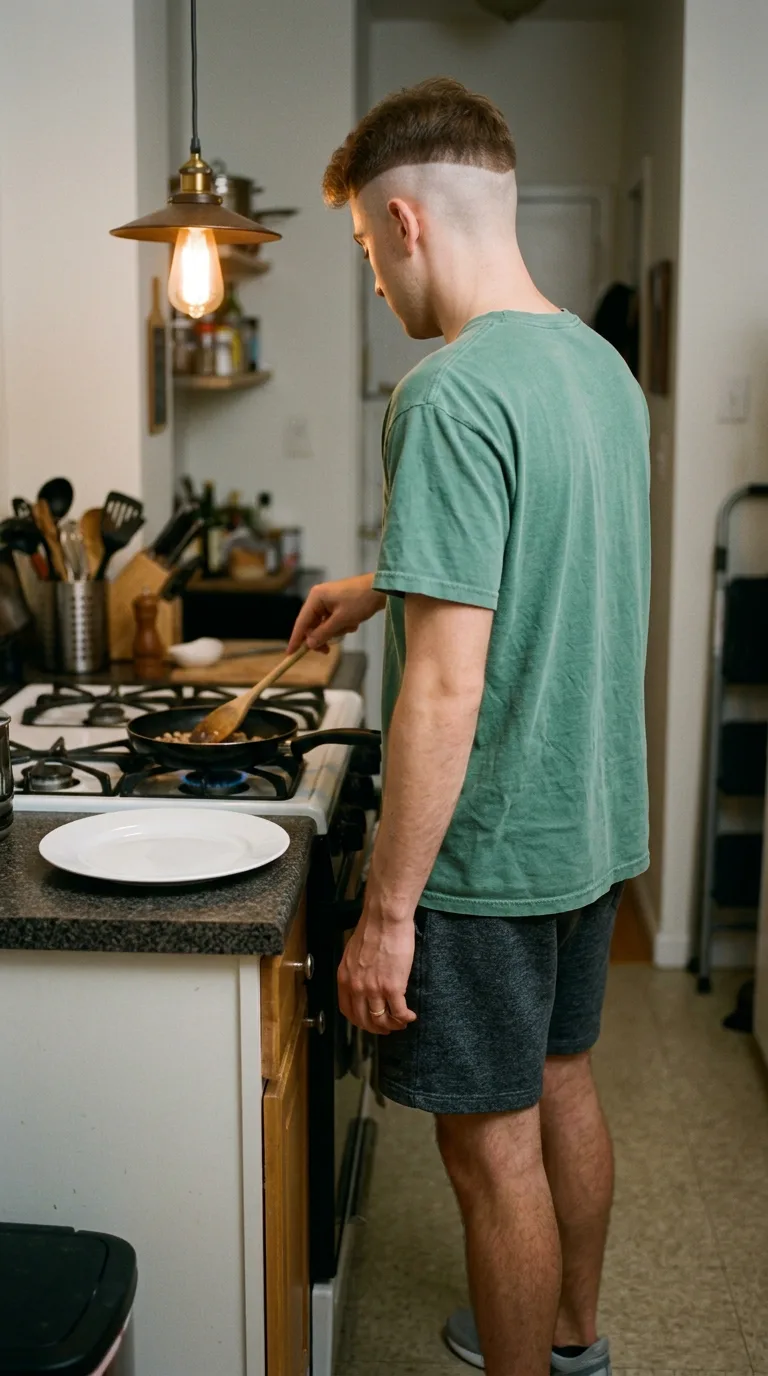
Rarest thing about him: Married — rare, 1 in 33
Season 0seed 145570966 · engine v10
Character card
lineage 2NZHHJ
His body-swap story
@colin.hasbrook, wearing Wade Bellinger, rolled the wheel on and woke up as Nathan Prilosky, spent 1 minute in him, then spun the wheel and woke up as Russell Dunmore
The counter behind the espresso bar is sticky with syrup, and Wade Bellinger's knees ache the way they always ache by eleven, a forty-nine-year-old ache that lives in the joints like weather. You have been him less than a minute, and already you know why you came back so fast. It isn't the knees. It's the register drawer you just watched him — you — short by fourteen dollars because his hands, thick and slow, fumbled a stack of ones, and the manager's face doing that patient thing that is worse than yelling. Twenty-six bodies in and you have learned this much: a life can be fine and still not be one you want to keep standing in. Wade's is fine. Wade's is also over, as far as you're concerned, the second you get a free hand to the phone in his apron pocket and pull up the page with the wheel on it.
You spin before you can think better of it, the way you always do, and the gray New Orleans daylight goes out like a struck match.
The stirring stops mid-circle.
You feel the spoon first — wood, worn smooth at the neck, turning in a hand that is not thick and does not ache — and you feel it start again, the other direction, before you've caught up to whose fingers those are. Steam off the pan. A radiator smell of onions going soft in butter. Your — his — spine is straighter than Wade's, the whole frame lighter, strung tighter, a body that has spent its days walking gym floors instead of standing behind an espresso machine. You salt the pan by feel, too much probably, and don't taste it, and your hand — his hand — is already reaching up into the cabinet for a second plate before you've told it to. It sets that plate down next to the first one on the counter, white against black granite, and something in the gesture is so unthinking, so grooved-in, that you understand before any memory arrives: this is a man who has done this exact motion hundreds of times and never once noticed himself doing it.
Then the shirt gives it to you — a soft cotton tee, green, worn at the collar from washing — and it comes in through your back like heat off a stove.
Nathan. The word arrives with the shirt, the way his wife says it, half a laugh in it, *Nathan, you're doing the thing again* — setting two plates when it's just him, some Monday she's got her book club or her sister's or wherever, and he does it anyway, every time, because his hands don't ask his head for permission. You feel the whole shape of her without a face yet — a warmth, a weight on the other end of a phone, the specific gravity of somebody who has decided to stay married to you — and then the sink gives you more: dish soap, a ring left in porcelain, her mug on the rack that says nothing special, just hers.
You are standing in a kitchen in Brooklyn that smells like a Monday afternoon nobody planned for. The window over the sink is doing the wet-street thing New York does, sodium light not even needed yet but close, the kind of gray that means evening is coming early. Odd, some part of you notes — Wade's shift-worker instinct, maybe, or just the strangeness of a man cooking dinner for one at an hour that isn't dinner — but Nathan works split shifts at the gym, the early clients and then a gap and then the evening rush, and this gap is his, this is when he eats before he goes back out to spot deadlifts until nine. The knowledge comes with the apron string still faintly printed against his stomach, phantom-tight, hours after he took it off.
The whistle on the counter — no, hanging in the front hall on its lanyard, you can feel where it usually sits against his sternum — gives you the gym floor: fluorescent hum, the particular boredom of a Tuesday full of cancellations, a client's shoulder under his palm correcting her form, *there, feel that, that's the muscle actually working.* He is decent at this job and unbothered by not loving it. There's a locker with his name taped to it in blue masker tape, half peeled.
The wedding band gives you the most, because it's touching skin and skin remembers longest. Not a wedding — the site of it goes fuzzy, unimportant to him now — but a morning eight, nine months back, standing in this exact spot in this exact green shirt, pulling it over his head while she stood in the bathroom doorway in a towel telling him about a dream she'd had, and him only half listening because he was thinking about how the ring still felt new on his hand, a small metal weight he kept noticing like tonguing a filling. He'd tugged the shirt down, felt the hem settle, shrugged into the day. Sleeve, sleeve, collar. Nothing remarkable. That's the thing that comes through clearest: how little any of this needed remarking on. A body that knows its own kitchen, its own stove's temperamental left burner, the particular give of these gray sneakers by the door. Skinny fat, soft through the middle in a way his job should embarrass out of him and doesn't, shoulders narrow, knuckles that ache faintly to crack even now, an itch he doesn't act on because both hands are full — one with the spoon, one drifting, without him choosing it, toward the second plate to nudge it a half-inch straighter.
The pan hisses. Somewhere behind you the apartment holds its breath the way empty rooms do when they're about to not be empty anymore.
You look down at the hand on the spoon. Then at the ring on it, plain, a little loose, catching the pendant light.
"Didn't peel the garlic right," you say, to no one, in a voice that isn't the one you walked in with, and you almost laugh at how much that isn't the thing that's wrong.