Vincent Marchetti
Fictional. Generated by AI — not a real person, and no likeness of one is intended.
64, retired in Philadelphia · rolled by @colby.nash · card — no film
History
who has worn him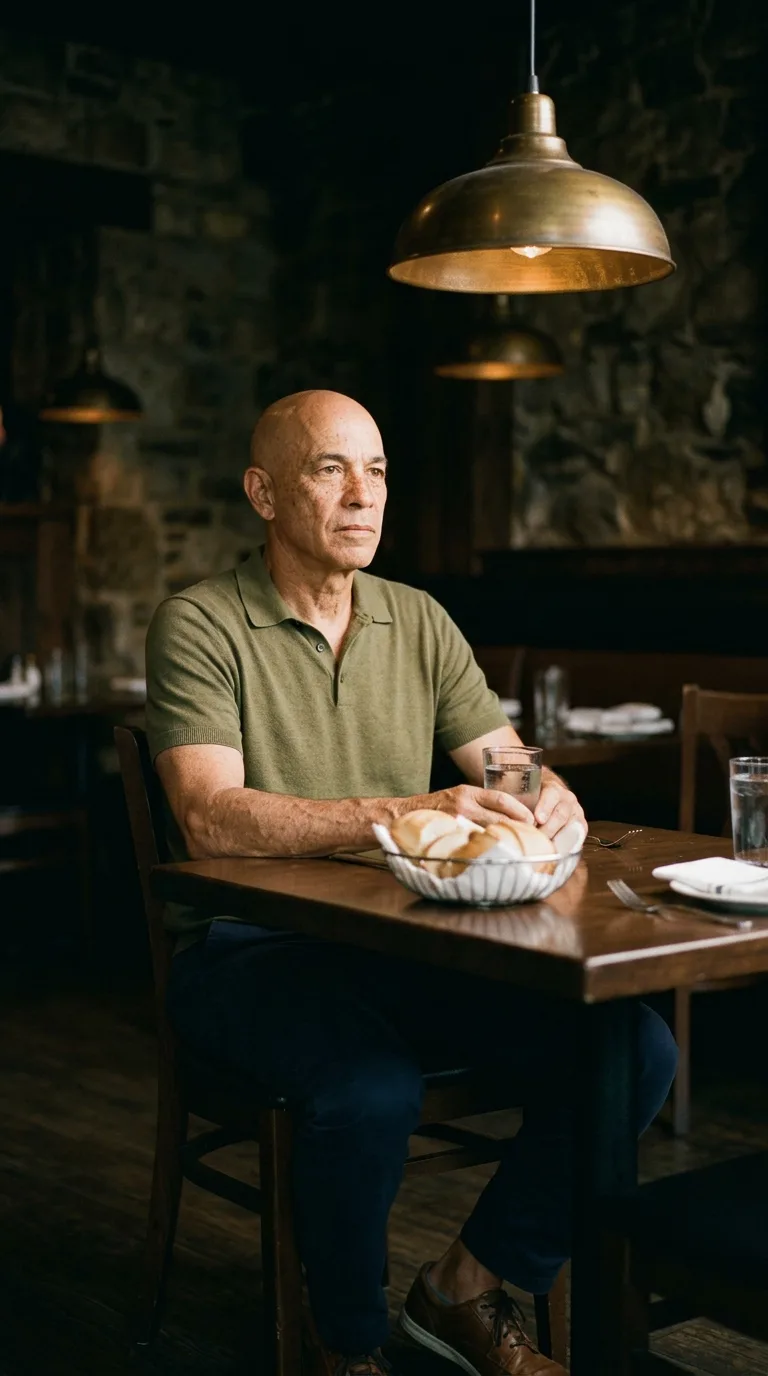
Rarest thing about him: Mixed — rare, 1 in 26
Season 0seed 218736929 · engine v10
Character card
lineage E1W54H
His body-swap story
@colby.nash, wearing Bradley Kosinski, rolled the wheel on and woke up as Vincent Marchetti, spent 4 minutes in him, then spun the wheel and woke up as Nabil Shaheen
You are sitting at a desk in Chicago that is not yours, in a body that is not yours, and the cursor on the laptop blinks over a spreadsheet you stopped pretending to read forty minutes ago. Bradley's hand — soft, freckle-free, nails bitten down to nothing — sits on the mouse. It is Saturday, midday, and Bradley Kosinski should be at his sister's kid's birthday party right now, the invite is still up in another tab, and you are not going, because ten hours in this heavy patient body has taught you everything it has to teach: he flinches at confrontation, he has a knee that clicks on the stairs, he owns four ties and hates all of them. It was fine. It was already used up. The site is open in the tab next to the spreadsheet, the wheel sitting there mid-spin from muscle memory, and you tell yourself it's boredom, though if you were honest — which you are not going to be, not today — it is that Bradley's whole life felt like a waiting room, and you want to be somewhere the furniture is better. You click. The wheel spins itself down to nothing.
And then you are standing — no, sitting — and there is late light coming sideways through old glass, brass lamps low over dark wood, and a bread basket under your hand, untouched, still warm through the cloth. Your voice is already moving, already three words into something, and you did not choose the words, they were already leaving this mouth when you arrived in it, "—and I know that probably sounds like an excuse, but it isn't," and it comes out clear and carrying, loud enough that a woman two tables over glances up. The glass under your other hand turns a quarter turn on the wood and stops. Across the table a woman is watching you with an expression you don't have time to name yet, because you are busy being sixty-four years old.
It comes in through the shirt first — a soft golf polo, olive green, and the memory of ironing it this morning arrives whole: standing in a kitchen with good light, humming nothing in particular, running the iron along a collar out of habit rather than need because the shirt was already fine. Vincent Marchetti irons his shirts even when they don't need it. There's a whole marriage folded into that habit — Diane, twenty-six years of her, gone eleven years now, not dead, just gone, remarried to a dentist in Delaware, and somewhere in the folding and creasing is the version of himself that used to iron for two people and kept doing it for one out of some stubbornness he never examined. No kids. He wanted them and it never worked out and there is a specific quiet Sunday-shaped grief about that which comes through not as a scene but as an absence, a room in the house he doesn't go into.
The chair under you, hard wood, and your back tells you about thirty-one years at a mechanical contracting company, the kind of work that puts muscle on a man and then, at the end, puts a permanent low ache across the shoulders that four decades of showing up on time can't be argued out of. Retired three years now. Well-off — the buyout was generous, the condo is paid off, and there is a freedom in that which still surprises him some mornings, standing on his porch with coffee at eleven a.m. on a Tuesday like a man getting away with something.
Your hand finds the water glass again and that's where the date comes in, all at once, badly, the whole shape of the last forty minutes: a woman from an app, a widow, kind eyes, and neither of you landing on a single subject that holds weight, silences stretching until they became their own kind of conversation. You feel his humiliation like a held breath — the specific, particular loneliness of being sixty-four and single and trying, again, after so many years of not having to. His hands want to pick at the cuticles of his thumb, a tell he's had since boyhood, and they're doing it now, under the table, where he thinks she can't see.
The freckles across your nose and cheeks — sun from decades of job sites, of porches, of a father who was Puerto Rican and pale-eyed and a mother who freckled the same way — are a piece of every photograph he owns of himself, and for a second you are standing in his bathroom this morning, running a hand over the bald scalp out of old habit, checking the same face that has looked back at him, changing only slowly, for over half a century. Strong forearms. A knee that's fine, unlike Bradley's. Blood pressure medication in a weekly organizer on the kitchen counter, taken automatically, without thought, the calluses on his palms from thirty years of pipe fittings gone soft now but not gone.
You feel all of it land at once — the shirt, the chair, the glass, the woman's face going from confusion to something warier — and you understand, the way you always understand by the third or fourth beat, that you are going to like this one. He is solvent and healthy enough and has all his hair follicles gone quiet by choice rather than time, and there is something almost peaceful in a man who has already lost the things he was going to lose.
You look down at your hand on the glass — broad, freckled, the cuticles a little raw — and you turn it over slowly, watching the light catch on it, and then you lift your eyes to the woman across the table, who is still waiting for the rest of a sentence that already finished itself without either of you meaning it to.
"Sorry," you say, in his voice, easy now, unhurried. "Let's start over."