Nabil Shaheen
Fictional. Generated by AI — not a real person, and no likeness of one is intended.
55, manager (mid-level) in New York · rolled by @colby.nash · card — no film
History
who has worn him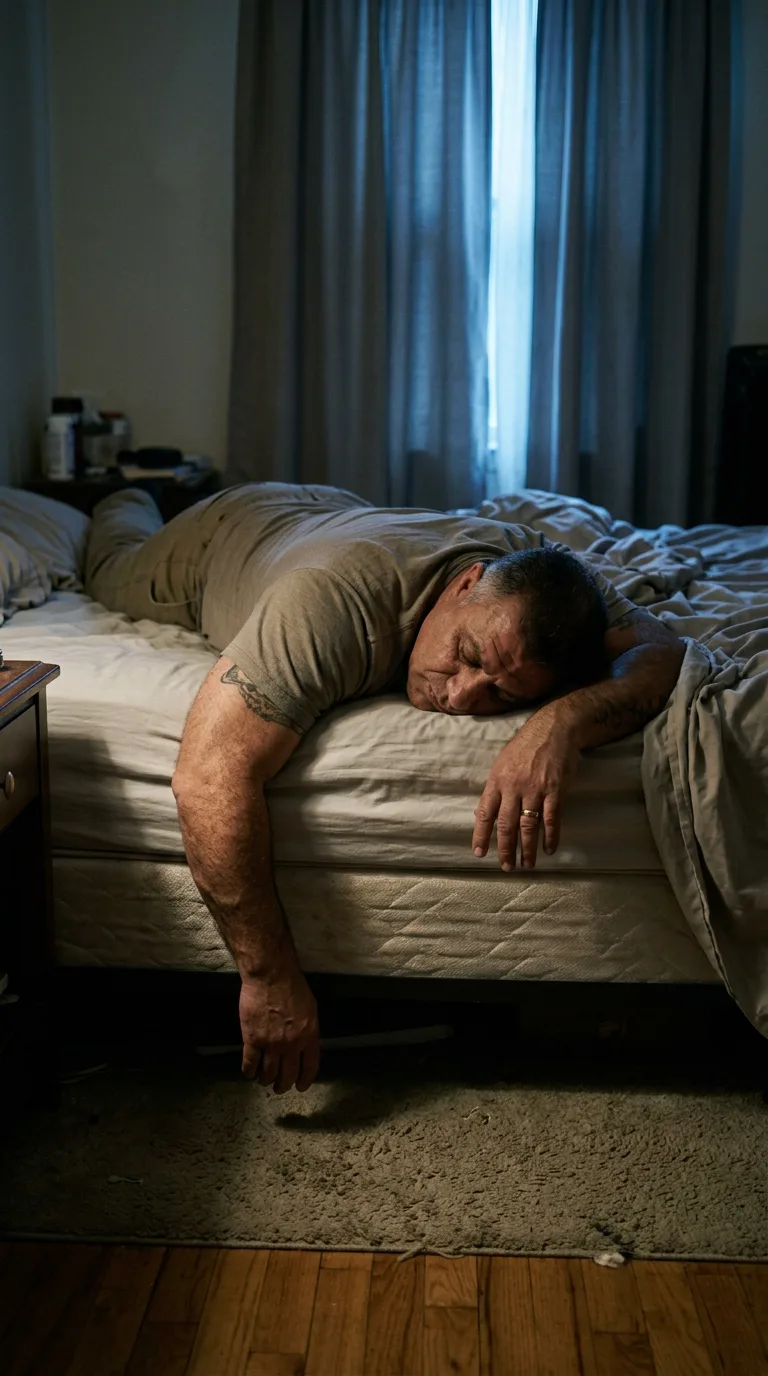
Rarest thing about him: A pack a day — legendary, 1 in 271
Season 0seed 554881287 · engine v10
Character card
lineage E1W54H
His body-swap story
@colby.nash, wearing Vincent Marchetti, rolled the wheel on and woke up as Nabil Shaheen, spent 4 minutes in him, then spun the wheel and woke up as Gary Belletire
Three minutes in Vincent Marchetti and already the itch is back. You stand in the retired body — bald, freckled, still strong through the shoulders at sixty-four — and you flex the hand that isn't yours, and it does nothing for you. Philadelphia through the window, a life you didn't build, furniture you didn't choose. It worked. It was athletic and free and paid for. But three minutes was enough to know it: nothing in it is waiting for you tomorrow. No door with your name on the glass. No weight to be somebody. You spun through thirteen men already looking for the one that would finally feel like keeping, and this one, a retired stranger standing quiet in his own kitchen, is just one more that doesn't. So you open the laptop that isn't yours, you find the site again with fingers that know the keys by muscle memory that belongs to someone else, and you spin.
The room that arrives is dark, blue-lit, a gap in curtains letting in sodium light off a wet Brooklyn street. You are heavy in a way Vincent never was — muscular under fat, low and dense — face-down, one arm hanging off the mattress toward a rug you can't yet see. Breath ragged, then not: it evens out in the space of one inhale, and the arm draws itself up off the floor, and the body rolls onto its back on its own, hands folding at the chest like a man laid out for viewing. Nobody taught it that. You didn't ask for it. It's just what the body does now that you're in it.
The pillow first — cool cotton, a smell of somebody else's shampoo and sweat, and underneath it, faint, the ghost-smell of tobacco that never quite leaves a pillowcase no matter how many times it's washed. That's the first door. A pack a day, forty years of it, and the flash comes uninvited: a boy of nineteen behind a deli counter in Bay Ridge, cigarette tucked behind his ear because his uncle did it that way, the taste of it becoming a taste for everything after. Then the ring. Your — his — left hand finds it without meaning to, thumb running the plain band the way it has ten thousand nights lying just like this, and it opens wide: a wedding twenty-six years back, a hall in Bensonhurst with too much rice and his mother crying into a napkin, his wife's face younger, laughing, unafraid of him yet. Then: her voice down a hallway an hour ago, three names called up a staircase for dinner, four now if you count the youngest already grown and gone but still on the phone every Sunday like clockwork.
The mattress under your spine gives you the shape of the back that hurts most mornings, low, from sitting too long behind a desk with a glass wall and a door he leaves open on purpose so the younger ones can see him and not be afraid to knock. A gap-toothed smile that disarms grown men in negotiations twice his size in stakes. Money — more of it than the room around you would ever suggest, ten million, twenty, tucked into things that don't show: a modest brownstone stoop, a Timex, a belt gone soft with wear — because showing it was never the point, and his church never asked him to. Sunday mornings, a chapel two trains away, his wife beside him in a good coat, the boys restless in the pew, and after: a toothpick worked at the corner of his mouth all afternoon out of habit, because his hands need something now that the drink is gone from them these eleven years, quiet, no ceremony, just tired of what it cost him and what it was starting to cost his blood pressure, already high, already a pill every morning with the eggs.
The office comes back through the shirt — no, not yet, he isn't wearing a shirt, he's bare-chested under the sheet, and that's its own door: the memory of dressing yesterday morning, the navy polo pulled on over his head, the way the collar always sits a little crooked until his wife reaches over without a word and fixes it, the ID badge clipped to his belt loop swinging as he bends to tie steel-toe boots that have outlasted three pairs of his sons' sneakers. Twenty-two years at that company. He runs eleven men on the floor and he knows all their kids' names and none of them know what he's worth, and he likes it that way — the glass door open, the chair always available, the toothpick working while he listens to somebody's complaint about a schedule like it's the only thing happening today.
The good ones come last and slowest: his daughter at six asleep on his chest in this same bed, before the mattress got old; his father's voice teaching him a blessing over bread in a kitchen forty years gone; the specific, ordinary joy of a Tuesday with nothing wrong in it.
Then it's just you, heavy in him, chest still rising in that borrowed rhythm, and you lift your left hand off your chest into the thin blue light and turn it over — the ring catching what little there is, the gap between your teeth already there before you've even smiled.
"Okay," you say to the empty room. "Okay. Let's see what he's got."