Vikram Suthar
Fictional. Generated by AI — not a real person, and no likeness of one is intended.
57, line cook in Philadelphia · rolled by @colin.tarwater · card — no film
History
who has worn him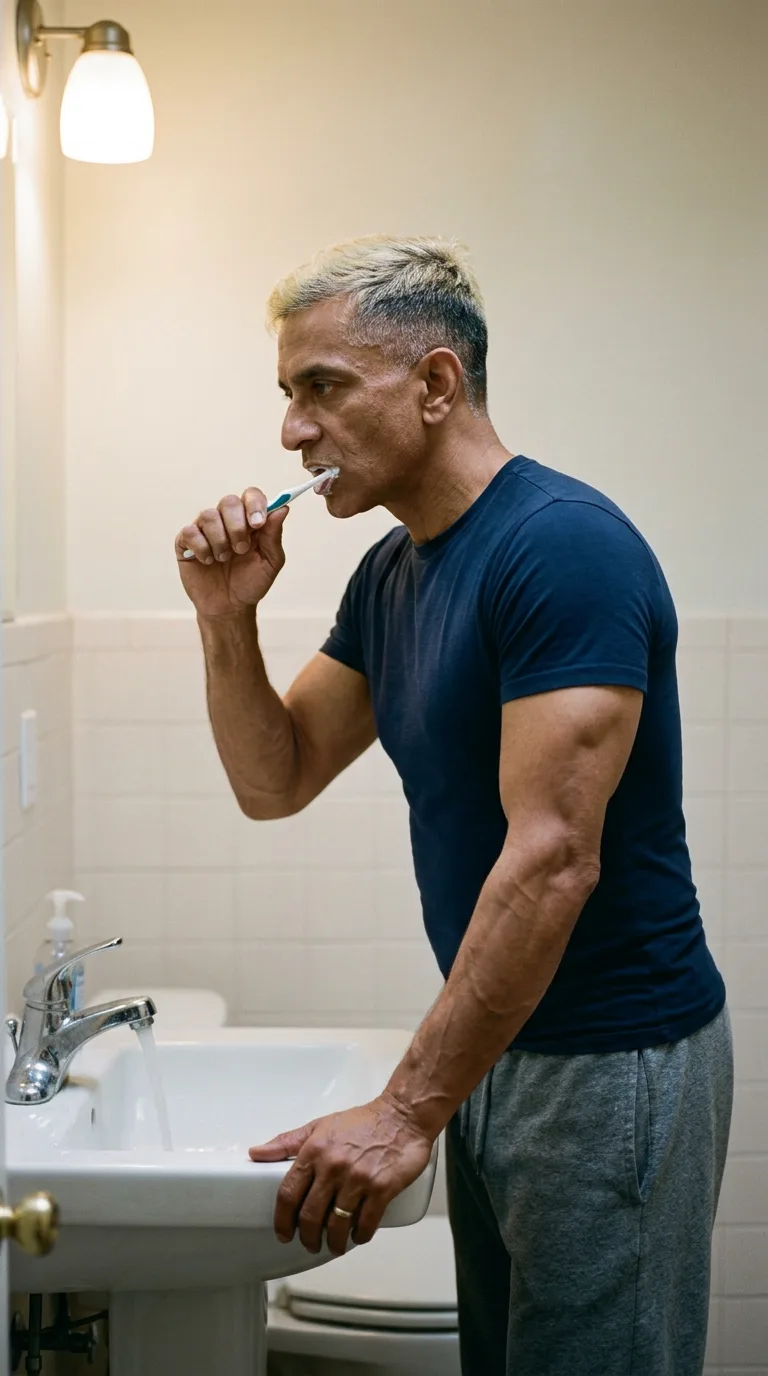
Rarest thing about him: Bleached blond — legendary, 1 in 119
Season 0seed 1701806380 · engine v10
Character card
lineage COEU7T
His body-swap story
@colin.tarwater, wearing Aaron Vandermolen, rolled the wheel on and woke up as Vikram Suthar, spent under a minute in him, then spun the wheel and woke up as Marco Ibañez
Aaron Vandermolen's kitchen smells like drain cleaner and cold coffee, and his phone is face-down on the counter where you left it, because a minute ago a woman texted him three question marks and nothing else and you don't have the first idea what that's about. That's the thing about wearing a stranger who came with a whole life already running — you get the tall, the young, the good shoulders, the dimples some woman is going to be furious about tonight, and none of the why. You stood in his kitchen for sixty seconds feeling twenty-four in your knees, feeling a body that has never once thought about its knees, and it was already boring in a way you can't explain to anyone, because there's no one to explain it to. You've been sixty-nine men and every one of them was somebody's whole life and every one of them, eventually, went thin. Not bad. Thin. Like a coat you didn't buy for yourself. You open the site on his phone with his thumb, which still doesn't feel like an act of violence to you, sixty-nine times in, and you spin because the wanting doesn't announce itself, it just gets loud enough that spinning is quieter.
The wheel gives you Philadelphia, evening, a bathroom with a warm little wall sconce and toothpaste foam, and you are already mid-stroke on the left side, and you finish it, and then — because his hand knows the pattern better than you do, and for one full second his hand is driving and you are only riding — it moves to the right side, slower now, working the back molars the way a hygienist told him to fifteen years ago and he never stopped doing. You rinse. You rinse again. You stand the brush up, bristles to the ceiling, out of the grey ring of water it always sits in on this sink, an inch to the left of a woman's toothbrush that is pink and has been there so long neither of you sees it anymore.
The T-shirt is the first thing. Navy, soft at the collar from washing, and it gives you a Tuesday from a year back — no, many Tuesdays, folded into one — him pulling it over his head after a double, the particular ache across the shoulders that isn't soreness so much as usage, forty years of reaching over a flat-top settled into muscle that never got soft because the job won't let it. Then the sweatpants, grey, waistband gone loose at the hip, and with them a whole marriage arrives sideways: Meena laughing at him for wearing "the ugly ones" to bed, him saying comfort doesn't apologize, her taking the other side of it years ago without either of them noticing when the joke became a fact of the house. The ring is next, plain, a little tight now over the knuckle — his hand remembers a July, a backyard, her father not wanting to shake his hand until he did — and it comes with an ache that isn't in your chest, it's in his, and you feel it anyway because right now there is no difference.
The sink porcelain under his palm gives you the kitchen he doesn't own but runs — twelve years on that line, the flat-top's dead center hot spot he's learned to avoid, the exact rasp of the exec's voice calling ticket times, the burn scar he doesn't have because he's careful, has always been careful, hands too valuable for carelessness. He broke the nose at nineteen, a summer league basketball elbow he never saw coming, and the surgeon offered to reset it straight and he said leave it, it's mine now, and Meena has told him for thirty years she likes it crooked, likes that his face admits something happened to it. His blood pressure meds are in the cabinet behind the mirror, and touching the counter's edge gives you the small daily fact of them, the pill and the water glass, a thing his body carries that his mind has stopped remarking on. Drums his fingers — you feel the ghost of that now on the porcelain, a rhythm from some song his daughter used to play too loud on the drive to school, gone eleven years old in this memory and grown now, gone from the house, the quiet of that a small permanent weather in him you didn't ask for and can't put down.
He wasn't going anywhere tonight. Late off a Tuesday dinner service, home after eleven, brushing his teeth in a kitchen-quiet house because Meena's already asleep and the light over the sink is the only one still on in Philadelphia. Fifty-seven years old and still on the line because he likes the noise better than he likes the silence he'd get promoted into, and that's a thing nobody at the restaurant knows about him, not even the guy who's worked beside him for eight years — that he turned down sous chef twice, that he wants his hands full and his head empty at the end of a night, that ambition, in him, went sideways into wanting to be good at one exact thing forever.
You look down and his hands are wet still, foam gone from his lip with the second rinse, ring catching the sconce light, and you turn the right one over slow, like it might tell you something the left one didn't. Fingers that know a knife the way yours never will. A crooked nose in the mirror that isn't an accident he regrets. You lift your eyes off the hand and find them in the glass instead of the lens, because there's only a mirror here, and it'll have to do.
"Okay," you say, to no one, to him, to the wheel wherever it's sitting tonight. "Let's see what you're for."