Aaron Vandermolen
Fictional. Generated by AI — not a real person, and no likeness of one is intended.
24, plumber in Detroit · rolled by @colin.tarwater · card — no film
History
who has worn him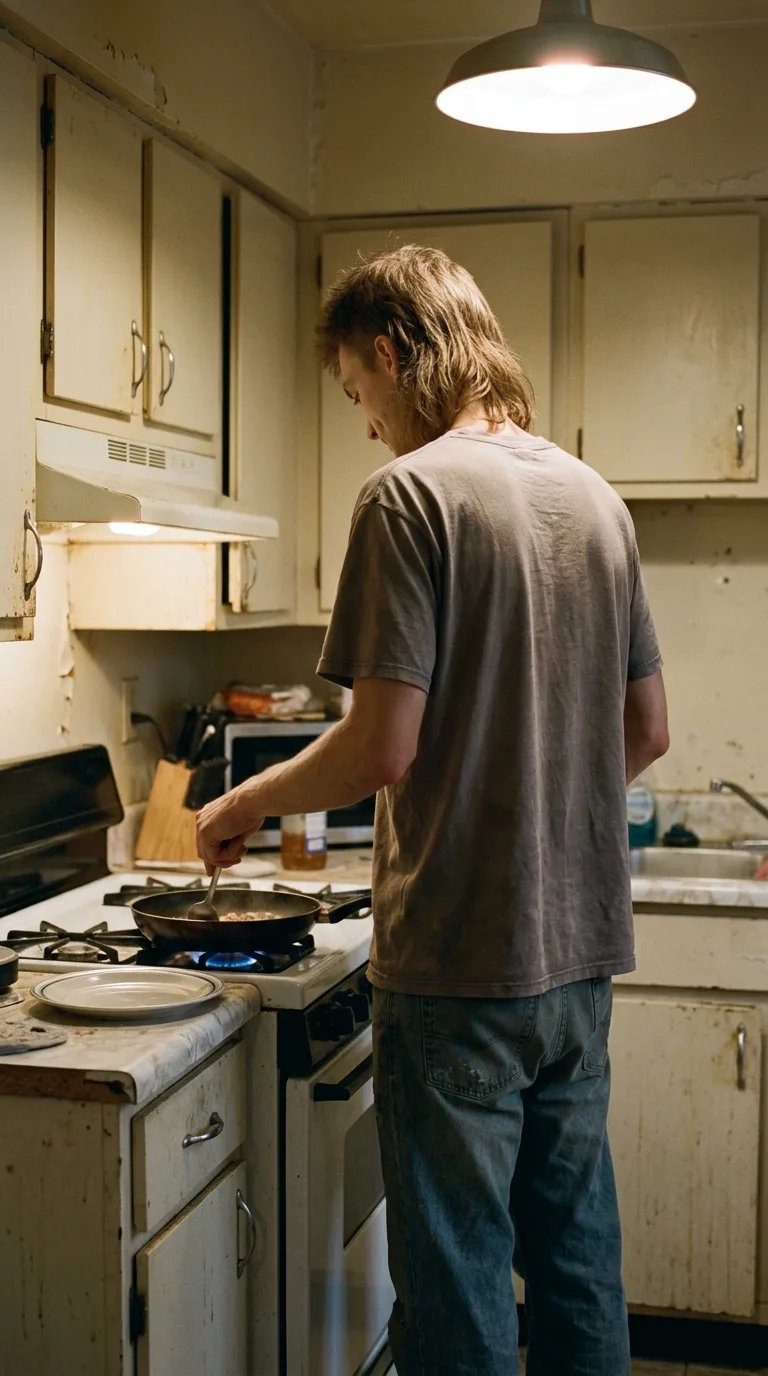
Rarest thing about him: ADHD, diagnosed as an adult — rare, 1 in 31
Season 0seed 689378222 · engine v10
Character card
lineage COEU7T
His body-swap story
@colin.tarwater, wearing Donald Sechrist, rolled the wheel on and woke up as Aaron Vandermolen, spent 1 minute in him, then spun the wheel and woke up as Vikram Suthar
---
Donald Sechrist's knees ache before he even stands up, and that's the first thing you notice tonight, sitting in his recliner in a Vegas living room with the swamp cooler ticking in the window and the light going orange through the blinds. Less than a minute in him. You made the mistake of looking down at his hands too soon — spotted, soft, a wedding ring from a marriage that was never yours and never his either, not really, not anymore, since apparently the man is a widower and you're the one who has to feel that hollow for him for however long you keep his face. Sixty-four years old. Retired from something with insurance forms, you gather, though you didn't stay long enough in the last guy to ask him outright. It's not boredom, exactly, that has you already reaching for the laptop balanced on the arm of the chair. It's that his knees ache. It's that his knees are going to keep aching every day for the rest of whatever this is, and you have found, over sixty-eight spins, that you have very little patience for a body that hurts just standing up. You want to feel young again. You have wanted that since the eleventh spin at least, and every time you don't get it you go back for another one anyway.
The site loads the way it always loads: patient, a little smug, the wheel already spinning lazy behind the paywall like it knew you'd come back. You pay. You don't let yourself think about the ring.
You spin.
—
The spoon is already turning the other way before you understand you're the one turning it.
Your hand — no, his hand, long-fingered, a burn scar's worth of old grease under the nails that isn't a scar, just ground in — is stirring something in a pan that smells like garlic gone slightly too far, and your back is to a kitchen you have never stood in, and you are so much taller than you were half a second ago that the light fixture over the stove seems close enough to touch with your forehead. You salt the pan without tasting it. Some reflex that isn't yours yet moves your arm to the cabinet and takes down a second plate, sets it beside the first one on the counter, and you have no idea why, none, except that your hands did it before you had a say.
—
The shirt is what opens first — it's against your back and it's damp under the arms already from standing over the stove, and it gives you, sleeve by sleeve, a boy — no, a man, but younger-feeling than his years, all wrist and shoulder — pulling it off a hanger that morning in a bedroom with a water stain shaped like Florida on the ceiling. Aaron. The name arrives with the shirt, plain as a tag. Aaron Vandermolen, twenty-four, and he'd stood in front of the closet a full ten minutes that morning because he couldn't decide between this shirt and another one, and that ten minutes wasn't vanity, it was the same snag that makes him forget his phone charger twice a week and lose forty minutes on a video about diesel engines when he meant to leave the house at seven — his ADHD, the diagnosis that came at twenty-two and explained, retroactively, an entire childhood of teachers writing home. He'd stood there thinking about his girlfriend, who likes this shirt on him, and about nothing at all, both at once, until his alarm made the decision for him.
The overalls come next, stiff at the knee from drying wet, and they bring the job with them — the crawl under Mrs. Okonkwo-Taylor's bathroom sink that afternoon, the particular grunt of a slip nut that hadn't been touched since Carter was president, the satisfaction of a pipe wrench finding its bite. His hands know this without him: the wrist-snap that breaks a seized fitting, the two fingers braced against the trap so it doesn't spray when it finally lets go. Skinny arms, but there's a wiriness in them, tendon more than muscle, that has hauled water heaters up basement stairs for six years now and can do it again tomorrow if tomorrow comes. Six-three folds badly under sinks. His lower back is a low, familiar ache, older than it should be at twenty-four, the kind you get used to instead of fixing.
The spoon in your hand gives you tonight, specifically — cooking for one, because Sam had cancelled, texted something about her sister needing her, and he'd said *no worries* and meant it mostly, and made the pasta anyway because he'd already bought the ground beef and hated wasting food more than he hated eating alone. He thought about calling his mother. He thought, unbidden, the way he always eventually does on a quiet night, about Kayla — the ex, four years gone now and married to somebody else in Warren, and still there was a version of a Tuesday where his mind went and knocked on that door out of habit, not longing exactly, just checking it was still shut. He touches his own face, thumb along his jaw, an old tic that means nothing and everything, comfort with no name on it. He'd tucked a nicotine pouch into his lip before he started cooking and it's still there now, gone soft and peppery, and that small burn on his gum is the last thing that is entirely, unmistakably his.
He believes, in the plain unfussy way he was raised to, that somebody is listening when he prays before bed, and he'd meant to tonight, and he still might have, if there had been a *him* left to do it.
The second plate is still sitting there on the counter. His hand set it down out of some evening-shaped muscle memory — for her, maybe, some hope that she'd swing by after all — and you are the one standing over it now, twenty-four years old, six-foot-three, dimples denting into your cheeks though there is nothing on this earth right now to smile about.
—
You look down. Long fingers, callus at the base of each one, a bead of pasta water gone cold on the wrist. You turn the hand over slowly, like you're checking it's attached.
"Didn't even get to eat," you say, to the empty kitchen, in his voice, and you almost laugh, because Donald never once said anything that stupid in the sixty seconds you wore him, and this one's still warm, still twenty-four, still has both plates out like somebody's coming.
You don't know yet how long you keep him. You never do.