Vikram Saini
Fictional. Generated by AI — not a real person, and no likeness of one is intended.
53, assembly line worker in Los Angeles · rolled by @colin.hasbrook · card — no film
History
who has worn him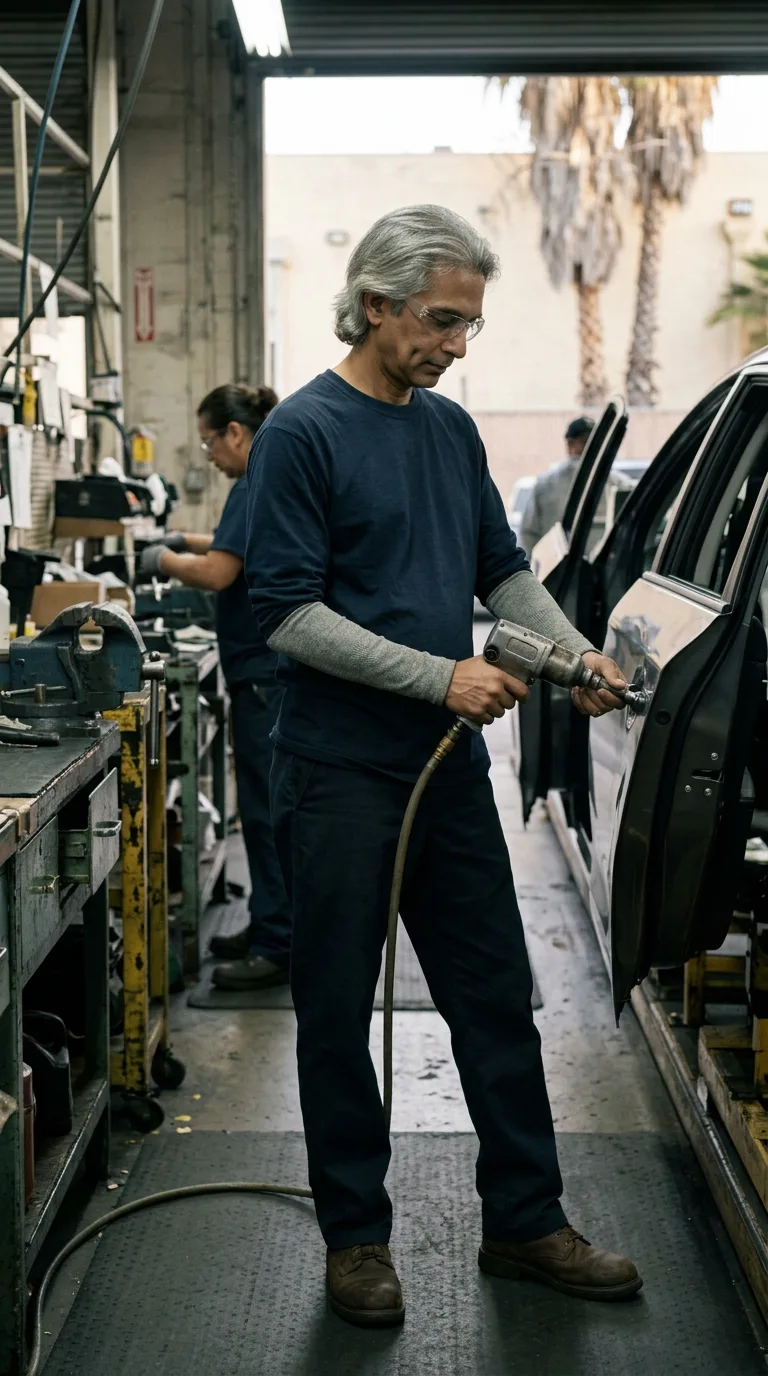
Rarest thing about him: South Asian — common, 1 in 26
Season 1seed 1243102151 · engine v11
Character card
lineage 2NZHHJ
His body-swap story
@colin.hasbrook, wearing Terrence Kalama, rolled the wheel on and woke up as Vikram Saini, spent under a minute in him, then spun the wheel and woke up as Brett Halvorsen
The dock at four in the morning smells like diesel and cardboard, and Terrence Kalama's shoulders — broad, easy, thirty-one years old and none of the ache you're used to carrying around in older men — are exactly the kind of body a person could get comfortable in. That's the problem. You've had him less than a minute, decided already, before the strap-cutter's even back in the bin, that comfortable is the whole reason to leave. Seven hundred and fifty-four men, and you know the particular flatness that comes right at the start of a good one, the sense of the next forty years laid out already like a shift schedule. You don't want to know Terrence's forty years. You want the drop, the half-second before you know anything, so you find the phone in his back pocket, thumb still knowing the passcode though you never learned it, and you open vessel.cards standing on a loading dock in Honolulu while somewhere it is also almost morning, six hours and a whole ocean off, and you spin.
The wrongness lands before the man does. One motion of a pneumatic driver going into a hinge bolt, done wrong — the bit skating, catching air instead of thread — and then, a beat later, corrected, slow and deliberate, like a hand relearning where the hole is. The gun is heavier than Terrence's strap-cutter ever was, hanging off a trigger finger that aches faintly at the knuckle in a way that has nothing to do with you. Fluorescent light and a car door swung open on its hinge in front of you, a woman working a station to your left without looking up, the mouth of the garage bay open onto a strip of hard white sky and the ragged tops of palms. Your hands — his hands — run ten more bolts, and every one of them gets checked, torque confirmed, a tic that a man on this line hasn't needed in years and that you can't stop doing, because whoever's checking isn't him anymore.
The shirt is what opens first. Long-sleeved, navy, going soft at the collar from washing, and under it the gray waffle-knit that rides past the wrist for the exact reason the gun kicks metal filings backward — and there it is, an ordinary Tuesday four years gone, him in front of a mirror in an apartment with light coming low and orange through a blind, pulling this same shirt over his head, favoring the right shoulder because of something with a disc that flares if he reaches too high on his side of the closet. His closet now — he'd had to build a whole half of a room around being one person again after twenty-two years of it being two people's. The dimples show in the mirror even though he isn't smiling, they always show, his ex used to say it made it impossible to be properly angry with him, and she was right, and she left anyway, and the two of you are still — no, he is still — the kind of divorced where she calls at Christmas and it doesn't feel strange.
The tan line under the glove is next, a paler stripe around the base of the ring finger that the gun's grip presses against with every trigger pull. Sixteen years married. He remembers the last day he wore it more clearly than the wedding: standing in this exact bay, pulling the glove off at lunch and feeling the band slide loose because he'd lost the weight the separation took off him, and thinking, with a kind of flat surprise, that his hand didn't look like his hand anymore. He put the ring in a drawer at home that night. He has not put anything back on that finger since. Two kids — a daughter with his temper, a son with his old bike still filthy in the garage — and neither of them lives close, and both of them call more than either of his brothers ever did, and there's a comfort in that so plain and specific it's almost embarrassing to feel it standing here holding a rivet gun.
The boots against the mat, worn soft exactly at the pinch points, know this floor down to the inch — twenty-six years on this line, first as a kid barely legal to work it, now as the man juniors ask when something's out of true. His back knows which way to lean before a panel's even latched. His knees know the shift is almost half done by which ache has shown up. And under all of it, threaded so deep it barely registers as a fact and not just weather, is the number in an account he never talks about at work, inherited oddly, invested well, untouched for the most part — he could stop doing this today. He has never once stopped doing this. Nobody on this floor knows, and it would change nothing if they did, which is itself the reason he likes them.
Then there's the safety glasses' arm against your ear, and static behind it: him clicking a pen against a clipboard in a break room that doesn't have a working clock, waiting on a callback from his daughter, dimples showing at nothing in particular, at the pure animal comfort of having nowhere else he'd rather be sitting.
You look down. The rivet gun in your grip. A hand with a pale ring of skin at its base that the sun forgot to catch back up on. Fingers that already, on their own, without you telling them anything, want to click a pen that isn't there.
"Wrong bolt," you say, to no one, in a voice pitched lower than Terrence's ever went, and the woman at the next station doesn't even look up, because to her nothing has happened at all.