Brett Halvorsen
Fictional. Generated by AI — not a real person, and no likeness of one is intended.
25, between jobs in Seattle · rolled by @colin.hasbrook · card — no film
History
who has worn him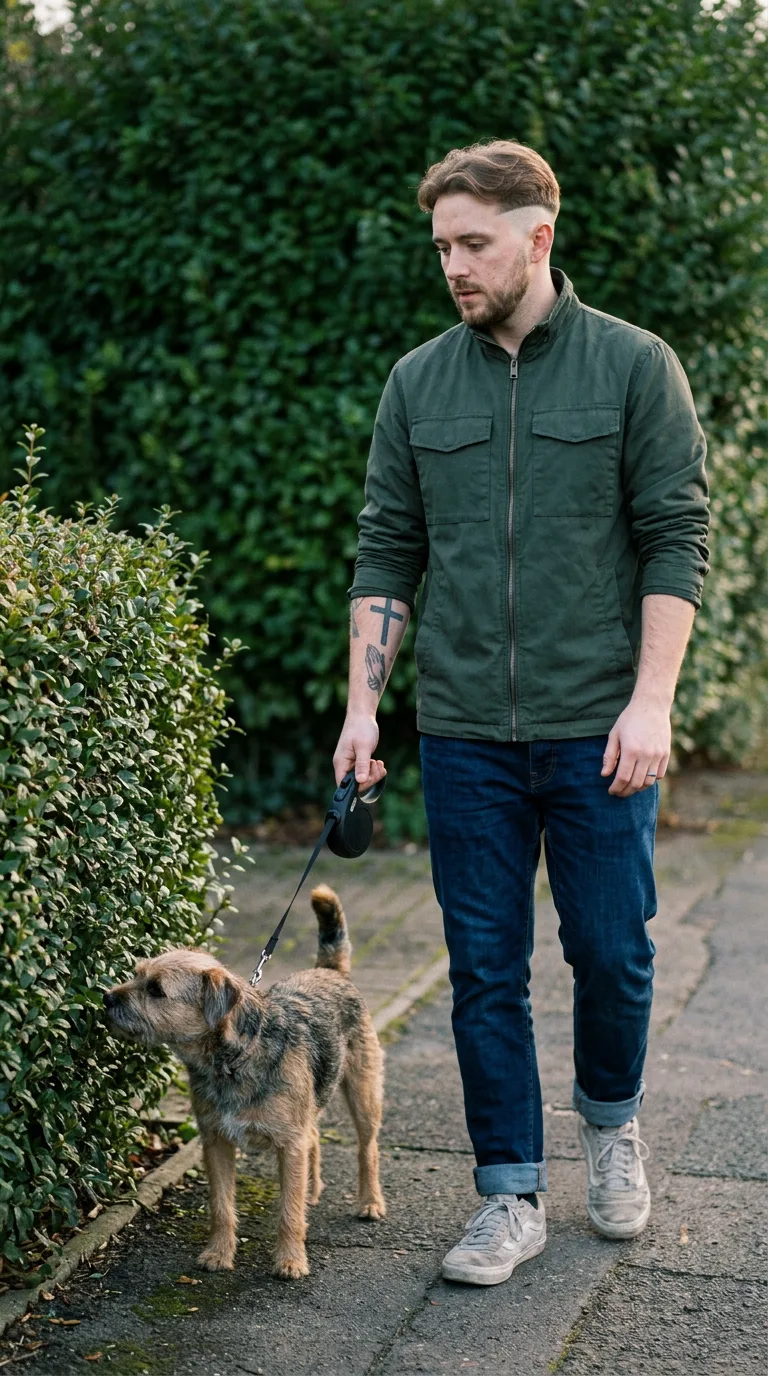
Rarest thing about him: Picks at his cuticles — common, 1 in 34
Season 1seed 871951625 · engine v11
Character card
lineage 2NZHHJ
His body-swap story
@colin.hasbrook, wearing Vikram Saini, rolled the wheel on and woke up as Brett Halvorsen, spent 7 minutes in him, then spun the wheel and woke up as Ernesto Villalva
Vikram's kitchen is quiet at the hour the body wants to sleep. You have been him less than a minute — long enough to feel the ache low in his back, the way his knees complain when you shift weight on the linoleum, the dimple that isn't yours pulling at a mouth you didn't choose. Fifty-three years of him folded into gray hair and a gut he stopped fighting. Somewhere down the hall a wife you haven't met yet is still asleep, and in an hour an alarm will send this body to stand at a conveyor belt for nine hours doing the same twist of the wrist forty thousand times. You know this because you've done it. You did it yesterday, in this same skin, and the day before that, and it is not boredom exactly, more the specific itch of a body that already told you everything it has. Seven hundred and fifty-five men behind you and this one is honest and worn and yours for as long as you want him, and you don't want him, not this morning. Not this one more time. The laptop glow from last night's spin still lights the counter. You touch the trackpad. The wheel is still on the screen, waiting the way it always waits, patient as a held breath.
You spin it standing in Vikram's slippers, and the second it lands you are not standing anywhere Vikram has ever been.
You are outside, and it is cold in a way Los Angeles never gets, damp cold, hedge-smell and wet asphalt, and there is a weight pulling at your right hand — a leash, taut, then slack as the dog at the end of it finishes with the hedge and looks up. Past the hedge. At you. Ears flat back. Dogs know first, always, you've learned that much in seven hundred and fifty-six bodies — something in the smell of a man changes before the man does anything to prove it. The hand holding the leash has already stopped walking. You feel it stop, a beat behind the decision, the way you always do, arriving into the middle of a motion that was his and now isn't. You wind the leash twice around two fingers without deciding to. The dog startles at the new rhythm and has to trot to catch the stride you set off with.
The jacket is what gives him to you first — green canvas, worn soft at the elbows, a snap chest pocket under your left hand where it's found its way to rest. Warmth comes up out of it like a held note: a Christmas morning three years back, his wife handing it to him wrapped badly in a Trader Joe's bag because she'd run out of paper, laughing at her own cheapness, and him not caring, because it fit exactly right across the shoulders and she'd remembered he needed one. Brett Halvorsen. The name arrives with the jacket, the way names do, stitched into nothing but true anyway.
The leash in your hand is next, ridged plastic worn smooth where his thumb rides the brake button, and it gives you the dog's name — Cooper — and a whole spring of early mornings just like this one, before either job or unemployment mattered, just him and the mutt and the hedges going from bare to green. Underneath that, quieter, it gives you the shape of the last four months: the laptop at the kitchen table, tabs of job listings gone stale and reopened, the particular shame of a husband who used to have somewhere to be at eight and now has nowhere, dressing anyway, walking the dog anyway, because a schedule is the last thing keeping the day from going formless.
Your left hand finds the ring on its own, an old habit surfacing without your asking — thumb worrying at the band, and it opens straight into her. Not a scene, just her, the fact of her, the weight of a marriage that has held through worse than this stretch of not-working, a small photograph he keeps meaning to reframe, a fight last week about money that ended with her hand flat on his chest and neither of them saying sorry because they didn't need to. And a child — you get only the edge of it, a car seat buckle, a height marked in pencil on a doorframe, love too large to come through all at once from a touch this small.
The forearm itself, when you glance down at it — his sleeve pushed up from reaching for the leash — carries the tattoo like a held breath: a cross, praying hands, done young, in a season of his life he doesn't talk about, when a church basement and a folding chair and a man twice his age telling him he wasn't past saving mattered more than anything before or since. His hands, you notice, want to pick at the cuticles of the hand not holding the leash — an old tell, worry with nowhere else to go — and you let them, because it's his and it's true and there's no reason yet to stop it.
Underneath all of it, the body: twenty-five, tighter and lighter than Vikram's, knees that don't ache, a stride that wants to go faster than the dog allows. Good coffee this morning, still faint on the tongue. Cold air sharp in a chest that breathes easy. Nothing hurts. That, more than any memory, is its own kind of welcome.
You stop walking. Cooper stops too, confused by the second change in a minute. You lift your right hand — his hand — off the leash brake and turn it over in the gray morning light, palm up, watching a stranger's fingers flex like they're checking their own report.
"Okay," you say, out loud, to no one, to the hedge, to the dog. "Okay."
Somewhere behind that face a wife is waking up to an empty side of the bed that isn't empty at all, and you don't know yet how long you intend to let her go on thinking it is.