Vikram Anand Deshpande
Fictional. Generated by AI — not a real person, and no likeness of one is intended.
48, professor in Small-town Ohio · rolled by @declan.michael.farrow · card — no film
History
who has worn him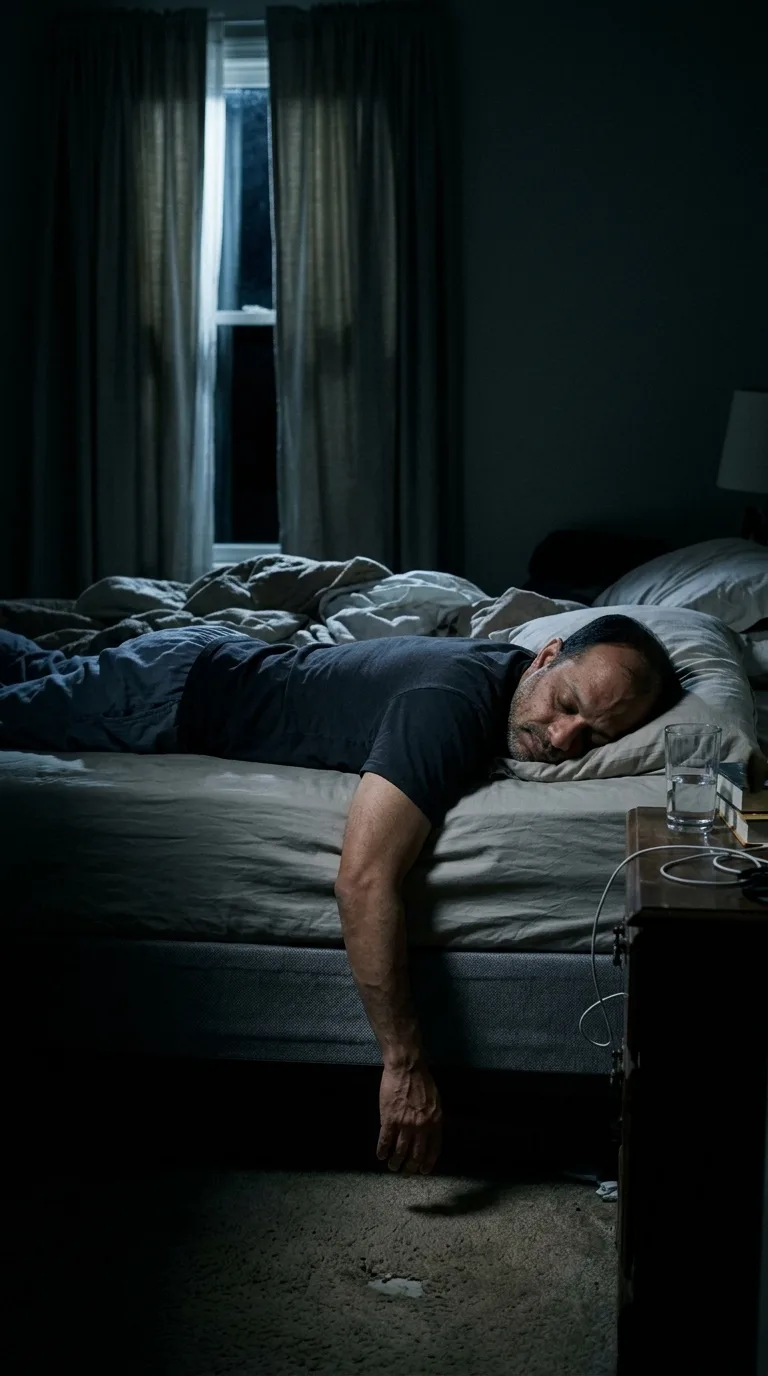
Rarest thing about him: Smokes when he drinks — common, 1 in 42
Face-off rating 1500 · not ranked yet
Season 1seed 29806362 · engine v11
Character card
lineage 5OR92V
His body-swap story
@declan.michael.farrow, wearing Cody Ray Brunner, rolled the wheel on and woke up as Vikram Anand Deshpande, spent under a minute in him, then spun the wheel and woke up as Raúl Esteban Cordero
Cody Ray Brunner's knees are done. That is the thing I carry to the screen, standing in the kitchen of a man I have been for less than a minute, a freight handler's kitchen at nearly midnight, Kansas wind leaning on the trailer wall. Thirty-five years old and the knees already talk. Two hundred and some pounds of him, and the first thing he gave me was a stair I could not take without my own breath complaining. I wanted a body that was not tired in advance. I wanted a man who had, if nothing else, arranged his life so that someone slept through the night in it.
I open the page. The wheel is already turning, and I let it.
Then there is no kitchen. There is a mattress under my chest, a pillow wet at one corner from his mouth, and my breathing, his breathing, tearing in ragged and then smoothing into one long even pull because I decide it should. My left arm hangs off the bed. I draw it up. I roll onto my back, and my hands go to my chest and fold there, and I lie like something laid out. He never slept that way. I know it the way you know a coat is borrowed. Streetlight comes through a gap in the curtains and lies across the carpet in one pale stripe.
Light body. That is the first honest fact. Five foot six, nothing heavy, the knees quiet, the back unbraced. My scalp is cool where the pillow was not. My hand rises without being asked and runs over the crown of my head, over thin hair and the skin showing through, and the gesture opens something that is his, not mine.
A faculty parking lot in October, the hand doing exactly this while he stood reading a letter from the dean. The dread in it, and underneath the dread a small stubborn pride, because he had said the true thing in the meeting and it cost him. Then it's gone, and the stubble under my fingers is rough, gray at the chin, and the dimples pull in without my permission. I am smiling at nothing. His face does that at rest.
The sheet is cotton, washed thin. It gives me a Sunday, his Sunday: ironing a shirt on a towel spread across the kitchen counter because the board broke years ago and he never replaced it. His daughter's voice on the phone saying, Dad, you can just buy one. His answer, a laugh, I like the towel. The ache in that, how rarely she calls, how carefully he keeps the voice light.
The T-shirt on my back is soft and old and smells of detergent and faint cigarette, the kind he allows himself only when he drinks, a few times a year, on the back step, after church people have gone home. The memory comes on his tongue: a cheap whiskey, the burn, the orange tip in the dark, and a woman's name that I feel more than hear. The one who got away. He said it once aloud to the yard and the yard did not answer. His chest tightens around it now, in my chest, and I let it, because it is the only way into him.
The nightstand water glass. I reach for it and my fingers know exactly where the edge is. Under it, a stack of books, and the top one's spine under my thumb gives me the lectern: an empty hall, the rows rising behind him, rehearsing the first lecture alone at seven in the morning, his voice small and then not small. He loved it. He was scraping by and he loved it, and the love is warm and plain and now sitting in me like swallowed tea.
The carpet is rough under my foot when I swing a leg off the bed. Small-town quiet outside, no traffic, the one stoplight blinking for nobody.
I lift my hands into the stripe of light. Brown, square, the knuckles dry from chalk and cold. Not mine. Not Cody's either. I turn them over, slowly, palms up, and the lines in them are a map of nobody I know.
I look up at the dark window and say, softly, in a voice that is lower and kinder than I expected, "Hello, Professor."
My heart goes on, steady, borrowed. I wonder how long before I want something else, before the wheel starts to hum behind my eyes again, whether I will wake as him tomorrow or not at all.