Raúl Esteban Cordero
Fictional. Generated by AI — not a real person, and no likeness of one is intended.
61, cop in Atlanta · rolled by @declan.michael.farrow · card — no film
History
who has worn him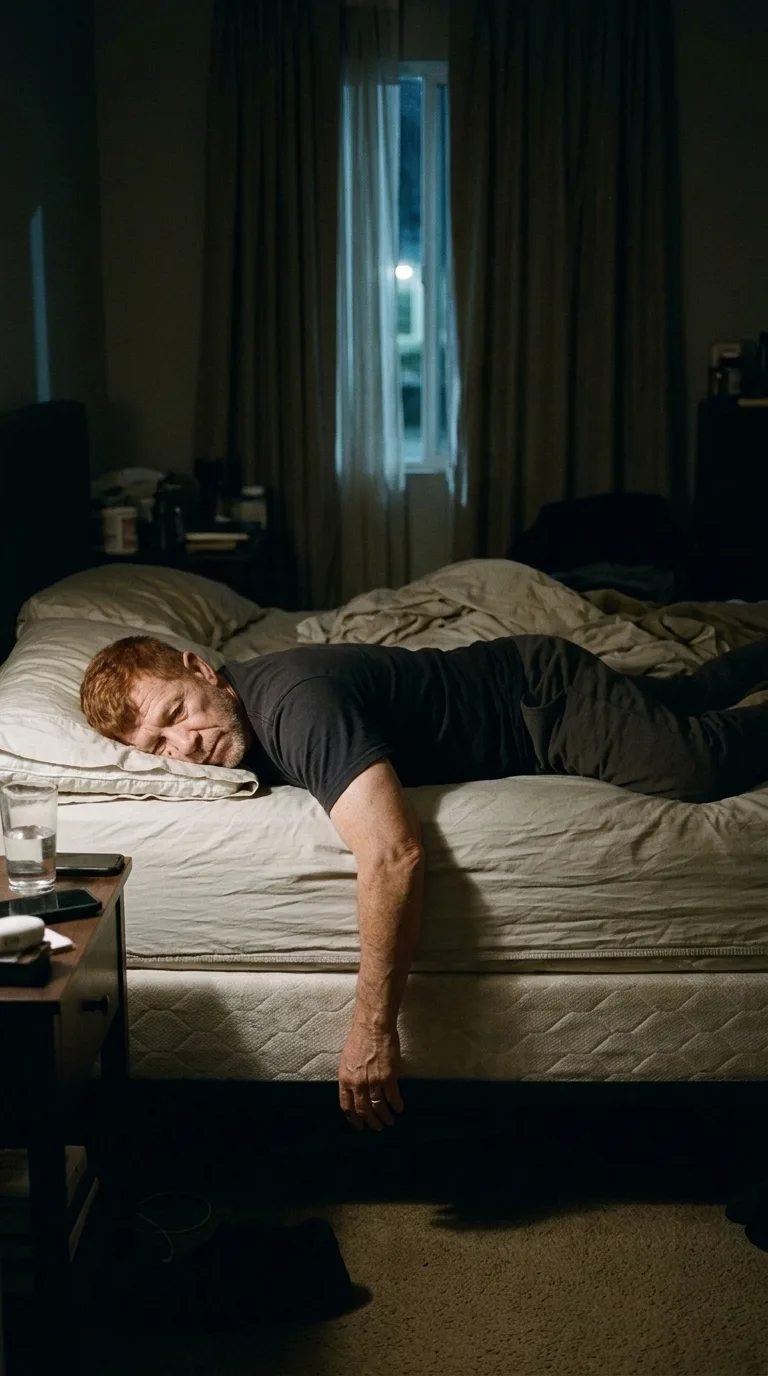
Rarest thing about him: Red — common, 1 in 60
Face-off rating 1500 · not ranked yet
Season 1seed 750434187 · engine v11
Character card
lineage 5OR92V
His body-swap story
@declan.michael.farrow, wearing Vikram Anand Deshpande, rolled the wheel on and woke up as Raúl Esteban Cordero, spent under a minute in him, then spun the wheel and woke up as Jason Patrick Dombrowski
You are standing in a dead man's kitchen, which is what Vikram's kitchen has felt like for the last hour. Nothing is wrong with him. That is the trouble. His body works: the knees don't complain, the dimples come when you tell them to, and the stubble is the kind that makes students think he is tired in an interesting way. But the house is asleep, the refrigerator hums, and on the counter is the stack of ungraded essays he would have known how to love. You read the first line of the top one three times. You can't make it matter.
You came back because of the essays, and because of the thing you found in his desk drawer that had nothing to do with essays: a folded letter in a woman's hand, addressed to him, never mailed. You held it, and the feeling in him came up through your fingers, grief the size of a room. It was a good feeling. It was somebody else's, and it was not yours. You wanted a grief of your own, or a weight of your own, and you didn't know what. The laptop is open. The wheel is already turning on it.
You press the key.
Dark. Then a ragged breath, and the breath evens out of its own accord. The mattress gives under your chest. You are face-down, one arm hanging into the cold air off the edge of the bed, and streetlight comes through a gap in the curtains and lies across the sheet. The heat is thick even at this hour, the air-conditioner losing its fight. Your arm draws itself up. The body rolls onto its back, and the hands fold at the chest. Something in the muscles knows this is wrong, a posture he has never once slept in, and you feel him not being here to object.
The sheet is damp against your calves. The T-shirt clings at the ribs, soft, washed a hundred times, and it opens something. He bought it at a church fundraiser. His daughter was nine and had pressed the stamp onto it crooked. He stood in a parish hall that smelled of coffee and floor wax while she tried to read the lettering out loud, and his chest went tight with a pride so large he had to look at the ceiling tiles. The shirt does not know you. It only remembers being loved.
Your left hand is lying on your sternum. The ring is there, plain gold, worn thin on the underside. When your thumb turns it, you get a wedding in a church with a broken fan, her mother crying, his own leg bouncing against the pew until she laid her palm on his knee. The leg is bouncing now, under the sheet, a small restless animal. It has bounced through every funeral and every stakeout of his life. You let it.
He works nights. That is why the room is dark and the bedside clock says what it says: he lay down in the small hours after a shift and a half, and the uniform is hanging on the chair. Even from here you get it. Boots by the wall. Belt coiled over the chair back, leather creaking in his memory. That morning, the one before this sleep, he dressed in the dark so as not to wake her: the undershirt, then the shirt, buttons from the bottom because his thumbs liked the rhythm, the pen into the pocket, the badge pressed flat. He sat on the bed to lace the boots, and his lower back said a sentence about sixty-one. He said, quietly, "Okay, viejo." It was how he talked to himself.
The pillow smells of her shampoo, and it brings the other one, the one who got away. A girl at a bus stop on Buford Highway, thirty-some years ago, laughing at something he said. He let her go because he was frightened, and he never told anyone, not even the wife he loves. It still sits in him like a coin under the tongue. You hold it carefully, since it is the one true secret you've been given.
You flex the fingers and the knuckles ache, thick and capable. You are short, solid, tired, warm, and the thirst in your throat is his. On the nightstand a glass of water sweats beside a phone, and your hand knows the way to it.
You lift both hands in the streetlight and turn them over. Freckled, scarred at the knuckle, a ring you didn't choose. You look up, and your voice comes out in a hoarse, unfamiliar baritone.
"Okay, viejo."
It's his phrase, from his mouth, and you don't know yet whether it will hold. Down the hall a floorboard settles. How long is this one? Until the wanting returns, you suppose. You listen for it already.