Tyler Akana
Fictional. Generated by AI — not a real person, and no likeness of one is intended.
22, barista in Honolulu · rolled by @marco.villagrana · card — no film
History
who has worn him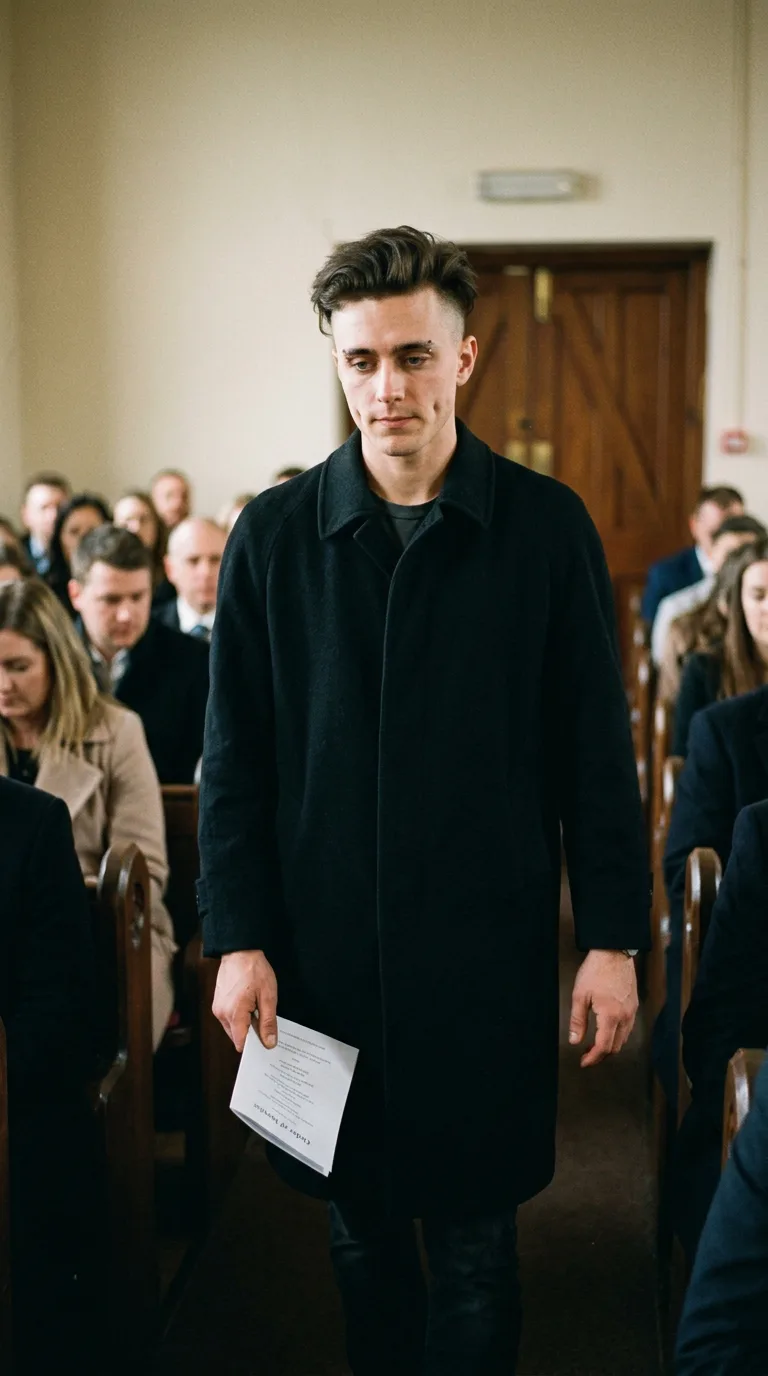
Rarest thing about him: Eyebrow — epic, 1 in 69
Season 0seed 1695363693 · engine v10
Character card
lineage LJL8SV
His body-swap story
@marco.villagrana, wearing Kenji Otsuki, rolled the wheel on and woke up as Tyler Akana, spent 2 hours in him, then spun the wheel and woke up as Colton Rieffer
Kenji Otsuki's chair is still wet under you when you decide. Six minutes in this one and already the lifeguard chair feels like a cage built for somebody smaller than his own life — skinny fat, sunburn peeling off his shoulders in that specific Detroit way, a whistle around his neck that isn't yours and never will be. The pool below is quiet, some kid's mother toweling him off, the smell of chlorine thick enough to taste. You spun for this. You didn't even get to want it yet before the wanting went out of it, the way it always does now, fast, faster each time, like a hunger that forgets the meal the second it's swallowed.
You open the site again on his phone, thumb print and all — his thumb, not yours, but it works, that's the joke of it — and there's the wheel, spinning through faces you'll never meet the rest of.
It lands on a boy in a black coat.
—
The organ stops.
You come up half a beat behind the room, standing when everyone else already stands, your legs doing it before you tell them to, because they were always going to. There's a folded paper in your hand, damp at the crease from being held too long. A coat that isn't broken in yet — someone else's coat, a size too generous in the shoulder — and under it a body five inches shorter than the one you just left, tighter, quicker, younger in the muscle if not on the calendar. You smooth the coat down the front. Your fingers find the top button, and they hesitate there like they're being taught it for the first time, because they are.
Nobody looks back. That's the strange mercy of arriving at the back of a chapel — you get a few seconds where being new is invisible.
—
The paper in your hand says a name that isn't his and a date that isn't yours and the smell of it — cheap toner, a little damp — cracks something open.
*This is not your grief.* You know that clean and immediate, the way you always know the difference, riding shotgun in a stranger's sorrow. But it comes anyway, because his hand is the one holding the program, and his hand remembers folding it exactly like this, twice, pressing the crease with a thumbnail bitten down past comfort, in a house on posts with a rusted tin roof, red dirt yard baking white in a heat that has no Michigan equivalent. Tyler Akana. You didn't know his name a second ago; now it arrives with the paper, the way everything about him will — not given, only touched into being.
The coat: borrowed from an uncle, too big at the shoulder, and under your palm smoothing it down you get the whole morning — him standing in front of a mirror that's really just a propped piece of glass in the hallway, deciding the eyebrow barbell has to stay in even for this, because taking it out feels like agreeing he should. His mother's voice from the kitchen, something about the ferry times, not about the dead man, because grief in that house gets handled sideways, through logistics. He'd pulled the coat off a hanger still faintly smelling of someone else's cologne and put it on over a black tee, and the dimples had shown even then, even dressing for a funeral, because they always show, an inheritance from a father he barely — there, gone, the thought slides off before it finishes.
Your feet, his feet, are in boots that have stood twelve-hour shifts, and the muscle in the calves remembers that better than it remembers this pew. Steam wand hiss. The particular ache across the shoulders from pulling shots since five a.m., six days a week, tips counted out in a jar with a cracked lid. A regular who always orders the same flat white and always overtips because he likes watching the dimples show when he says thanks. The tiny badly-inked thing on the forearm — you feel him wince at it without looking, an old humiliation, something done cheap at nineteen that he covers with sleeves in summer even though everyone can see it anyway.
Church pew wood under your palm where you finally sit, mid-hymn, and it gives you Catholic school, an altar boy's boredom, his mother's rosary clicking through her fingers in a pew like this one when he was small enough to lean into her side. Communion wafers dissolving on a tongue that later, much later, tasted a hundred different bad decisions instead — a bottle passed around a bonfire on the beach, another one alone on a Tuesday, the particular self-disgust of waking up and not remembering getting home, which happens more than he'd say out loud, to anyone, ever.
Somewhere behind you a man's photograph rests on an easel near the casket, a face you don't know and neither did this body very well, and that's when it comes clearest of all — not who died, but who's beside you at the back, the cousin whose hand this same hand shook an hour ago, dry and quick, both of them uncomfortable in coats. Family that loves him the way family does, at a slight unbridgeable distance, nobody quite asking about the boy who left the island for four semesters of community college and came back without a degree and without explaining why, and settled instead behind an espresso machine because at least the noise of it fills a room.
And under all of it, plain and true as the floor under your borrowed boots: this body is 22, wiry-strong in the forearms from months of milk pitchers and portafilters, a permanent line of grit under two of his fingernails he can never quite clean, and a mouth that dimples at rest whether he's happy or not, which has fooled more than one person into thinking he's fine.
—
You look down at your hands — his hands, small and quick, nails bitten to the quick, a healing hangnail on the thumb — and you turn them over like they're new tools you haven't been handed the manual for.
Somewhere in Los Angeles, three days and twenty hours behind you now, there's a heavyset man with a unibrow developing film in a room that still half-remembers your ten minutes in it, and thinking, without knowing why, of dimples.
You look up, past the folded paper, into the front pew where nobody has turned around, and you say, quiet enough that only the man beside you catches it:
"I don't even know whose funeral this is."