Marco Villagrana
Fictional. Generated by AI — not a real person, and no likeness of one is intended.
29, photographer in Los Angeles · rolled by @marco.villagrana · card — no film
History
who has worn him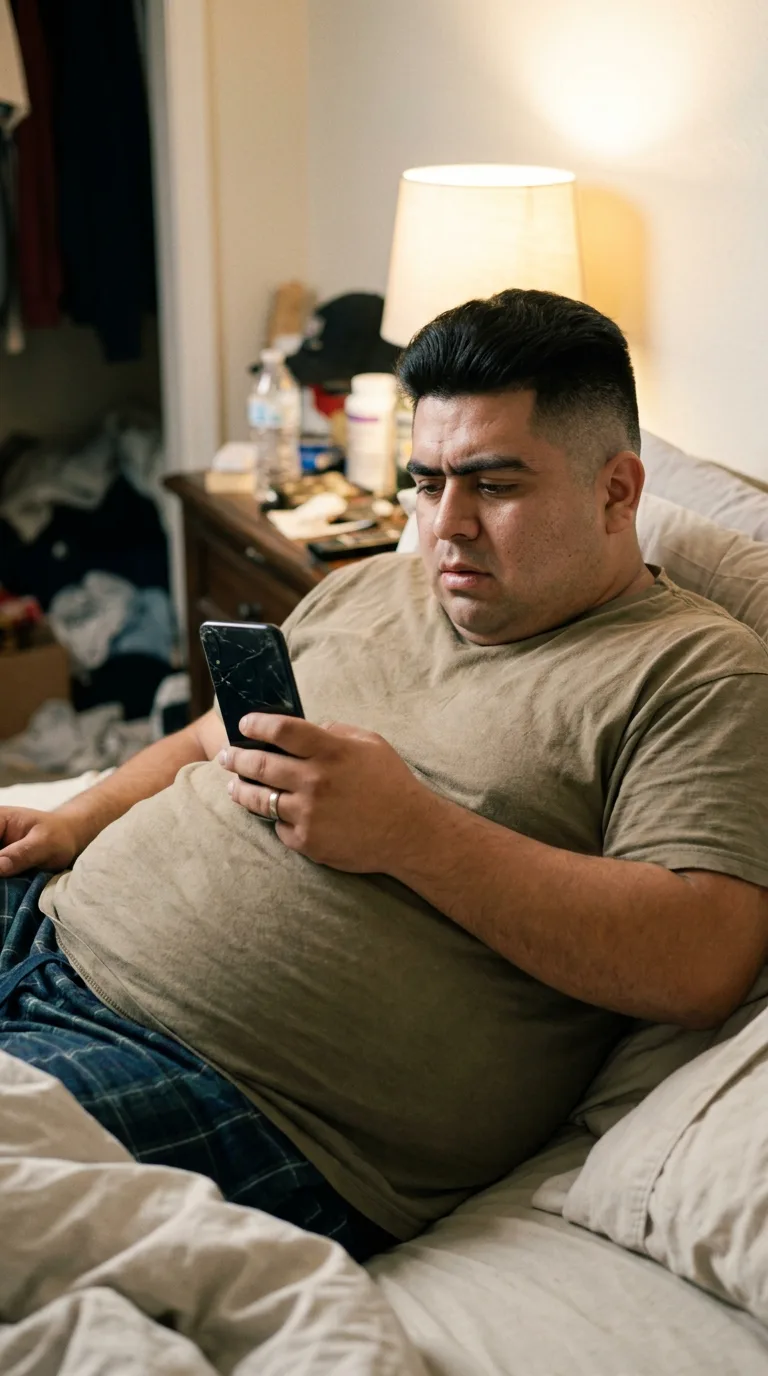
Rarest thing about him: A unibrow — rare, 1 in 51
Season 0seed 1192190777 · engine v10
Character card
lineage LJL8SV
His body-swap story
@marco.villagrana rolled the wheel on and woke up as Marco Villagrana — their first, spent 10 minutes in him, then spun the wheel and woke up as Kyle Ostrander
---
Nothing is on. That's the truth of it, the whole excuse: a Tuesday with nothing on, the kind where you've already refreshed everything refreshable and the apartment is quiet in that specific late way where quiet starts to feel like a dare. You found the site three weeks ago and didn't believe it, and then you believed it a little, and tonight you believe it enough to type in a card number. vessel.cards. A wheel, rendered too smoothly, spinning under a header that says nothing about what it's actually for. You have wanted this the way some people want a color of car or a face they saw once on a train — uselessly, for years, in the specific privacy of two in the morning. You press spin because it is finally a button and not a wish.
It doesn't ask you to brace. There isn't a countdown.
There is a bed that isn't a bed you know, and a weight settling into you that is not a weight you have ever had to think about before — hip, gut, thigh, all of it low and warm and already sweat-damp along the waistband of gym shorts — and a phone in your hand, screen lit, a thumb (yours now, blunt, a plain gold band riding loose over the knuckle) scrolling down through texts addressed to somebody named Kenji. You are mid-scroll. You were mid-scroll before you got here, is the strange part — his hand was already moving and your arrival doesn't interrupt it so much as slide underneath it, like stepping into a walking man's shoes without breaking his stride. The room smells like fabric softener and something fried a few hours ago. A lamp is on. It is too warm for the hour it apparently is where you are, evening-turning-night, but here the window behind the blinds is still holding a strip of orange, low and dry, and that wrongness — his golden hour against your black one — sits in you for one full second like a held breath before it stops mattering, because everything is about to stop being about the time.
The shirt against your back says something first. It's thin, soft from washing, a little tight at the belly, and touching it — no: *wearing* it, the second beat of skin-on-cotton warmth — gives you a morning. Him standing in front of a mirror he doesn't love, pulling this exact shirt down over his stomach, sucking in out of habit though there's no one to see, letting it go because there never is anyone, just Priya still asleep in the next room, her breathing the only sound in the apartment. Not a girlfriend, a roommate — you get that clean and immediate, the way you get his name a half-second later, Marco, off the edge of a mug on the nightstand, WORLD'S OKAYEST PHOTOGRAPHER, a gift from an ex two apartments ago who still texts him on his birthday and whom he still, guiltily, checks for like a loose tooth.
The phone is the loudest thing he's touching and it gives the most. Not his — he found it, or someone handed it to him, a secondhand thing bought off an app to replace the cracked one you can feel the ghost of in his other memories, and it came with somebody else's whole life still logged in, notifications addressed to Kenji stacking up like mail through a mail slot nobody's forwarded. He'd meant to wipe it. He hadn't. Instead he's been doing exactly what you're doing right now — thumbing down through a stranger's conversations at the greedy, guilty speed of a man reading somebody's diary because it fell open in his lap. It made him feel less alone for an hour, is the shape of the feeling underneath it, before it started making him feel worse.
His hands, when you let them go still, want to drum against his thigh, four fingers, an old habit older than the wedding ring — nerves, since he was a kid, since a childhood that hands you nothing but a flicker: a smaller version of this same face, this same unibrow drawn thick and dark across it even then, other kids' fingers pointing at it before he learned to wear the joke first so nobody else could land it clean. He carries something quieter than that now, managed, a bottle in the bathroom cabinet he is decent about, an appointment every few weeks he doesn't tell people about because the shame of it healed crooked even after the rest of him didn't need it to. He has never had a drink in his life and never wanted one, never smoked, and something in the body agrees with that so completely it isn't even a decision anymore, just a shape he's grown into, heavy and settled and steady on his feet in the way of a man who has learned to move a big body carefully through small rooms full of light stands and extension cords.
The camera strap he isn't wearing right now still lives in his shoulders anyway — a groove worn into muscle memory, the particular ache of standing all day angled sideways to hold a reflector against a stucco wall while somebody's kid graduates or somebody's cousin gets married, the low sun of this city flaring white off silver fabric into his squint. He loves it more than he tells people. He is bad at telling people things, which is most of what's wrong at home — a wife two rooms away right now, or two hours away, or asleep, you can't tell yet and neither, some nights, can he — a marriage gone quiet in the specific way of two people who stopped fighting because they stopped bothering, and an old girlfriend from before her who never fully left the freeway of his thinking, an exit he still slows down near without meaning to.
The blinds cut three gold lines across the wall. Somewhere past that wall a lock rattles, keys, a voice calling something ordinary down the hall — Priya, home, unbothered, no idea a wheel on a website just finished spinning through the man she lives with.
You look down at the phone still lit in your palm, Kenji's messages frozen mid-scroll, and past it to the hand holding it — thick fingers, gold band loose at the knuckle, a small white scar you didn't put there and don't ask about — and you turn it over once, slow, like checking it's real.
Then you look up, into the lamp light, and say, to no one:
"Whoever this guy is — I hope he's got a better phone than this."