Trevor Marsh
Fictional. Generated by AI — not a real person, and no likeness of one is intended.
22, sales rep in Los Angeles · rolled by @connor.waskiewicz · card — no film
History
who has worn him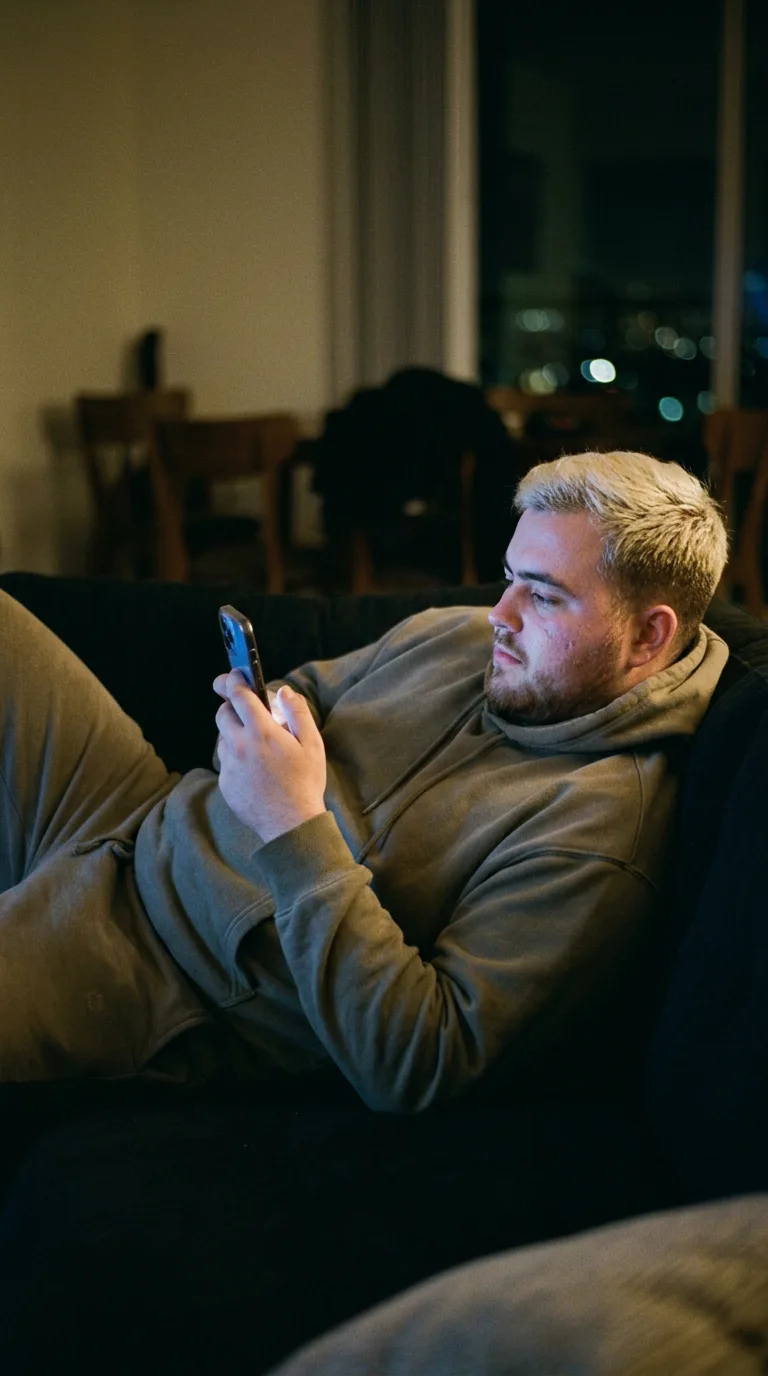
Rarest thing about him: Bleached blond — common, 1 in 54
Season 1seed 1569967163 · engine v11
Character card
lineage 2NZHHJ
His body-swap story
@connor.waskiewicz, wearing Dylan Quiroga, rolled the wheel on and woke up as Trevor Marsh, spent under a minute in him, then spun the wheel and woke up as Ismael Cordero
Four minutes ago you were nobody, and now you're less than that. Dylan Quiroga's bedroom is dark and everyone in the house is asleep, and you are standing at the edge of his bed in his body, lazy eye drifting, looking down at a phone that isn't yours, in a life that fits like somebody else's jacket. Twenty-one years old and Eastern Kentucky and a sales job that already feels like a debt you inherited without signing for it. Four minutes was enough. You know already there's a girlfriend's name in the call log you don't recognize the weight of, a truck payment you didn't make, a body that aches in the knees for reasons that aren't yours to have earned. It's the middle of the night here and nothing is happening and nothing is going to happen, and that stillness is the whole problem. You didn't spin the wheel to sit in a dark room being a stranger to yourself. You open the site again, thumb steady, the way it gets when the wanting is simple. You spin.
The room that receives you is not dark. It is lit blue, close, six inches from a face that has quit blinking on its own schedule. You are lying on your side, on top of a comforter, weight settling into a body that takes up more space than the last one — heavier through the shoulders and gut, warmer somehow, thicker in the hand that holds the phone. The thumb was stopped mid-scroll. It starts again under you, faster than he had it going, flicking past a video of somebody's dog, past a meme he'd have laughed at, past a text thread with a name in it you don't know yet. Outside this apartment it is evening, city-colored, and somewhere behind you through a wall a television is on low. You blink at the correct intervals now. He does not.
The shirt is the first thing. Not this shirt — the shirt from the memory that comes up through the hoodie sleeve currently bunched at your elbow, gray, worn soft, and underneath it a flash: this morning, or some morning like it, pulling this exact hoodie over his head in a bathroom that smells like her shampoo, the mirror fogged at the corners, a lanyard already looped around his neck from the day before because he never remembers to take it off. Trevor Marsh. The name arrives with the smell of the hotel carpet — some conference floor, recycled air, a lobby with low couches, him leaning against a pillar with the lanyard's laminate card turned backward against his chest out of habit, waiting on a client who is eleven minutes late and probably not coming. He hates that job in the specific, tired way of someone who is good enough at it to never quite fail and never quite advance. Quota met. Quota barely met. A manager who says *solid quarter* like it's an insult wearing a smile.
The phone in your hand keeps giving him back in pieces. Texts from a woman named Priya — her name lands with a whole three years attached, an apartment they signed for together after eight months of dating that everyone said was too fast and that turned out, so far, fine, better than fine, the two of them cooking bad pasta on a hot plate before they owned a real stove. She is asleep right now in the next room, or she is out, the memory doesn't specify, only that the sound behind the wall is her show and not his, and he'd been putting off going to bed until she finished it because he doesn't like falling asleep before she's home in the apartment even when she's just in the next room.
The hoodie's drawstring, worn soft at the tips from being chewed on in traffic — a nervous habit from his twenties that he thinks nobody's noticed. Under your borrowed weight the couch cushion holds a memory of every night like this one: him half-watching something with one eye on the phone, the ordinary tired hours of a Thursday that don't feel like anything until they're a year gone. There is a rosary somewhere in a drawer he hasn't opened since Christmas at his mother's, guilt riding under it thin and old and Catholic-shaped, the kind that shows up mostly on car radio at red lights. There's a big Friday two weeks back — tequila, a work friend's birthday, singing badly in a car that wasn't his — the last time he let himself go loud. He does not smoke, never wanted to, the one habit he dodged watching his uncle die slow from it.
Your shoulders are wider than they've ever been across; the gut sits low and soft and familiar-feeling in a way this body has clearly made peace with — no shame in it that you can find, just weight he carries the way you'd carry a bag you've had so long you forgot it has straps. Feet planted, socked, against a rug that remembers being walked on barefoot every morning toward a coffee maker with a chip in the handle. Knees fine. Back fine. Beard rough under your own touch when your hand drifts up without meaning to — a gesture he makes, not you, muscle memory surfacing before you've asked it to.
You sit up. The room resolves — courtyard light through the blinds gone orange-dim, a dry palm frond shadow laid dead still across the wall, Priya's laugh coming thin through the drywall at something on her show.
You look down at your hands — his hands, blunt-fingered, a little callused at the base from a decade of nothing more dramatic than gripping steering wheels and shaking too many hands too hard.
You turn one over, like it might tell you something it hasn't already.
Then you look up, toward the sound of her laughing, and say, quiet, mostly to yourself: "I don't even know what I'm doing tonight."