Ismael Cordero
Fictional. Generated by AI — not a real person, and no likeness of one is intended.
40, manager (mid-level) in New York · rolled by @connor.waskiewicz · card — no film
History
who has worn him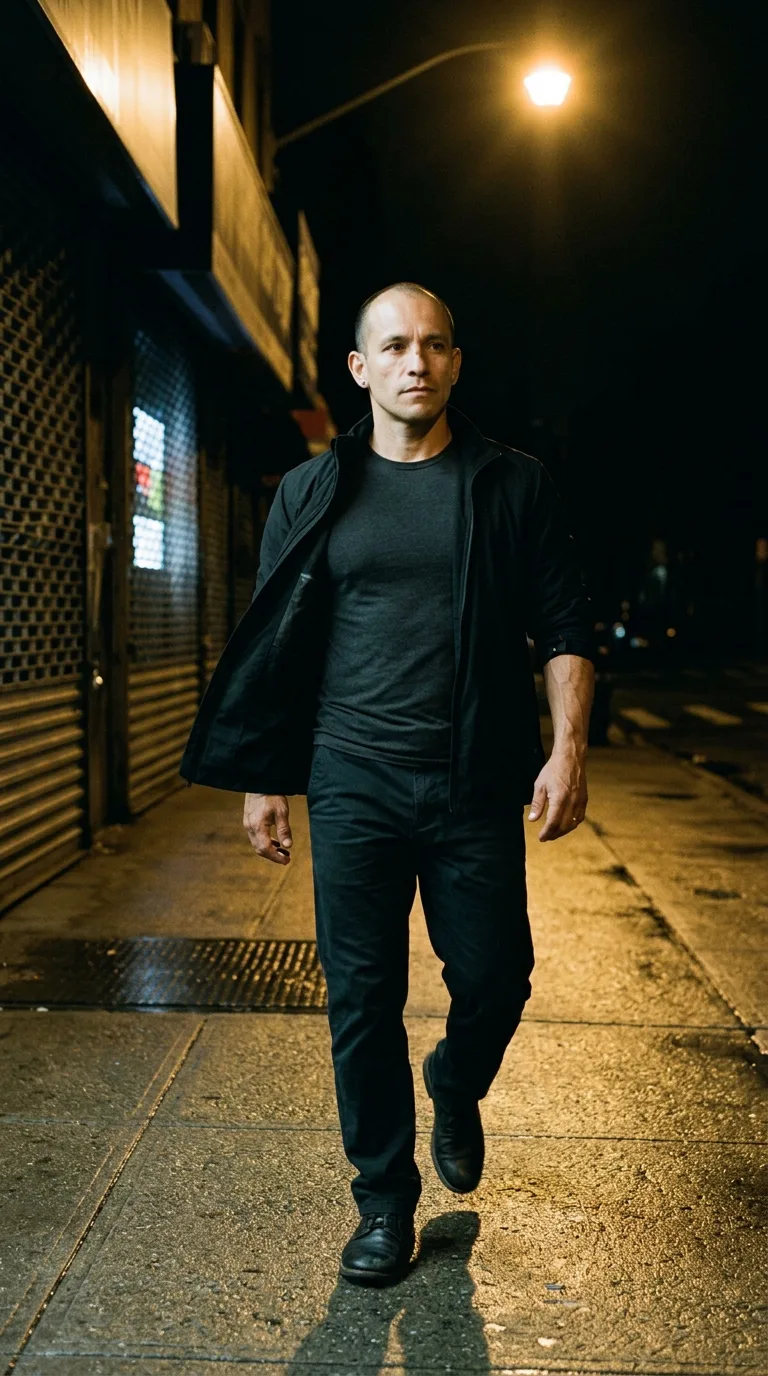
Rarest thing about him: Drunk, walking home the long way — common, 1 in 64
Season 1seed 786454076 · engine v11
Character card
lineage 2NZHHJ
His body-swap story
@connor.waskiewicz, wearing Trevor Marsh, rolled the wheel on and woke up as Ismael Cordero, spent under a minute in him, then spun the wheel and woke up as Denny Aubuchon
Trevor Marsh's apartment is quiet the way a place gets when nobody who lives there has ever cleaned it out of love. You are standing in his kitchen in his body, less than a minute old in him, and already you know the whole shape of tonight without wanting to: the fridge with three energy drinks and a takeout box gone waxy at the corners, the commission spreadsheet still glowing on the laptop, the framed photo of a father he does not call. You spun into this one hoping for something with better hands. Instead you got a big soft man who cries in his car in parking garages and has told you so, in fragments, all evening — a breakup two years cold that he still narrates like news. He is heavy in a way that makes the couch groan, and his knees already complain when you stand from it. There's a beer in the door of the fridge, three-quarters gone, and holding it gives you the last thing he felt before you arrived: a kind of low static, wanting to not be anyone for a while. That's a feeling you understand better than most men would like you to know. You set the bottle down. Thursday evening here, boredom thick as the carpet, and you think: not this one, not tonight. You open the site on his phone, thumb slow with drink, and spin.
The street tips and rights itself and it is not his street.
Cold wet air first, then weight arranged differently around it — shorter, denser, compact in a way Trevor Marsh never was. A shoe scuffs the pavement once out of old habit and then does not do it again, because you have already caught the rhythm and corrected it, smooth, like a machine finding its gear. Sodium light lies orange on wet stone. A parked car under your palm, cool, beaded with condensation. Somewhere above, a window unit hums. You are standing on a Brooklyn curb in a stranger's jacket, and the man whose walk this was is simply gone, the way they are always simply gone, no residue, no protest, just a vacancy with his shoes still on it.
The jacket is open and the zip-pull is cold against your knuckle, and touching it gives you a flash: a closet door, a wife's voice from another room saying *you'll catch your death*, and you shrugging into it anyway because the walk clears his head after doubles. Doubles — that's the word that comes with it, unbidden, tired in the bones of it. You reach into the jacket pocket without meaning to and your fingers find a toothpick, worn soft at one end, and the moment your teeth close on it your jaw remembers a thousand nights of this exact motion, small and automatic, something to do instead of a cigarette because his wife hates the smell worse than the dip. The dip tin is in the other pocket, half full, and just brushing its lid gives you the taste of it, that old-leather sweetness under his tongue at four a.m. in a stockroom nobody else wanted to close.
The wedding band on the left hand is warm from his skin, still, though the skin is yours now. Turning it with your thumb — an old unconscious tic — brings a wash of her: not a face yet, just warmth, a kitchen, a voice saying *Ismael* like it has two more syllables of patience left in it than she's showing. Ismael Cordero. The name arrives with the ring, the way it always does, last name first somehow, the way his mother said it. Two kids' shoes by a door, small enough to trip over, and the particular ache of stepping around them at midnight so as not to wake anyone, which tells you this is not new, this walking-late, this being not-quite-drunk-enough-to-stop.
His shirt is against your back under the jacket, and it gives you the morning he put it on — not this shirt, this exact one, a work polo dark as bruised fruit, buttoned with a hand that has done this every day for eleven years without looking in the mirror past the collar. Freshly shaved that morning, jaw smooth under fingers that check it out of habit, a small vanity he'd deny having. The glass-walled office comes with the collar: a door he leaves open on purpose, because he remembers what it was like when the door was always closed on him, some other manager, some other decade, before he became the one people had to walk past to get yelled at somewhere else. He is fair in there. He knows he is fair. It's the only thing about the job he's proud of, and holding onto the shirt's collar gives you the pride whole, unearned by you, entirely his.
The belt gives you almost nothing — just leather, ordinary — but the studs in your earlobes, when your fingers find them absently, bring back a barbershop, younger, someone laughing at him for getting them at thirty, and him laughing back because he liked them anyway. Small vanities. A nose under your fingers when you touch your own face — crooked, an old break, and touching it gives you one bright unwanted flash: a bar, twenty-two years old, a fist that wasn't aimed at him but got there anyway, and the particular pride of not going down.
You are five-foot-three in this one, low to the ground, compact with muscle that came from moving boxes before it came from any gym, forty years old and every year of it sitting correctly in the joints — not sore yet, just present, a body that knows exactly what it can lift and does it without asking permission from anyone. It is a good body. It is a body that has never once, in its whole life, felt like yours.
The old ex surfaces last, thinnest of all — no photograph to hold, just a smell of a different apartment from twenty years back, gone before you can make it stay. It doesn't matter tonight. It is two in the morning here and eleven, wide bright Los Angeles evening, back in the man you left standing in his kitchen holding a warm beer, boredom being the whole engine of what you just did.
You stop at the corner — the wrong corner, not home — and hold your hand up in the streetlight, turning it, watching the wedding band catch the sodium orange.
"Coming, coming," you say, to nobody, in his voice, low and a little rough with drink and the dip still working at the back of it, and you don't know yet if you mean the wife waiting up or the wheel waiting wherever it always is, humming, patient, yours whenever you decide to go back to it.