Travis Lindqvist
Fictional. Generated by AI — not a real person, and no likeness of one is intended.
37, janitor in Nashville · rolled by @klaus.dietermann · card — no film
History
who has worn him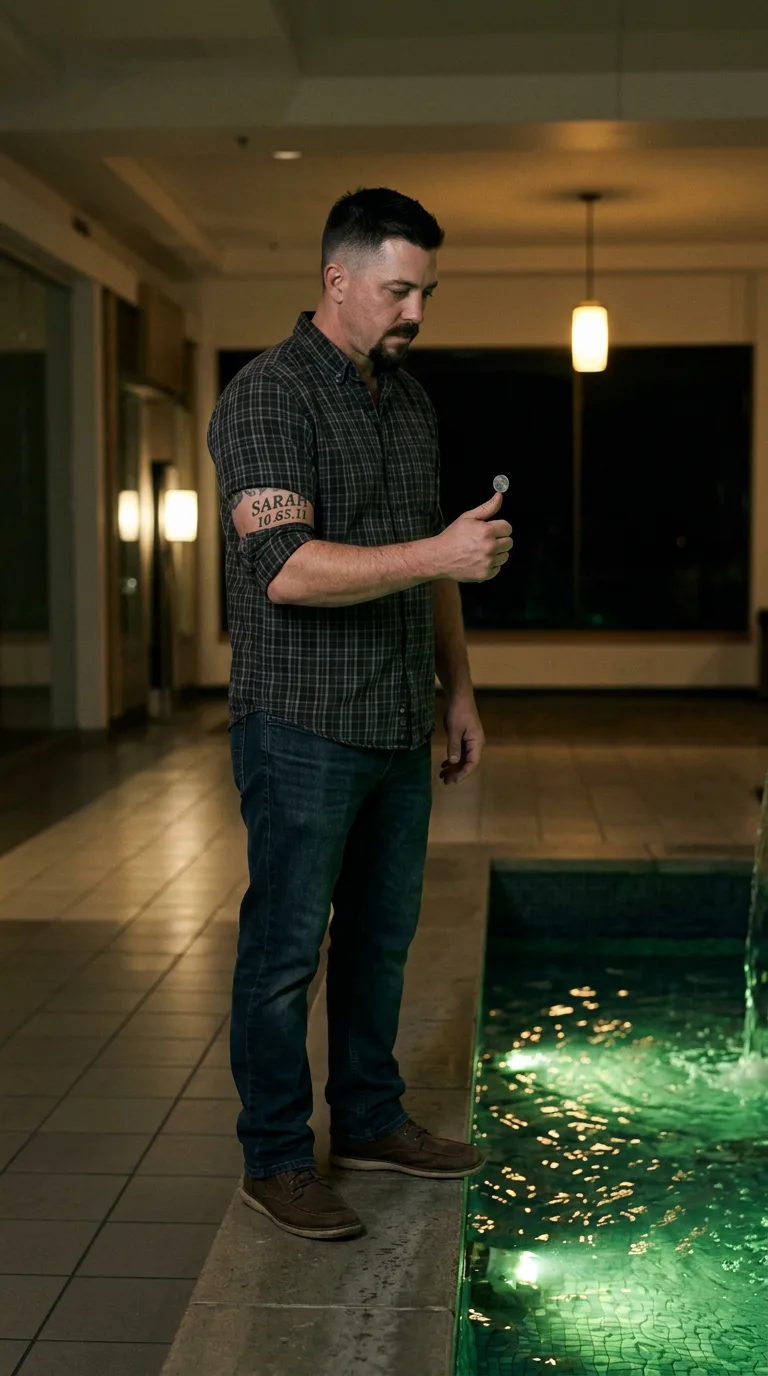
Rarest thing about him: Making a wish — common, 1 in 65
Season 1seed 785093930 · engine v11
Character card
lineage KEPHG1
His body-swap story
@klaus.dietermann, wearing RodneyAckles, rolled the wheel on and woke up as Travis Lindqvist, spent 16 minutes in him, then spun the wheel and woke up as Caleb Renstrom
Rodney Ackles's office chair creaks under you at an hour when the building is still dark except for the hallway motion lights, and his knees ache in the specific way that sixty-three years of knees ache, and you think: three minutes. Three minutes in this long cold body and already you are bored of the taste in his mouth, bored of the ops-manager email open on the monitor that isn't even yours to answer, bored of being tall. You didn't spin for him. You never spin for anybody specific — you spin because the wanting comes back, always, faster than you want it to, a kind of hunger with no bottom in it, and this morning it came back before the coffee did. Blond goatee, blue eyes, a title with "manager" in it — none of it holds. You open the laptop, go to the page with the wheel on it, and you pay again, the thirty-fourth time, not even running a hand along Rodney's jaw before you let him go. You don't say goodbye to bodies. You never have.
The wheel spins somewhere behind your eyes and then there is no wheel, there is water.
Green water, lit from underneath, and the sting of chlorine and closing-time quiet, and a coin just leaving a thumb that is not the thumb you had four seconds ago — shorter fingers, a callus along the side of the first knuckle, a wedding ring that isn't there, never was. The coin drops without turning once. The splash goes in wrong, pulled inward like the fountain swallowed instead of received, and you stand over it in his body at the lip of the stone, feeling his weight settle into your borrowed command of it — shorter than Rodney by half a foot, heavier through the shoulders, a tiredness sitting low in the lower back like it's lived there a decade. Somewhere above, a mall speaker plays nothing, because the mall closed hours ago and should not, by any clock that makes sense of a man standing here making a wish, be open now at all.
It comes in through the shirt first. Plaid, cotton gone soft with washing, and the second your skin registers the collar against your neck you get an elbow deep in a closet in a one-bedroom off Charlotte Pike, the hanger his sister gave him three Christmases running because she thinks he needs more of them than he buys himself. Sarah. The name arrives with the tattoo before you even look down at the arm — SARAH 10.65.11 in the blue-black script riding the inside of the bicep, half under the rolled sleeve, and what comes with it is not a woman's face but a hospital room, fluorescent and too bright, and a weight of four pounds eleven ounces that was his niece for six days before the doctors stopped saying anything hopeful. He doesn't talk about her. Nobody at the school asks and he's never once offered it, not to the vice principal, not to Deb who runs the cafeteria and flirts with him on Tuesdays, not to anybody at Robert's Western World where he drinks on the nights he can afford to and some nights he can't. The date is the day she was born and the day, eleven days later, that they buried her, both facts carved into the same stretch of skin because there wasn't room on his arm for two separate griefs.
The jeans know how to stand in them — he bought these at the Walmart on Nolensville two winters ago, the receipt still probably in the glovebox of a truck that needs a timing belt he can't swing — and the boots under you know a thousand miles of waxed linoleum, the specific ache in the arches that comes from eight hours a night on a school corridor floor that never actually gets clean, just cleaner, the fluorescent hum of the halls after the buses are gone and the custodial closet smells like bleach and pine and something underneath that's just tired man. He took this job four years ago between other jobs that didn't take. He is not unhappy in it, exactly — there is a particular peace, close to prayer, in a hallway that is entirely his for eight hours, the floor buffer's low drone, the way the trophies in the case catch light when nobody else is there to see them catch it. He goes to church some Sundays, the ones where the hangover lifts early enough, sits in the back pew of the Methodist church his mother still attends, says the responses by memory without meaning most of them.
His hand remembers the coin was a quarter from the change jar in his truck, and the wish — half-formed, more feeling than words, the kind you make at eleven at night with nowhere else to put the want — was for enough, just enough, to stop doing the math at the register at Kroger. He pulled a double tonight covering for Earl, which is the only reason a man on a night shift is standing at a mall fountain at an hour when the mall is supposed to be dark: the center let the cleaning crew in after close to strip the food-court floor, and he came down on his break to see the water because the green light of it, stupidly, calms him, has since he was a boy at this same mall with his mother before she stopped being well enough to take him anywhere. His throat still carries the dryness of the last pouch he tucked under his lip twenty minutes ago. His pocket still has three dollars and change and a church key and nothing else, because there is nothing else to have.
You feel his hand already moving before you decide anything — index finger and thumb closing on air where a pen isn't, the tic of a man who has clicked a pen so many thousands of times his fingers do it empty now, out of habit, out of nerves he'd deny having.
You look down at that hand. Short nails, a thin white scar across the base of the thumb from a box cutter two Augusts back, nicotine-yellow at the first knuckle though he quit the cigarettes for the pouches years ago. It is not Rodney's hand. It is not any hand you've worn in thirty-three men before him, and that is most of the pleasure of it, every time, right at the start, before the knowing settles in and becomes merely yours.
"There you are," you say, to no one, to the water, to him — and you don't know yet if that's thirty seconds or thirty years of his life left to find out in.