RodneyAckles
Fictional. Generated by AI — not a real person, and no likeness of one is intended.
63, operations manager in Atlanta · rolled by @klaus.dietermann · card — no film
History
who has worn him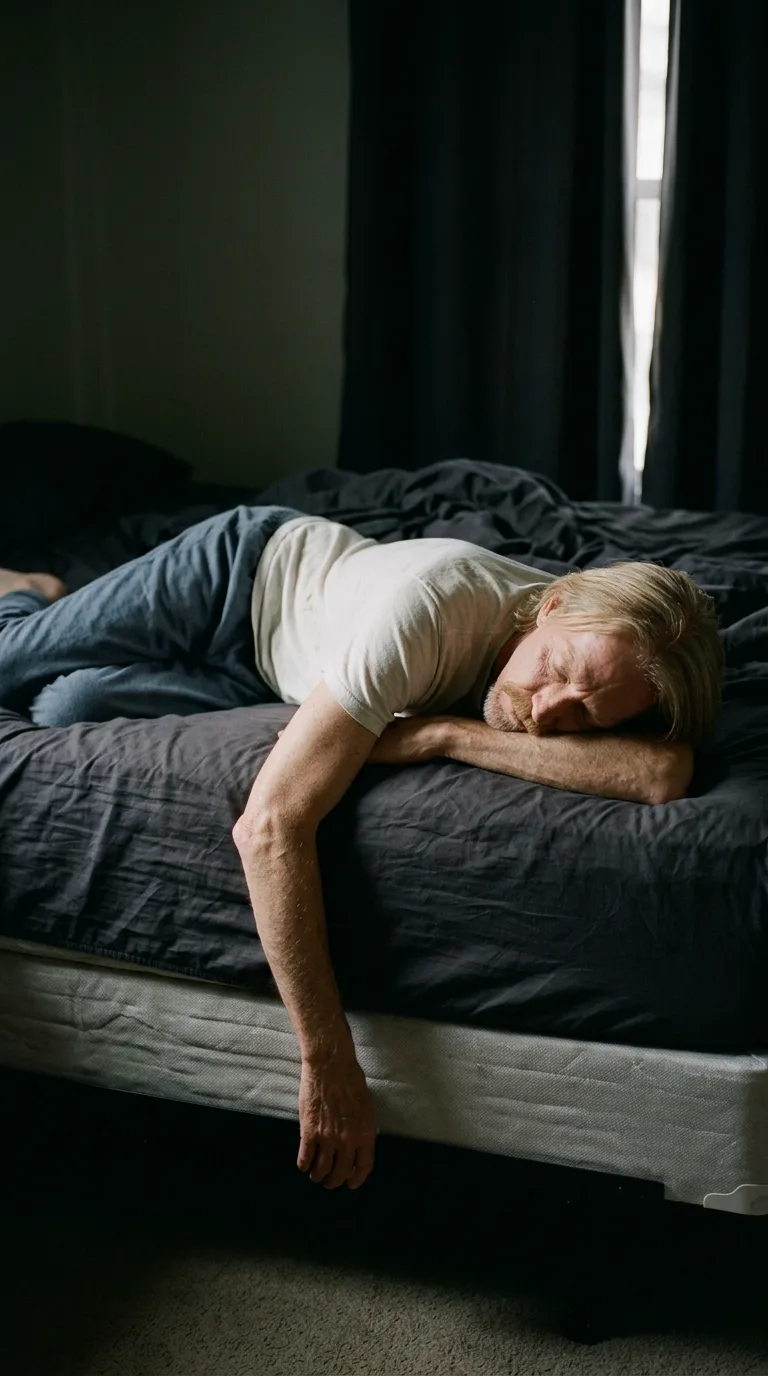
Rarest thing about him: 6'2" — common, 1 in 29
Season 1seed 670237249 · engine v11
Character card
lineage KEPHG1
His body-swap story
@klaus.dietermann, wearing Gregory Alsept, rolled the wheel on and woke up as RodneyAckles, spent 3 minutes in him, then spun the wheel and woke up as Travis Lindqvist
The office is dark except for the glow of Gregory Alsept's laptop, and you hate, specifically, the shape of his hands on the keyboard — thin fingers, a professor's hands, soft in a way that has started to feel like a complaint. Two days and sixteen hours in him and the itch has already set in, the one that has nothing to do with Gregory and everything to do with you: the knowledge that there is a page open in another tab, a wheel on it, and that nothing is stopping you from spinning it again except the small, diminishing effort of admitting you want to. You tell yourself it's curiosity. It's always curiosity, right up until it's done. You tell yourself thirty-two was enough of a number that thirty-three shouldn't matter, and that's exactly the kind of math that got you here the first time. Gregory's apartment smells like coffee gone cold and old paper. Somewhere down the hall a radiator clicks. You put two fingers on the mousepad, feel the cheap plastic click under Gregory's nail, and you spin.
The breath changes first — ragged, then suddenly, impossibly even, like something exhaling for you. The arm that was hanging off the mattress, numb to the shoulder, draws itself up on its own authority, and the whole body turns onto its back and folds its hands over its chest, a position this man has apparently never once chosen for himself in sixty-three years of sleeping, because something in the muscle resists it even as it happens. Humid air presses down through the room. There is sweat already cooling along a ribcage you don't recognize yet, a mattress that gives wrong, a ceiling fan somewhere clicking on every third rotation. You are enormous suddenly, long-legged, a stranger's skinny frame laid out straight as a plank. Streetlight comes through a gap in blackout curtains and lies across the back of a hand that is not the hand you had ten seconds ago.
The knuckles crack — all by themselves, an old unconscious tic, one, two, three, before you've even thought to call them fingers — and that small ordinary violence is the key that turns. A flash: zip ties and a clipboard, fluorescent light on a mezzanine, the whole distribution floor spread out below like a sea with forklifts moving through it, and the particular ache of standing for ten hours that lives permanently now in both knees. Another flash: a woman's voice, not the one beside him in this bed — Carol, saying his name like she used to when it still meant something tender instead of tired, years and years gone, a version of himself that still writes letters in his head he never sends. He feels, distantly and with a guilt that is entirely his own, that he loved her more than he's loved anyone since, and that he has never told Denise this, not once in the four years they've shared this house.
The sheet under him is cheap cotton, pilled with washing, and through it comes the memory of getting into these same sheets eighteen hours ago — no, longer, this bed remembers him, it has the groove of him worn into the mattress on the left side. His hand finds the hem of the undershirt he's wearing, soft and thinned from washing, and there it is: putting it on, an ordinary morning, standing in the bathroom light, the goatee needing a trim he never gets around to, the belt threaded through the loops of khakis by hands that have done it nine thousand mornings running, badge clipped to the waistband before he even thinks about it, clipboard tucked under one arm like a second spine. He is a man built out of routines — coffee, badge, floor, numbers, home — and somewhere in all that routine three kids grew up and moved out and started calling on Sundays, and he loves them with the specific ache of a man who missed some of it to a shift schedule he couldn't control. He has not had a drink since Easter. He has never liked the taste anyway. He goes to church on Sundays when the shift allows it and means most of the words.
The body itself tells you things nobody is handing you: how the lower back announces itself first thing, every single morning, how the shoulders have gone narrow and the forearms stay wiry anyway from twenty years of lifting clipboards and pallet counts, how the knees crack louder than the knuckles ever will. Sixty-three years old and still upright, still walking the mezzanine, still able to put in a full day standing, and tired in a way that has become so constant it no longer registers as tired, just as Tuesday, just as Thursday, just as whatever day this almost is.
You open your eyes all the way. The ceiling fan turns, clicks, turns. Beside you Denise breathes on, undisturbed, her back to you, and you look past her to your own hand lying flat against your chest, and you turn it over slowly in the gray light, watching the fingers flex like you're testing whether they'll answer.
"Lord," you say, quiet, to no one, in a voice gone gravelly with sixty-three years of use that isn't yours, "what time is it."