Travis Denbo
Fictional. Generated by AI — not a real person, and no likeness of one is intended.
28, janitor in Las Vegas · rolled by @colin.hasbrook · card — no film
History
who has worn him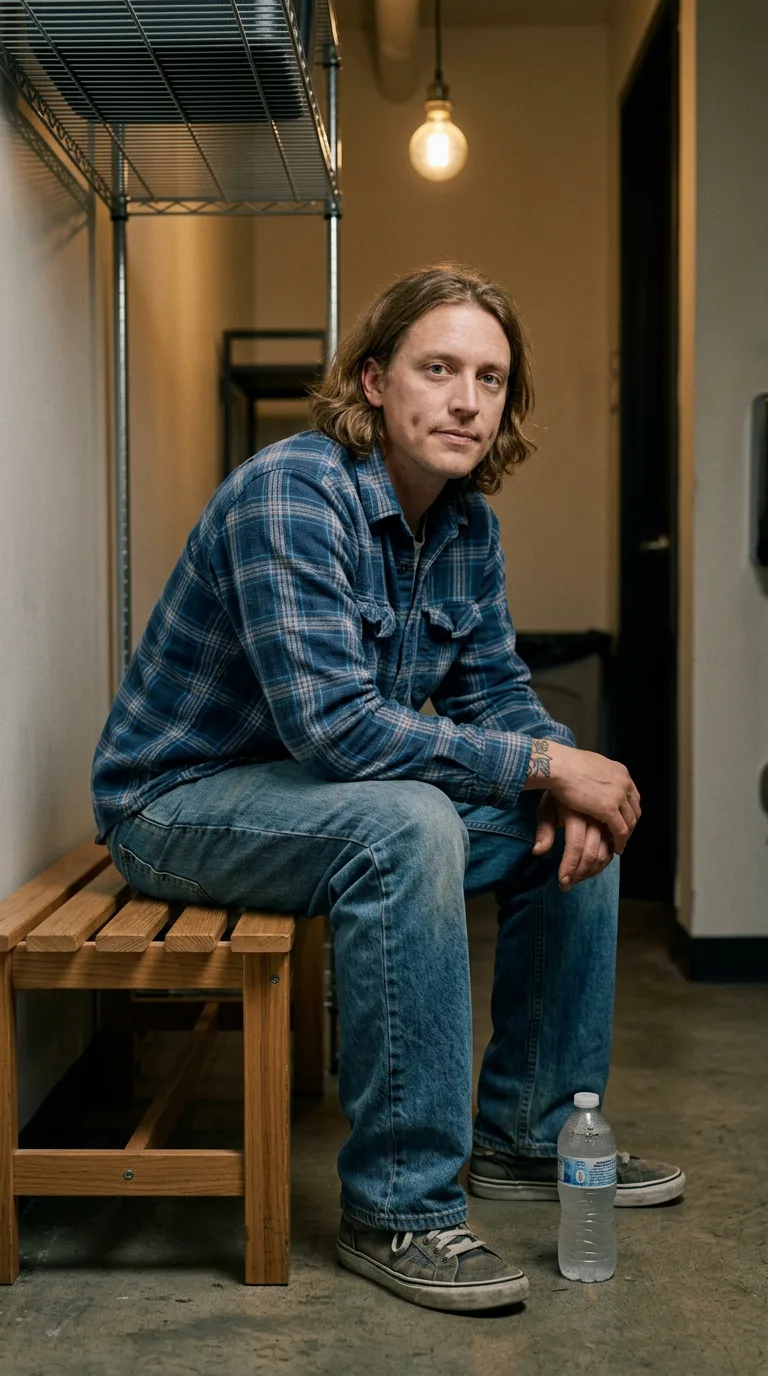
Rarest thing about him: Las Vegas — uncommon, 1 in 44
Season 0seed 420411811 · engine v10
Character card
lineage 2NZHHJ
His body-swap story
@colin.hasbrook, wearing Mark Pilarski, rolled the wheel on and woke up as Travis Denbo, spent 18 minutes in him, then spun the wheel and woke up as Marcos Reyna
Mark Pilarski's knees are bad going down and worse coming up, and you feel both of those things as your own now, which is the whole problem. You've been him fifty-some seconds. The breaker box is open in front of you, gray steel, the customer's dog barking behind a door somewhere in this house, and your — his — right hand is still holding a flathead screwdriver he was using to reseat a lug. White streak in his hair hanging in his eyes. Green eyes that need reading glasses he keeps forgetting in the truck. Fifty-eight years old and every one of them sitting in the lower back. You did the polite thing for about half a minute — introduced yourself to his hands, felt the calluses, thought, fine, electrician, small town, this'll do — and then the boredom arrived the way it always does, fast and total, like a door closing on a room you already knew the shape of. There is nothing left to discover in a man in under a minute. You know already there's a wife somewhere in this life you haven't met yet and don't want to. You set the screwdriver down on the top of the panel, take out your phone — his phone, cracked case, off-brand charger cable curled in the truck cupholder in a memory that isn't yours yet and won't ever be now — and you open the site.
The wheel loads the way it always loads. You spin it without narrating it to yourself, the way you've stopped narrating anything, six hundred and sixty-eight times deep into a habit that used to feel like a decision.
The bar is two inches wider than it's sat all year, and that is the first thing you know — before you know hands, before you know weight, you know that the bar is wrong under your palms, wider, and the body corrects for it without asking you, drops the hips, tightens the lats, because it has done this exact lift ten thousand times and does not need you awake to do it again. You are grinding out a rep that should have ended a minute ago. Breath is not coming through your teeth in the hiss he had going before; it's just gone, held, spent on the work. The face — his face — is doing none of the things a last rep does. No grimace. Calm, almost bored, dimples sitting in his cheeks even now, even under a bar that is trying to fold him. Then it's racked. Metal on metal, the sound of the safeties catching it. Your arms drop. You are sitting again, forearms on knees, before you've decided to sit, and a water bottle sweats on the concrete by your foot, and somewhere behind you gym mirrors are throwing back a room full of people who are not looking at you, because nothing about this looked like anything.
The bottle is what does it. You pick it up — his hand does, and you're just in the hand — and the plastic is cold and beaded and gives a little crackle under his grip and there it is: this morning, four a.m. dark outside a chain-link fence, a casino employee entrance with a keycard reader that eats his badge twice before it takes it. He clocked in at the start of a shift that other people call the middle of the night and he calls Tuesday. Swing shift, three years running. The corridor smell comes with it — floor wax, the particular ammonia-and-carpet smell of a service hallway under a casino at an hour when even the machines sound tired. He pushed a cart with a busted wheel down that hallway for eight hours, and somewhere in there he clocked out, drove home into a sunrise that always looks wrong to him, slept through the day like sleep is a debt, and got up in the gap the schedule leaves him, the one true unclaimed hour, and drove to the gym instead of back to bed. That's this. That's now, his now — the middle of his day by the clock on the wall, though the sun outside says otherwise, because his hours run backward from everyone else's.
The plaid shirt comes next, folded over the bench where he'll put it back on, and touching it gives you the getting-dressed of it hours ago — no, wait, that's tonight's shirt for after, it's clean, he changed at the locker before this, and pulling it over his head this evening — sleeves through, collar snagging on his jaw the way it always does because his hair's too long for a collar to sit right against, a flick of his head to clear it, automatic, done a thousand mornings that are actually evenings. Under the shirt, the body: five-eleven, thirty pounds of it built by three years of a schedule that leaves him nothing to do at four in the afternoon but lift, average build going quietly less average, shoulders that ache pleasantly, a left knee that clicks on the stairs and never on the leg press. Hands calloused from a mop handle more than from the bar, keys on a ring at his belt that aren't his own house key but a master for two hundred doors he'll never open all in one night.
He quit drinking eighteen months ago for no dramatic reason he'd tell you, just stopped enjoying the mornings-that-are-evenings feeling worse than they had to. Never smoked. The thing his hands do without him — click a pen — comes back off a memory of the gym counter, signing a guest slip, click click click while he waited for the front desk girl to find his membership number, and underneath that, further down, an ex-girlfriend's name arriving with no shirt or key to carry it, just there: Danielle, gone four months, who used to tease him about the dimples showing even when he was furious at her, said it made it impossible to fight with him properly. He agreed. He missed her exactly as much as a man misses somebody he still sometimes almost calls.
None of it is much. A man with $4,000 to his name, no ring, no god, no cigarettes, a corridor and a cart and a body he takes better care of than he takes of anything else he owns, because it's the one thing that's his outright.
You look at your hands — his hands, the wet-cold plastic bottle still in the right one — and you turn them over slow, the calluses at odd places a mop grinds into a man that a bar doesn't. You look up, past the rack, into the mirror where he isn't looking back at you the way he should.
"Wrong day for a personal best," you say, out loud, to no one in the gym who's listening, and you set the bottle back down on the concrete, already wondering how long the dimples get to be yours.