Tom Radek
Fictional. Generated by AI — not a real person, and no likeness of one is intended.
25, retail sales associate in Las Vegas · rolled by @colin.hasbrook · card — no film
History
who has worn him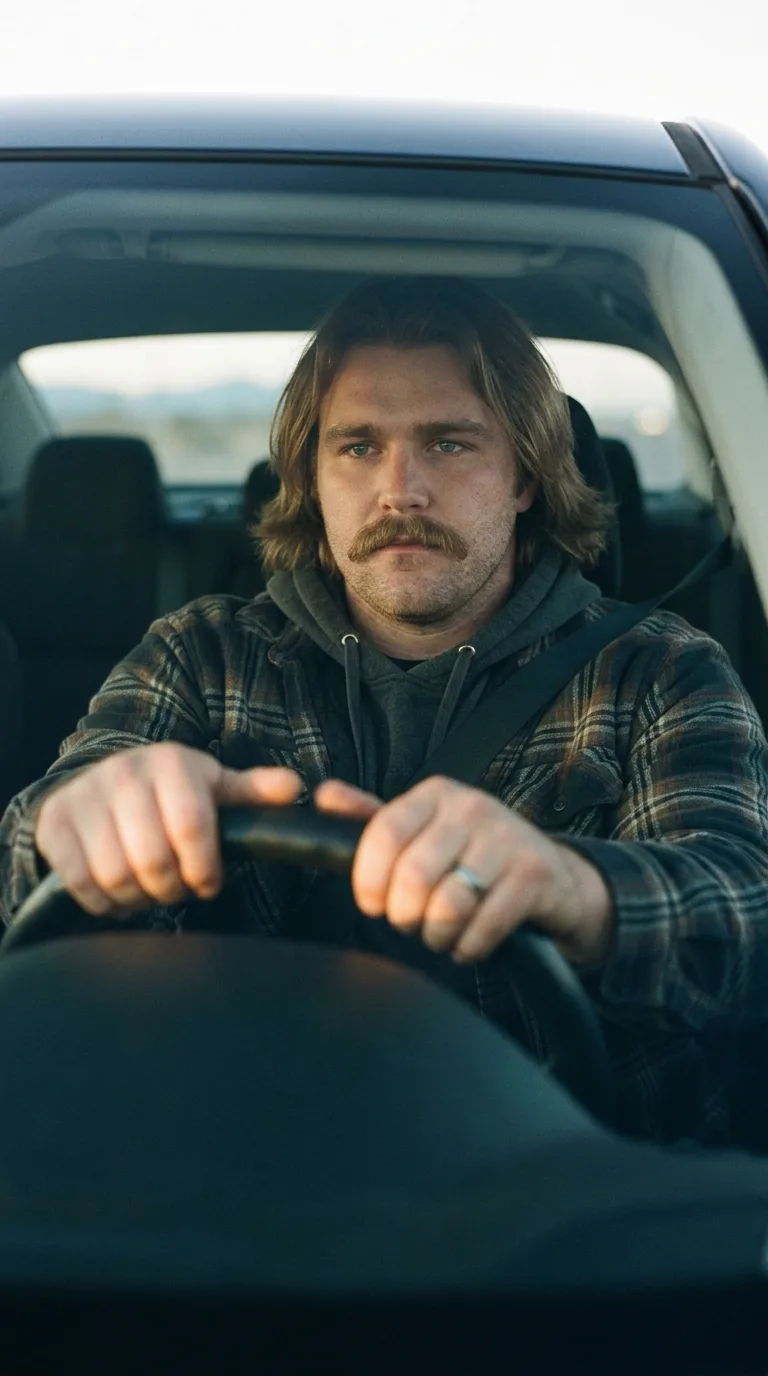
Rarest thing about him: Half sleeve — common, 1 in 32
Season 1seed 1242495943 · engine v11
Character card
lineage 2NZHHJ
His body-swap story
@colin.hasbrook, wearing Gary Pruitt, rolled the wheel on and woke up as Tom Radek, spent 2 minutes in him, then spun the wheel and woke up as Peter Yoon
Gary Pruitt's kitchen is quiet at eleven in the morning, and that is the problem. You have had his knees for less than a minute and already you know them: the left one that clicks on the second stair, the ache low in the back from thirty years bent under trucks. His coffee is going cold on the counter because his hand — thick-knuckled, a burn scar across two fingers he doesn't remember getting — set it down the second you arrived, and you stood there in a life that fit like a shoe worn to somebody else's foot. You did not spin again yesterday because you were curious. You spun again because Gary Pruitt is fifty-four and quiet and paid-off and there is a particular kind of morning, in a particular kind of body, where nothing left in it surprises you anymore. That is the whole reason, and it is enough.
You open the site instead of drinking the coffee. The wheel turns the way it always turns, without ceremony, and Gary Pruitt's hand is the last thing of his you feel.
Then: cold vinyl under two hands at ten and two, a seatbelt cutting low across a gut that did not used to be there, headlights ahead washing pale over asphalt that goes on into a dark not yet touched by morning. The dash glow sits along a stranger's knuckles — thicker than Gary's, a plain band on the left one — and the car is doing sixty on a road with no other cars on it, and your body, this one, is already easing the wheel a half-turn without you having decided to. It corrects itself before you've caught up to it. Both hands come off, low and wide, resettle. Somewhere behind your ribs a turn signal clicks on for an exit you have never seen before, and you understand dimly, secondhand, that it is not this man's exit either.
The plaid against your shoulders is heavier than it looks, flannel gone soft at the elbows from years of the same motion, and it gives you a Sunday: him standing at a closet in a bedroom with the blinds still down, pulling this shirt off a hook because the vest goes over it and nobody at the store cares what's underneath, his wife still asleep with one arm thrown over where he'd been, the smell of her shampoo still on the pillow when he leaned down to it before he left. Tom. The name comes with the shirt sleeve the way names do, sewn into a shift he's worked a thousand times — F-Team, four a.m., the casino corridor employee entrance smells like bleach and cold concrete and he has never once in three years gotten used to it. He works this shift because it pays better and because Denise's hours at the hospital run the opposite way and somebody has to be up when the other one's down, and it means whole days pass where they only wave through the doorway like neighbors instead of two people married five years, and there is a grief in that so small and so constant he does not call it grief, he calls it Tuesday.
His right forearm is warm where the ink sits, and the ink talks back to your hand before anything else does: the eagle, the ship, the roses, done cheap and young at twenty-two in a shop off Fremont with a friend who is not his friend anymore, colors gone soft the way American traditional goes soft, like it was always meant to fade into something you'd earned rather than something you'd bought. And under that, further down, quieter — Casey. Not a mark on him, nothing so obvious, just a name the arm remembers anyway, the girl before Denise, the one who left for Reno and a nursing program and never once asked him to follow, and some nights stocking the shelf at 4 a.m. with nobody around he thinks *what if* the way you'd worry a tooth, gently, knowing better.
The wedding band is cool and plain against the wheel, and it brings Denise whole: her laugh loud in a small kitchen, the two of them dancing badly to the radio because neither of them can dance and neither of them cares, the fight about money eight months back that ended in her crying and him holding her anyway because what else was there to do, the two of them deciding, without saying it in so many words, that they were fine as they were, no kids, just them and the odd hours and the mortgage on the little house three miles up this exact road. The seatbelt against a body that carries its weight low and solid, arms that know the particular economy of turning a box so the barcode faces out without looking, legs used to eight hours on tile — all of it settles into you at once, unbidden, a whole marriage and a whole shift and a whole ordinary unremarkable good life delivered through a flannel sleeve and a ring and a half-healed old ache in a knee that isn't Gary's anymore.
Your hands are on the wheel and they are not the hands you had this morning. You turn one over in the dash light, thick fingers, faded ink at the wrist, plain gold catching what light there is, and something in your chest that used to be Gary Pruitt's chest goes quiet and pleased in a way you don't examine too closely.
"There you are," you say, to no one, to the dark road, to the exit sign sliding past that isn't yours yet either — and you don't correct the wheel back this time, not right away, because you have him now, and there is no telling, not to you and not to him, how long that's going to be true.