Terry Whitcomb
Fictional. Generated by AI — not a real person, and no likeness of one is intended.
56, baker in Eastern Kentucky · rolled by @colin.hasbrook · card — no film
History
who has worn him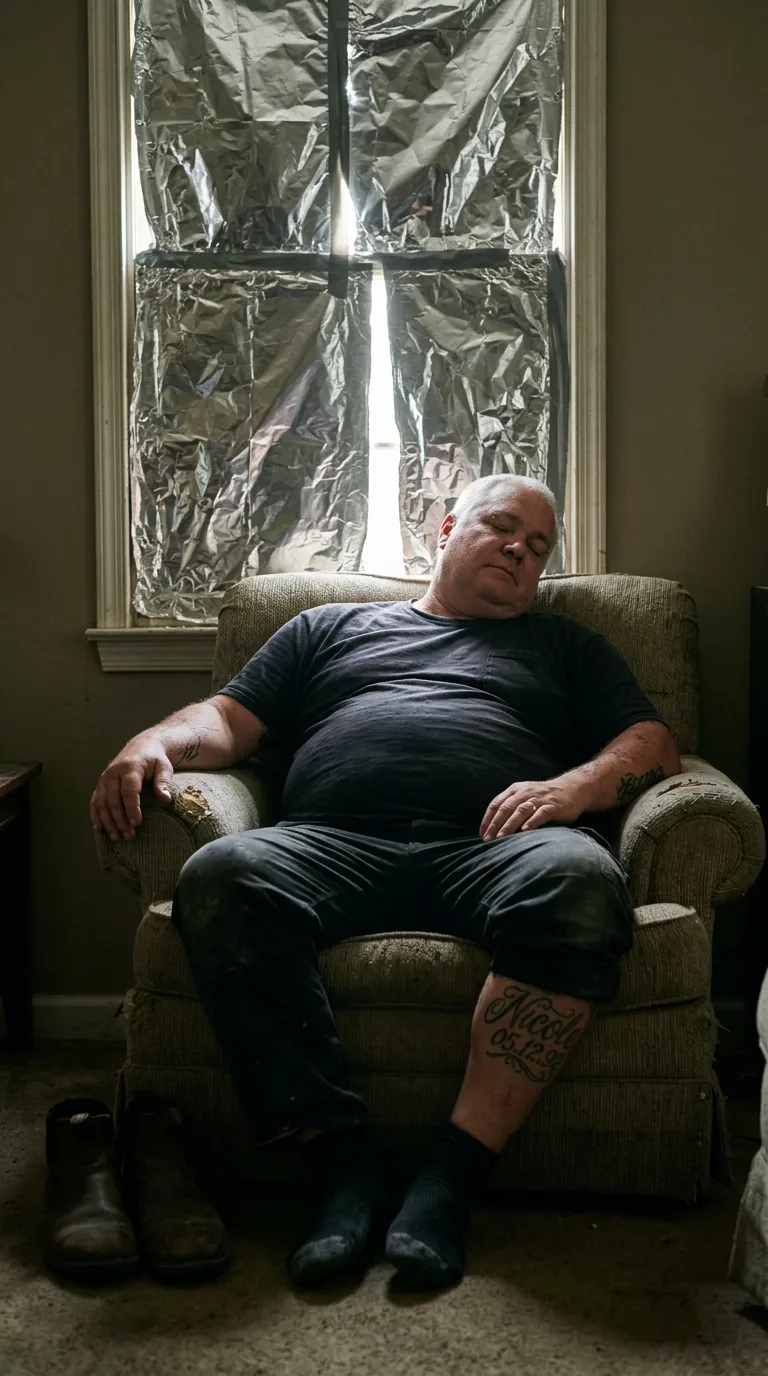
Rarest thing about him: Eyebrow — legendary, 1 in 333
Season 0seed 240537885 · engine v10
Character card
lineage 2NZHHJ
His body-swap story
@colin.hasbrook, wearing Deshawn Rutley, rolled the wheel on and woke up as Terry Whitcomb, spent under a minute in him, then spun the wheel and woke up as Vincent Casas
The plumber's forearms are what you notice first, every time you're him — the scars laddered up both of them, pink and shiny, old grease burns and a dog bite from a crawlspace job that never healed clean. You're standing in his kitchen at midday, phone in his scarred hand, the site already loaded because you loaded it before you even finished your coffee. You told yourself it was boredom. It isn't, quite. It's that his wife left a note on the counter this morning about his brother needing money again, and you are so tired of being a man other people ask things of, a man whose whole life is other people's pipes, other people's leaks, other people's water damage. Thirty-one years old in this body and it already feels like a rerun. A hundred fifty-three men behind you and this one barely lasted a season. You spin because you can, because nothing is owed here, because the wheel doesn't ask you to explain yourself either.
The light in his kitchen is flat and hard, a Monday doing nothing special. Somewhere it is also Monday, hours ahead, hours darker, and none of that matters to you yet.
You press the button.
The foil is peeling at one corner and a blade of light lays itself flat and hot across a stranger's face, and the face turns from it, stubborn in sleep, and then turns back and the eyes open straight into the glare and hold there. That's you now. Heavy in the chest, heavy everywhere, a body that has been standing at ovens for thirty years and sitting down like it's an argument it's losing. Boots off already, socked feet against a carpet gone thin as paper. Work trousers still on, waistband biting. Somewhere behind the ribs a low hum of blood pressure medication wearing off schedule. The recliner underneath you creaks in a way that says it knows this man's weight by name.
The apron isn't on you now — that's for later, for before-dawn — but your hand finds the armrest, worn soft and gray where a hand has gripped it ten thousand times, and that's the first key. Flour. The smell comes up out of nowhere, out of nothing you're touching, just memory riding in on the chair's stuffing like it soaked in with the years — flour dust hanging gold in the light of a kitchen at four in the morning, the particular give of dough under the heel of his palm, twenty-six years of it, since before the barbell went into his eyebrow on a dare from a woman who is now, God help him, his ex-wife's cousin. He remembers the sting of the needle more than he remembers her name most days.
You get up — no, he doesn't, not yet, you're still sitting in him — and your hand drops without asking to the calf, to the tattoo under the sock, and that's the second key, and it swings a door wide open: Nicole. May 12, 1992. Not his wife. His daughter, and the date isn't her birthday, it's the day she was born eleven weeks early and the doctors weren't sure, and he sat in a plastic chair for sixty hours straight and did not pray so much as insist, over and over, the same four words, please let her, please let her, and she lived, and she is thirty-two now and calls him every Sunday, and he got the ink done the week she came home from the NICU because he needed it on him where he could see it working the dough, needed her name to be a thing his hands passed over every single morning.
The wedding band on the left hand is warm from his own skin, and that's the third key: his wife, Deb, twenty-two years, the smell of her shampoo on the pillow, the fight they had last spring that was really about money and came out about nothing, the way she still laughs at his jokes even the bad ones, even now. And under that, quieter, guiltier, a name he doesn't let himself think in daylight — a woman half his age who worked the counter two summers back, who is gone now, who he ended it with the right way, mostly, and who still texts him sometimes at hours that make his stomach drop before he's even opened the message. He loves his wife. That doesn't make the other thing simple.
The shirt against your back — his back — remembers itself being put on this morning after the shift, sleeve by sleeve, arms too tired to lift right, the particular ritual of getting undressed enough to sleep and no further because in twelve hours he'll be up again standing over a mixer with dawn still an hour off. High blood pressure thrums low and constant somewhere behind the sternum, a pressure he's stopped noticing the way you stop noticing your own name. He quit drinking eleven years ago on a Tuesday for no reason he's ever told anyone straight, and there's a church basement smell that comes with that memory, folding chairs, weak coffee, a hand on his shoulder from a man twice his size.
His body is a heavy, honest thing. Knees that complain on the stairs. Forearms strong enough to fold dough for six hours without stopping, stronger than they have any right to look. A body that has done one job with total competence for a quarter of a century and never once been asked to be anything else.
You lift your hands — his hands, flour-ghosted even now, pale scars across nothing, unlike the plumber's — and you turn them over slow in the foil-cut light, like they might not hold.
"Nicole," you say, out loud, to no one, testing the shape of the name in his voice, and it comes out rough with sleep and something else, something that isn't yours to keep.
You don't know yet how long you get to say it again.