Terry Blevins
Fictional. Generated by AI — not a real person, and no likeness of one is intended.
56, waiter in Eastern Kentucky · rolled by @julian.reyes · card — no film
History
who has worn him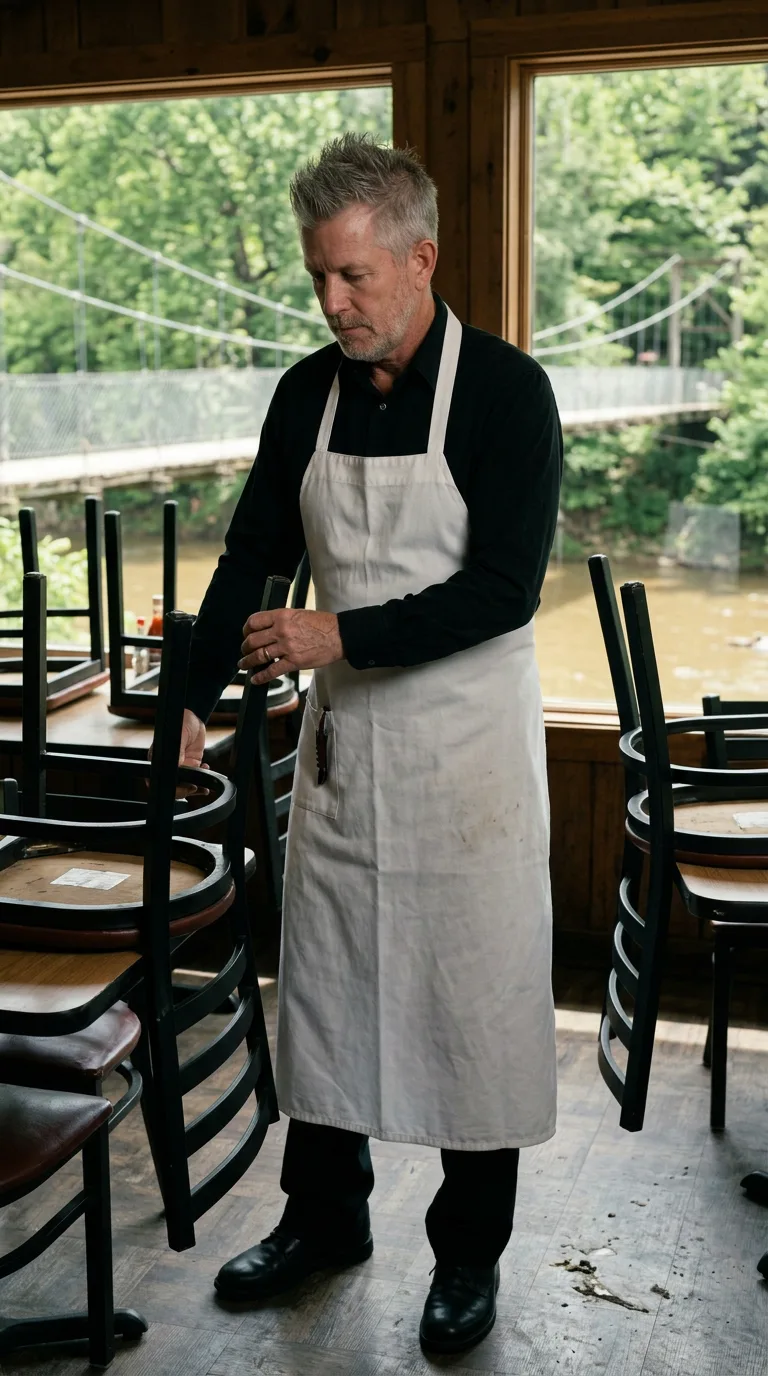
Rarest thing about him: Buddhist — common, 1 in 49
Season 1seed 525622663 · engine v11
Character card
lineage PYNCV3
His body-swap story
@julian.reyes (admin), wearing Danny Kowalik, rolled the wheel on and woke up as Terry Blevins, spent under a minute in him, then spun the wheel and woke up as Wendell Sturgill
The garage smells like brake cleaner and burnt coffee, and Danny Kowalik's back hurts in a way that isn't yours, except it is, now, for one more minute. You've had him a minute. Sixty seconds of a life that isn't yours, standing over a fender you don't know how to fix, and already the itch is back — that specific hunger that has nothing to do with Danny or Anchorage or the wrench in his skinny-fat hand. It's Tuesday morning here. You paid, once, fifty-eight times before this, and the paying never sticks, that's the whole problem with it — the wanting comes back like weather. You set the wrench down on the bench, not because Danny would, but because you're done with him, and you pull out the phone that isn't yours either and you go to the page with the wheel on it.
You spin.
—
Halfway across the country and several hours deeper into the day, Terry Blevins is fitting the last upended chair onto a four-top, the same motion he's made ten thousand times, and his hand does it wrong.
Just slightly. The chair catches the table's edge instead of seating flush, and he has to lift it again, slower, and set it down correct. Then the one after that. And the one after that — checked, every single one, on a job his hands have not needed to think about in six years of Tuesdays. Behind him the windows are full of green light off the trees and the cable footbridge swaying empty over brown water, and none of it means anything yet, because you are only just arriving into the weight of him — six-one, a gut he's stopped fighting, a low ache low in the back that's been there since a Tuesday like this one a decade ago when he threw it lifting a fryer basket wrong.
—
The apron ties are the first thing. Your hands — his hands — find the strings at the small of his back without being told to, a motion so old it isn't memory so much as muscle, and it opens anyway: a bathroom mirror, gray light, Terry threading the same strap over his head this morning, sucking in without meaning to at fifty-six the way he's sucked in since he was forty, then letting the breath go because nobody's watching. The black shirt beneath the apron gives you more — buttoning it with fingers gone a little stiff in the last two knuckles, the top one always crooked no matter how many times he's straightened it in twenty-two years, because Marlene stopped fixing his collar for him around the time their third came along and some habits just die of neglect. Marlene. Her name arrives with the shirt's collar against your throat, and with it a whole marriage: her laugh across a diner counter in 2001, her hand flat on his chest during the bad year, three kids' worth of noise filling a house that's quieter now than either of them likes to admit out loud.
The wedding band is cool and small on the fourth finger of the hand still resting on the chair back, and it gives you something else, unbidden — not Marlene, an old one, a girl named Connie from before, a summer the ring has nothing to do with and everything near it anyway, the particular ache of a person who still surfaces sometimes on a slow shift for no reason he'd admit to his wife. You let it go. It isn't yours to keep, only his to have had.
The apron pocket holds a folding knife, worn smooth-handled, and touching it gives you the floor itself — the squeak of it under rubber soles for six years, the window light that's green all summer and gray all winter, the footbridge outside swaying under tourists who never tip like locals do. It gives you a knee that complains on the cold mornings, a lower back that's fine as long as he doesn't twist wrong lifting the high chairs, hands that know the exact heft of a full tray without looking, twenty-some years of them. It gives you a temple somewhere back a ways he goes to on Sundays that matter and skips on the ones that don't, a small guilt about that, a bigger peace about most things than the guilt would suggest. Three kids, maybe a fourth depending which door you count. A body that isn't young, isn't broken, just fifty-six and paid-for and still standing at the end of every shift.
You are still holding the chair. You have not moved. Somewhere behind Terry's face — your face, now, only yours — the last flash comes cheap and small: this morning, black shirt, white apron, the drive in with the windows down because the AC in the truck's never worked right, a thought about nothing in particular, a man going to work the way he's gone to work six thousand times, not knowing this was the last ordinary one.
You set the chair down. Correctly, this time, flush to the table.
Your hands — his hands, spotted faintly at the knuckle, a plain gold band catching the green window light — turn over in front of your face, and you study them like you've never once been given hands before, which in a way, fifty-nine times over, you never have.
"There you are," you say, to no one in the empty room, and you don't know yet if you mean it as hello or as something closer to relief.