Terrence Okonkwo-Bell
Fictional. Generated by AI — not a real person, and no likeness of one is intended.
34, dentist in Pittsburgh · rolled by @justin.moy · card — no film
History
who has worn him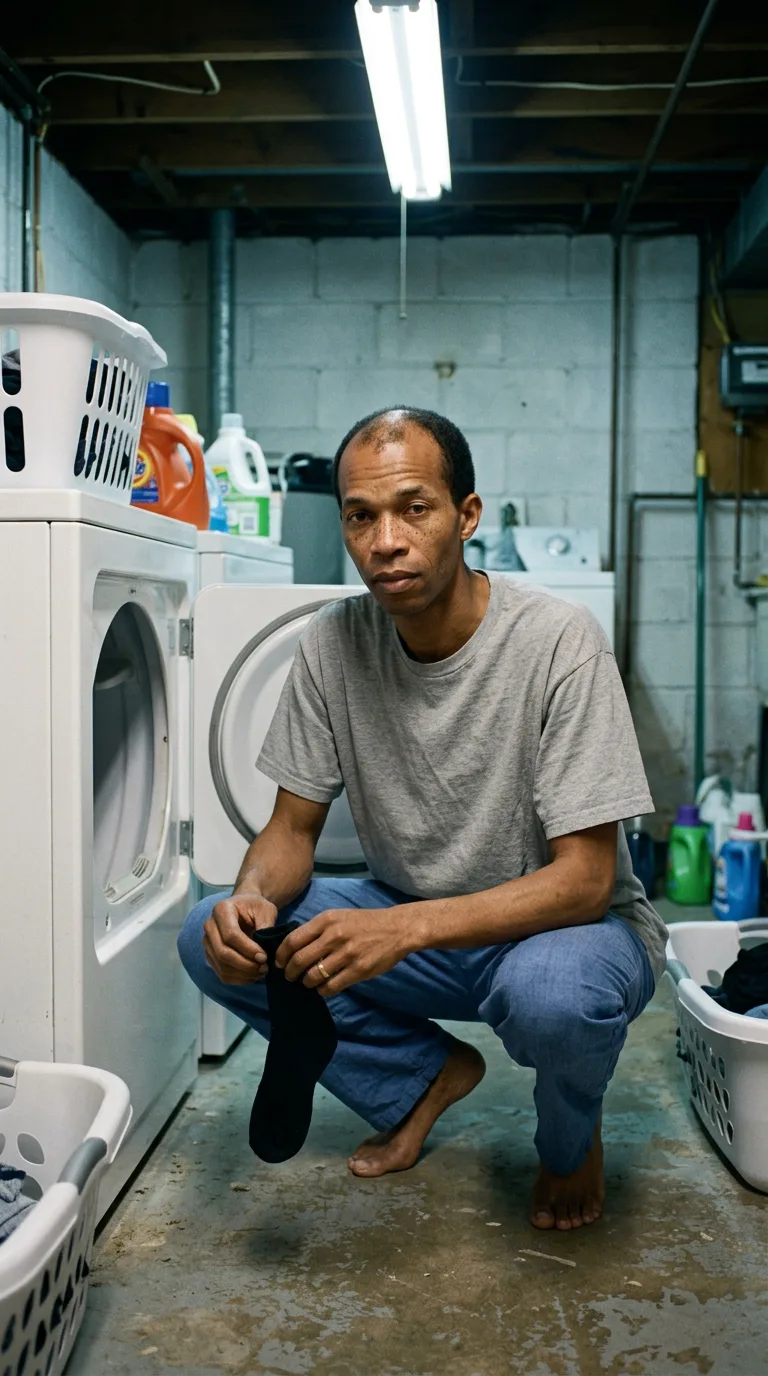
Rarest thing about him: Asexual — legendary, 1 in 250
Season 0seed 1787355260 · engine v10
Character card
lineage EN1F2L
His body-swap story
@justin.moy, wearing Marcus Deveraux Whitlock, rolled the wheel on and woke up as Terrence Okonkwo-Bell
You are standing in a bunk you have started to hate at eleven in the morning, which is not a normal hour to be standing anywhere. Marcus Deveraux Whitlock came off a night watch four hours ago and his body wants sleep the way a furnace wants coal, and instead you are on your feet by his footlocker with his dog tags cold against your — his — sternum, doing the math on how much of this life is actually yours to enjoy. Athletic, quick, five-nine, twenty-nine minutes of memory you never fully used because the barracks noise never stopped for you to sit with any of it. He can run six miles and you have run maybe half a mile of them, once, to see. That is the whole problem with soldiers: the body is a good one and the schedule belongs to somebody else entirely, and today off is actually a day for sleeping he never gets to take because you took it first. You are bored in a man built for endurance. You open the site on his phone with his thumbprint, which still works, which is its own small violation, and you spin before the guilt of it can catch up to you.
The dryer door is still swinging a little on its hinge when you arrive, and your knees are the wrong angle for a second — longer legs, less of them under you — crouched on a concrete floor with a sock in one hand and the fluorescent tube overhead giving off that flat morning-that-isn't-morning hum. Barefoot. Cold through the soles before anything else registers. Then warmth, a whole basket of it, radiating up off clothes that were just tumbling.
You pull the load and drop it in the basket and your hands go before you do — before you've decided anything, they are folding, and folding well, corners meeting corners, and somewhere under that a voice that isn't yours says fold it right the first time and you won't be back down here at midnight doing it twice. That's not a thought. That's a habit walking around without you.
The gray t-shirt against your back is the first thing that opens. Sears with an ordinary heat — laundry day, always Wednesday, always before the office because Wednesday afternoons run late with the molars and the emergencies people sit on for a week before they call. You feel him choosing this shirt off the hook that morning, the one with the collar gone soft, because he doesn't care what he looks like doing this, only who's watching, and nobody is. There's a version of him upstairs in a pale blue tunic with buttons up one shoulder, calm-faced over somebody's open mouth, mirror in two fingers, and that man chose his shirt with intention, ironed his collar, checked his scalp in the mirror the way he does every morning — thinning, always thinning, since twenty-eight — and decided, again, that it did not matter, that David loved him with or without the hair, that the freckles were the thing people actually looked at anyway.
David. The wedding band is warm against your ring finger before you've noticed you're wearing it, and it brings him whole: a laugh too loud for restaurants, cold feet in bed that Terrence complains about every single night of the four years they've had this house, an argument eleven months ago about moving to Cranberry that ended with David crying at the kitchen table and Terrence realizing, with the flat unhurried clarity he uses on patients who are panicking about a root canal, that he would rather live anywhere David wanted than be right about zip codes. There is an ex before David — Ray, gone eight years now, who Terrence still thinks of on the anniversary of nothing in particular, not with longing exactly, more like checking a scar to see if it still tells the same story. It does. It always says: you survived being unable to want him the way he wanted you, and you learned, after, that there was a whole way of loving somebody that didn't need the part you don't have. David learned it too. That took longer than either of them likes to admit at parties.
The concrete under your feet gives you the whole house sideways — the stairs between the yards out back, wet leaves flattened into the concrete steps every October without fail, and the two of them carrying groceries up those steps the week they closed on the place, laughing at how steep it was, David threatening to sell and move somewhere flat. He never did. Neither of them wanted flat, in the end. A toothpick would be between your teeth right now if one were near — the hands know that shape the way they know the shape of a mirror pick, and the mouth misses it, chews at nothing, an old boy's habit that outlasted the smoking he never started and the drinking he never touched, church every Sunday since Nashville, since his mother, since always, the one thing about him that never once wobbled.
The shirt you had on before this one, the one from yesterday, is upstairs balled wrong in a drawer with seven others just like it, and some other part of him — not the folding part, the tired part, the four-in-the-morning-emergency-call part — put them there without looking. That drawer is the truth of him under the discipline: exhausted sometimes past caring, gentle anyway, precise with other people's teeth and careless with his own closet, worth more money than either of them ever talks about at dinner and still doing his own laundry on a Wednesday because David asked him to once, years ago, and it stuck, the way good habits with this man always do.
You look at your hands. Long-fingered, thin-wristed, a plain gold band catching the tube light, a sock still in the left one like it forgot to finish being folded. Somebody else's marriage is sitting warm in that ring and you didn't earn one second of it.
"Didn't even hear the buzzer," you say out loud, to the empty room, in his voice, and it comes out fond, like it's already yours to be fond in — and you don't know yet if it is, or for how long.