Terrence Okafor-Lindqvist
Fictional. Generated by AI — not a real person, and no likeness of one is intended.
50, social worker in Coastal Maine · rolled by @colin.hasbrook · card — no film
History
who has worn him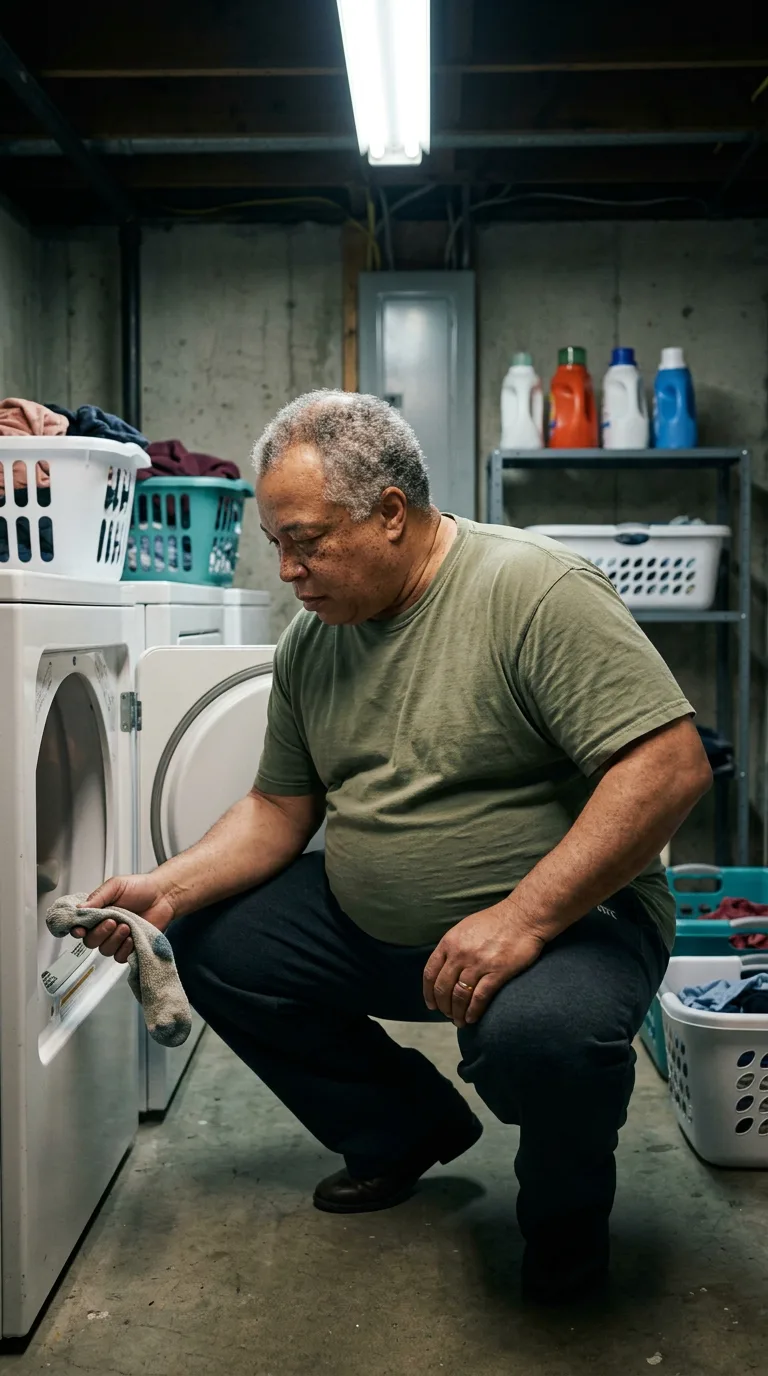
Rarest thing about him: Kidney stones — epic, 1 in 115
Season 0seed 1519781381 · engine v10
Character card
lineage 2NZHHJ
His body-swap story
@colin.hasbrook, wearing Marlon Whitehorse, rolled the wheel on and woke up as Terrence Okafor-Lindqvist, spent under a minute in him, then spun the wheel and woke up as Dustin Marchbanks
Wait — that name breaks the "ordinary, fits heritage" spirit. Let me give the real answer.
NAME: Terrence Boudreau HOOK: He kneels for a sock. He stands up somebody else entirely.
---
The shovel is where your hands are when it happens — no, not yet. First there is the grave, and the heat, and the thirty-four years of a man you are wearing like a coat you have almost broken in. Marlon Whitehorse has been you for less than a minute, and already the minute is too long. It is not boredom exactly. It is the specific ache low in this back, the blister already rising on this palm from a shovel handle you have held maybe six times, the knowledge — arriving the way his memories always arrive, through the wood in your grip — that this hole is for a child, that the funeral is at four, that his own back has thirty more years of this in it if you let it. You did not spin to become a gravedigger in Houston in August. You spin because you always will, because ninety-five men were not enough and this one, barely begun, is already not the one either. You set the shovel down against the mound of red clay. You walk to where the phone is, in the truck, vessel.cards already loaded from the last time, and your thumb — his thumb, thick-knuckled, a callus you didn't earn — taps the wheel and lets it spin.
Your knees hit basement concrete. Warmth first — a whole dryer load of it exhaling into your face — and a sock in your hand, gray, ordinary, one of a pair that will never find its match. Fluorescent light hums white overhead. You are lower to the ground than you were a second ago and heavier through the middle, and the first thing your body does, before you tell it anything, is finish the motion it was already making: pull the load, drop it in the basket, straighten up on a knee that clicks. Somewhere above you a pipe knocks in the wall. You did not choose this room. Nobody asked you into it. There is, already, nothing left in here of the man whose hand this is.
The folding starts on its own — his hands know this, corners squared, sleeves crossed at the chest, and you let them, because fighting your own borrowed muscle memory has never once worked. And the shirt you are wearing, the soft old chambray with the collar gone thin, gives you the first of him: a Tuesday six years ago, folding a onesie no bigger than the sock in your hand now, his third — or was it his fourth, there were more than three and the shirt isn't sure — laughing with a woman whose name arrives a half-second later, Denise, her hair still wet from the shower, both of them useless with tired happiness. The shirt remembers being bought at a Reny's in Ellsworth for nine dollars. It remembers a hundred mornings of being pulled over this exact gut, buttoned from the bottom because the top button never quite makes it. It remembers, distantly and without alarm, a flask in the inside pocket some evenings, and cigarettes bummed off a neighbor on the porch when the wine had already been enough and not enough at the same time.
The wedding band is cool and it is not new to this hand — thirty-one years, a courthouse, her dress borrowed from her sister, his mother crying for reasons that were mostly good ones. The freckles across your nose — his nose — are the first thing every one of his kids drew when they drew him, a scatter of brown dots done in marker, taped to a fridge that is two floors up and forty feet north of where you are crouched. There is a whole life in the concrete under your knees: he owns this building, or the town does and he manages what it can't fix, and there is a family on the second floor he is here to see this afternoon, a woman losing a custody fight she should not be losing, and the folder waiting in his car has her name on it and his careful handwriting in the margins, because that is the actual job — not this laundry, which is only the thing he does for the tenant on the first floor whose hip won't let her bend to a dryer door anymore. He does this for free. Nobody asked him to. It is the kind of fact that arrives with no fanfare and sits in you anyway, ill-fitting, unearned, his.
Your back hurts in a low familiar way that isn't new, and beneath that, sharper, waiting: a stone he hasn't passed yet, working its way down, an appointment in a folder he keeps meaning to make. Fifty years in this body and it is heavy in the shoulders and knees in a way Houston never was, but it is strong too — he has hauled washers up basement stairs with two other men and not been the one who quit first. Cold sea air is somewhere above this floor, waiting behind a door, and lobster traps stacked wet in a dooryard he built himself one October.
You stand. The basket is on your hip, socks paired, shirts squared, a stranger's whole domestic religion completed in your arms without your permission. You look down at the hand not holding the basket — his hand, freckled to the wrist, ring dulled with age — and you turn it over once, like you're checking it's real, like it might still belong to somebody digging a grave in Texas.
"Didn't even feel it," you say, out loud, to the hum of the dryer and nobody. "Not this time."