Dustin Marchbanks
Fictional. Generated by AI — not a real person, and no likeness of one is intended.
30, manager (mid-level) in Las Vegas · rolled by @colin.hasbrook · card — no film
History
who has worn him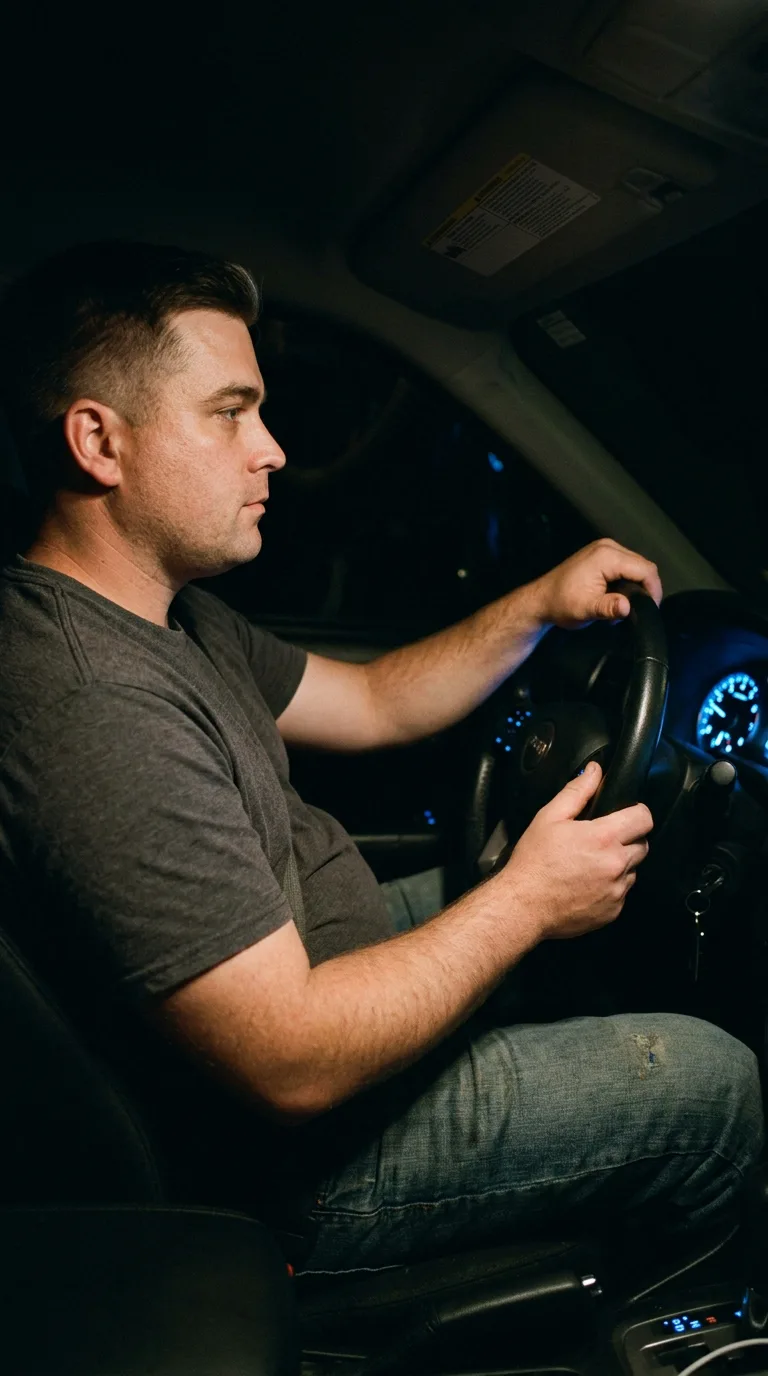
Rarest thing about him: Other Christian — epic, 1 in 132
Season 0seed 1133580367 · engine v10
Character card
lineage 2NZHHJ
His body-swap story
@colin.hasbrook, wearing Terrence Okafor-Lindqvist, rolled the wheel on and woke up as Dustin Marchbanks, spent under a minute in him, then spun the wheel and woke up as Rogelio Casillas
Terrence's kitchen smells like other people's problems — case files fanned across the counter, a mug of tea gone cold at his elbow, the radiator ticking through its Monday afternoon groan. You have been him fifty-one minutes. You already know the ache in his lower back, the way his knees complain going down stairs, the particular tiredness of a man who spent twenty years being told he was good at listening. It is a decent life. It is somebody else's decent life, worn like a coat that fits at the shoulders and nowhere else. You told yourself you'd sit in this one a while, let it settle. Then a case came across the desk twenty minutes ago — a teenager, a father, a phrase in the file you have read a hundred times in a hundred bodies and cannot unread — and something in you that isn't Terrence, that has never been anyone, wanted to be somewhere with less weather in it. Somewhere the air conditioning is free and nobody's childhood is on the desk. You open the laptop already knowing. The wheel loads slow on his old internet. You spin before the tea is cold.
The highway comes up under you sideways — dark, then dashboard-blue, then his hands, ten and two, thick fingers, a thin white line of old callus across the base of each thumb from something that isn't steering. The car is already drifting, a foot toward the centerline, and you correct it before you've finished arriving, muscle answering before you've claimed the muscle. Both hands come off the wheel and land again lower, wider, comfortable, and the turn signal ticks on for an exit that means nothing to you yet. Outside it is full dark and going toward morning. Three miles, the road said, before he stopped being the one driving it.
The shirt is what opens first — not this shirt, a different one, navy, damp under the collar from an August that isn't today, polo cotton gone soft with washing, and a lanyard swinging against your hip with a laminated card that says MANAGER in letters he stopped noticing years ago. Dustin Marchbanks. The name arrives like a stamp. Thirty years old and he has been at the casino long enough that the graveyard shift stopped being a young man's problem and became just his life, his particular Monday, if Monday means anything when the calendar on the wall behind glass never quite lines up with the sun. Right now, outside this car, it is the middle of some stranger's ordinary daylight three thousand miles east, and here it is deep night sliding toward a dawn he'll clock out before he sees. He has been awake since yesterday evening. His eyes know this road with the particular blankness of a hundred identical trips.
The steering wheel gives you more — his palms have a memory of gripping it too tight after a bad night on the floor, some dispute with a dealer, a guest who wouldn't leave the pit, a walk to the employee entrance at four a.m. with his badge already in hand, cold air, sodium light, the smell of an ashtray somebody emptied wrong. You feel the vape in his jacket pocket before you feel the jacket — a habit picked up in his twenties that never quite got put down, alongside the real thing some nights when the shift was long enough to deserve it. Reflux burns low and familiar behind his sternum, an old friend from too much drive-through coffee and irregular sleep, and some part of him has already resigned to Tums in the glove box.
The dash clock's glow finds the white streak at his hairline before you feel it — you know it's there the way you know your own name, except it isn't your name, it's his, and the memory that comes with it is his mother's hand smoothing it flat when he was nine, telling him it made him look distinguished, like his grandfather. He hated it until he didn't. His girlfriend likes to touch it, absent, the way people touch a scar that isn't a scar. She is home right now, three miles up this road, probably asleep, probably has left the porch light on the way she always does when he works the overnight, a small yellow promise at the end of a dark street. There was someone before her — a name that surfaces sour and quick, an ex who is a year gone and somehow still living in the passenger seat some nights, an argument that never finished, just stopped. You feel the specific tiredness of a man who has been managing people's shifts and moods and small emergencies since seven the previous evening and has three miles left before he gets to stop being in charge of anything.
His body under your hands — under his hands, it will take longer than this to stop making that mistake — is thirty and soft in the middle in the way of a man who used to play something and now mostly sits, forearms still strong from hauling boxes of chip trays, a dad bod holding steady rather than growing, one he's stopped fighting and mostly forgiven. Khakis worn soft at the knee. Boots he's had resoled twice. The morning — no, the evening, his morning — he dressed for this shift comes back through the collar against your neck: pulling the polo over his head in a bedroom with the blinds already down against daylight, girlfriend half-asleep and telling him to be careful, the belt cinched one notch looser than it used to sit, a small private satisfaction about that. He clipped the badge to his waistband without looking, the way you clip on a name you've had long enough to stop reading.
You feel all of this the way you feel your own pulse now, and it does not slow the car and it does not wake him, because there is no him left in here to wake.
You look down at the hands on the lower rim of the wheel — blunt, a callus map you didn't ask for, a thin white hair-streak's shadow crossing your peripheral vision every time you glance at the visor mirror — and you turn one over in the dash light like it might mean something different from the last ninety-six.
"Three miles," you say, out loud, to no one, in his voice, and you don't know yet if that's a relief or a countdown.