Terrence Ogunwale
Fictional. Generated by AI — not a real person, and no likeness of one is intended.
31, farmer in Western Kansas · rolled by @marco.villagrana · card — no film
History
who has worn him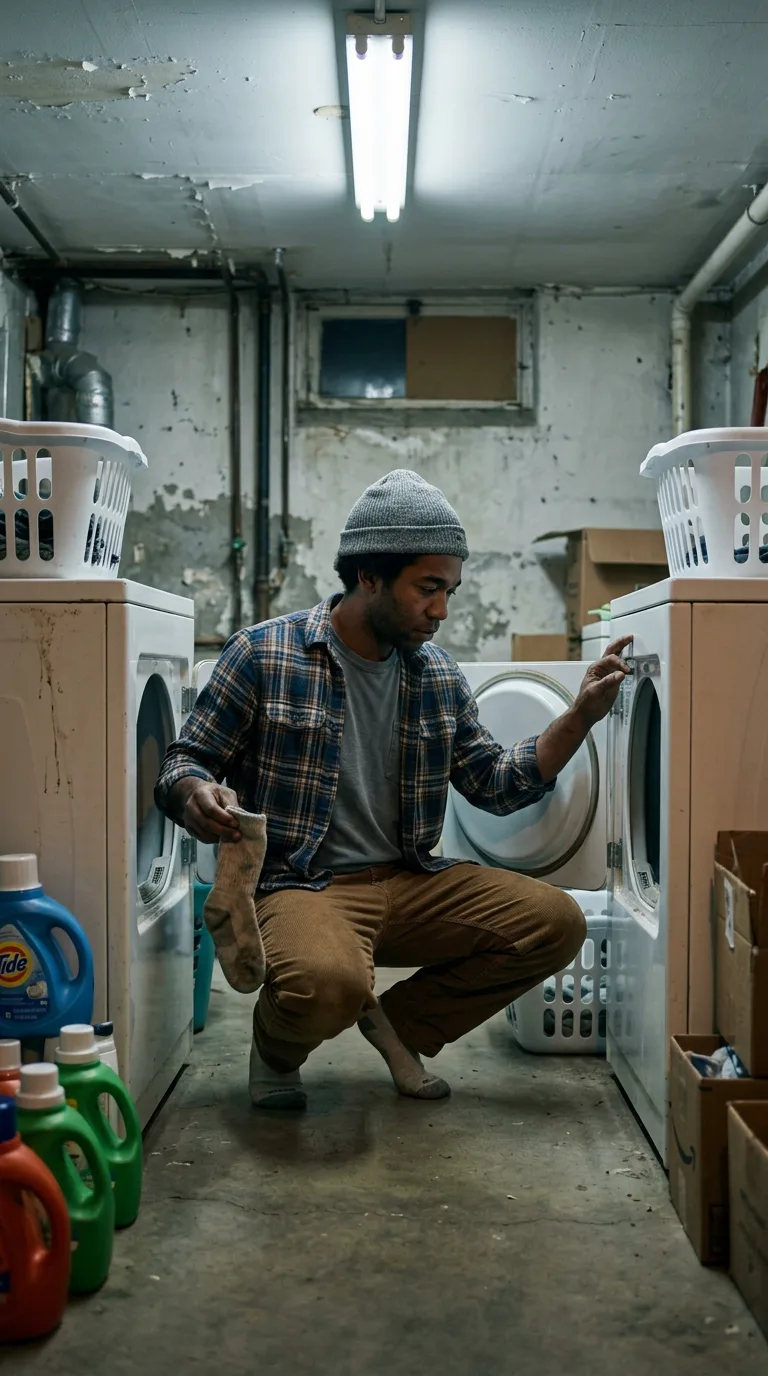
Rarest thing about him: Buried — $100k+ underwater — rare, 1 in 32
Season 0seed 1594230089 · engine v10
Character card
lineage LJL8SV
His body-swap story
@marco.villagrana, wearing Philip Wachowski, rolled the wheel on and woke up as Terrence Ogunwale, spent 6 minutes in him, then spun the wheel and woke up as Nabil Hadad
Philip Wachowski's office chair creaks under you and it is, for the third minute running, not your chair, not your weight settling into it, not your ache in the lower back from a case file you never opened. Three minutes was nothing. You spun and got a man with soft hands and a government badge and a framed photo of nobody you know, and something in you already knows the shape of the next four hours of his evening — the traffic, the reheated dinner, the wife who will ask about his day — and you would rather not find out what it feels like from the inside. That is the whole reason, if you are honest, which you are not required to be, even with yourself. You open the laptop still balanced on his knee. The page is waiting where you left it, the wheel patient and lit. You do not think about the man underneath you giving way. You have stopped thinking about that a long time ago, somewhere around spin forty. You put your finger — his finger — on the wheel, and you spin.
The fluorescent tube is already humming when you arrive, and it is the first thing you know: a flat cold buzz overhead, and then the crouch, thighs burning pleasantly with the kind of tired that comes from real use, and a sock damp and warm in your hand. Concrete under your knees through denim. The dryer door is open in front of you, its drum still faintly ticking as it cools, and warm cotton smell rolls out of it into a basement that smells of bleach and old pipe rust and something green, detergent, cheap and floral. Your body — his body — is thirty-one years of long bones and quiet strength, and it knows exactly what to do with a sock before you do. You watch your own hand smooth it flat, find its mate blind in the basket by feel, fold it into itself in one motion, and set it down square as a brick.
The shirt against your back gives you the morning first, because it is the thing you are wearing and touch is the only door in. Flannel, soft from washing, a small burn hole near the cuff you don't remember getting and he does — a spark off the welder Dale borrowed and never fixed right. You feel yourself, this morning, pulling this shirt over your head in a bedroom with a window full of gray light and no sun yet, Denise still asleep with one arm thrown over her eyes, and the quiet in that room is not sad quiet, it is Monday quiet, the kind you don't examine. You remember buttoning it one-handed on the stairs because the coffee was already going cold. You remember these exact corduroys from a drawer that only has eight shirts in it, because the rest are always in the wash, always a cycle behind you, the way it's been since you took over the west section after your father's knees gave.
The basket under your other hand brings more — not memory exactly, weather. Cut wheat stubble going gold-gray at dusk, a thunderhead stacked up black in the northwest like a held breath, and you at the gate an hour ago checking the sky the way you check everything, without hurry, because hurry doesn't move weather. Underwater on the loan for the equipment shed, has been for years, will be for years more, and it doesn't sit on you the way it should — you learned a while back, with a doctor's help and a small orange bottle you take every morning without drama, that the number in the bank doesn't have to be the number in your chest. Denise upstairs right now, maybe reading, maybe watching the storm come, waiting on you to bring up warm socks and something to say about dinner.
Your hands know this fold before you tell them to. Corners squared, crease sharp, a rhythm laid down over ten thousand loads because somebody — you don't reach for who, and it doesn't come — always did the wash around here and it ended up being you. Nothing dramatic in any of it. No scar to explain, no ring on the finger doing the folding, nothing marking this body as remarkable at all — just weather in the shoulders, calluses matched to a steering wheel and a fence tool and a shovel handle, an afro he never quite gets to a barber for, brown eyes that have watched a lot of sky. A few drinks a year at somebody's wedding. No smoke ever, not really. A whole ordinary life sized exactly to itself, and it keeps arriving in pieces — his laugh at something Denise said last Thursday, the particular ache behind the sternum that isn't a heart thing, is a worry thing, medicated down to background noise — pieces that are his and only borrowed by you, sock by sock, fold by fold, while the tube light hums on unconcerned above you both.
You set the last shirt on the pile and look down at your hand flat against warm cotton, and it does not feel like yours yet, the calluses too specific, the color, the shape of the knuckles all wrong for wherever you started this morning. You turn it over once in the fluorescent light.
"Didn't fold like this yesterday," you say, to no one, in his voice, and you almost believe it's a joke.