Terrence Ogilvie
Fictional. Generated by AI — not a real person, and no likeness of one is intended.
35, dentist in Denver · rolled by @colin.hasbrook · card — no film
History
who has worn him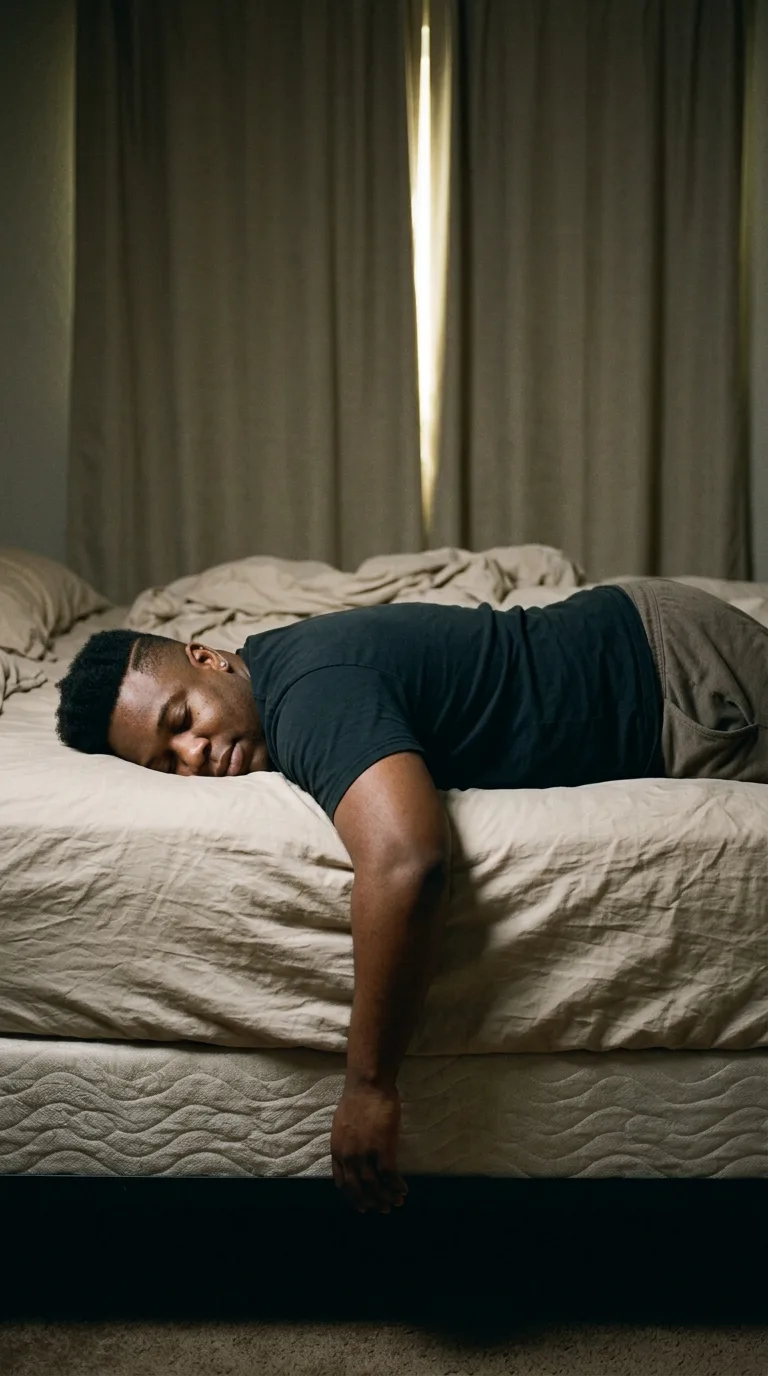
Rarest thing about him: Both earlobes — epic, 1 in 33
Season 0seed 185132742 · engine v10
Character card
lineage 2NZHHJ
His body-swap story
@colin.hasbrook, wearing Rigoberto Casillas, rolled the wheel on and woke up as Terrence Ogilvie, spent under a minute in him, then spun the wheel and woke up as Terrence Odum
Rigoberto's knees ache getting up off the couch, that's the whole reason, really, the whole stupid reason — sixty-four years in a body that isn't even the one you were born in, borrowed knees, borrowed hips, and they hurt anyway, like the wheel can't even give you a fresh set of pain. Almost midnight. The Tigers game long over on the muted television, the apartment smelling like the microwave dinner he ate three hours ago and never threw out. Retired. Quiet. Somebody else's grandkids call this man on Sundays, not yours, though the memory of their voices still sits somewhere in you, sweet and useless, like a photograph of a stranger's family that you keep because you found it in a coat pocket. You did not choose this face. You did not choose any of the four hundred and thirty-four before it. That's the thing nobody who hasn't spun understands — the body stops being a costume around spin sixty or so, and after that it's just weather. You live in whatever weather you're given until you get tired of it. And you are tired of it, tonight, of the knees and the quiet and the taste this man's dentures leave in the morning. So you open the laptop that isn't yours on a desk that isn't yours, and you go to the page with the wheel on it, and you pay, and Rigoberto Casillas's hand — spotted, steady enough — clicks the spin.
The breath changes first. Ragged, then even, one long pull of air that isn't panic anymore, hasn't been for four hundred and thirty-five bodies, and the arm that was hanging off the mattress draws up on its own, folding at the chest with the other one, a posture this body has never once held in sleep. Weight settles into you all at once — heavier than Rigoberto's, wider through the shoulders, younger, an ache-free thickness through the middle that isn't fat exactly, just mass, just a man's life sat comfortably in a man's frame. Face-down a second ago. Now on your back, staring at a ceiling you don't own, streetlight coming thin through a gap in curtains that smell like someone else's fabric softener.
It comes in pieces, the way it always does, keyed to whatever you're touching, and you're touching everything — sheets under your palms, cotton t-shirt against your ribs, pillow under your skull where the hair is buzzed close at the sides and left long enough on top to have a memory of its own weight when you turn your head. The sheets first: cheap cotton, expensive mattress, bought together at a store with his girlfriend eight months ago, her laughing at him for caring so much about a mattress topper when he could afford the whole store twice over. Money that doesn't feel like money to him anymore, just weather of its own — seven years since the second office opened, since the house stopped being a bungalow-and-hope and became a bungalow he keeps because he likes the porch and the mountains behind the roofline, not because he needs it.
The t-shirt gives you the morning it went on, hours ago now by his clock, evening by it: he'd come home from the office smelling of latex and mint, peeled off the light-blue tunic with its snap collar, hung it because his mother taught him you don't leave your work on the floor even when the work pays for the floor, pulled this shirt on inside out first, laughed at himself in the mirror, fixed it. Three kids' worth of noise still ringing in the house an hour before — the youngest one's spelling test taped to the fridge, a B-plus he told her was as good as an A because effort's the thing, effort's always been the thing since his own father told him that over a chair with a cracked vinyl seat in a rented storefront office that smelled nothing like his does now. Hands that know things without being told: how to angle a mirror against a molar, how to hold a child's jaw steady without frightening her, how to run a thumb along a scalp when he's thinking too hard, which he's doing right now in memory, some appointment gone long, some day thick with other people's mouths open under his light.
The studs in both earlobes — his mother's idea, said a man should have one thing on him that's just decoration, no reason, and he got the second done to match years later out of nothing but not liking to be uneven. No drink in the memory anywhere, tried it in his twenties and it never held any pull, let it go the way you let go of a hallway that dead-ends. No cigarettes ever. A church he doesn't go to anymore but still talks to, some nights, lying exactly like this, face down, the talking wordless, more like posture than prayer. An ex who isn't even a shape in here, no ache where she should be, nothing — just her, this one, the girlfriend, laughing about the mattress, and the three kids, and a fourth maybe coming up in conversation lately, and none of it is his worry tonight because none of it is happening tonight; tonight is only a man face-down and tired in his own life, going under.
You feel the weight of him settle the rest of the way into you, heavy and warm and unbothered, thirty-five years of a body that has never once been asked to hold something it couldn't. You lift the hand — his hand, wide, blunt-fingered, a groove worn into the pad of the thumb from thirteen years of dental tools — and turn it over in the gap of streetlight, watching it the way Rigoberto never let himself watch anything, too tired, too old, too close to done with looking.
"There you are," you say, to the ceiling, to the hand, to nobody in the room who could ever know what that means.