Rigoberto Casillas
Fictional. Generated by AI — not a real person, and no likeness of one is intended.
64, retired in Detroit · rolled by @colin.hasbrook · card — no film
History
who has worn him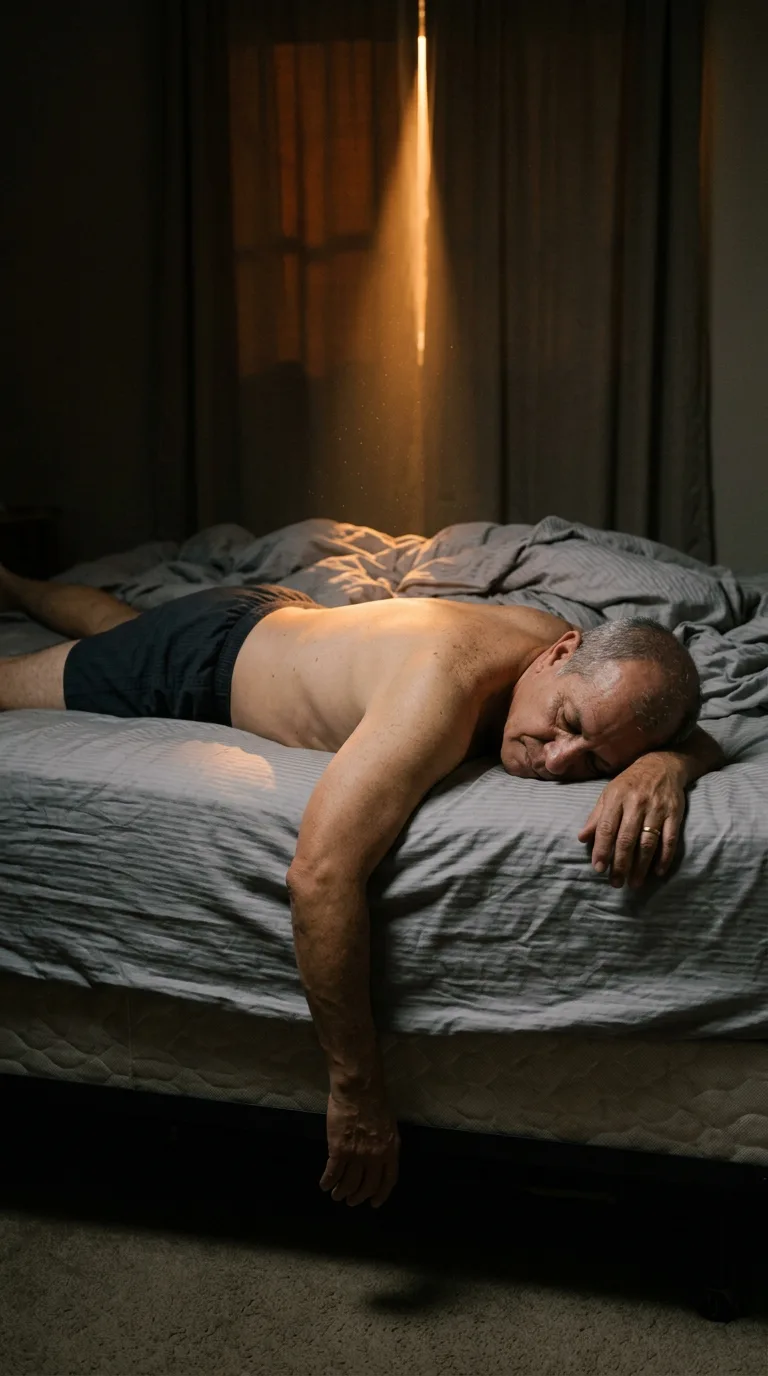
Rarest thing about him: One earlobe — epic, 1 in 67
Season 0seed 633634451 · engine v10
Character card
lineage 2NZHHJ
His body-swap story
@colin.hasbrook, wearing Colton Pelletier, rolled the wheel on and woke up as Rigoberto Casillas, spent under a minute in him, then spun the wheel and woke up as Terrence Ogilvie
---
Seven minutes is not enough time to get bored of anything, but it is enough time to get bored of twenty-two.
You are standing in Colton Pelletier's kitchen — his, not yours, though the wheel says otherwise now — and the ring light is still on because he set it up before his shift and never turned it off, and the blue glow of it is making your borrowed skin look sick in the black window over the sink. Green eyes. Dimples that show even when you're not smiling, some accident of the muscle underneath. Blond hair that this body's hands keep touching without meaning to, checking it's there. You spun for a body that streams to eleven thousand people a night and thought that meant something, and it turns out what it means is a folding chair, a cold can of energy drink sweating a ring onto a desk, and the low hum of a PC fan that hasn't stopped since before you arrived. Seven minutes of being envied by strangers who can't see you and it already itches like a shirt one size small. Coastal Maine at midnight through a cracked window smells like low tide and nothing is happening and nothing is going to happen, and that — more than any hunger for the next one — is the whole reason. You are not leaving because this body failed you. You are leaving because it is already, at minute seven, boring, and you have four hundred and thirty-three other times you've felt that turn in your chest and known exactly what it means.
You open the laptop. The wheel is already loaded, a courtesy or a cruelty, glowing on the cracked-open lid like it knew. You spin.
—
Air first. Warm, close, a little stale with sleep, and it's in your chest before you've registered you have a chest — smaller than the one you just left, the ribs nearer the skin. Your breathing, which a half-second ago was ragged, the tail end of some dream this man will never get to finish having, smooths itself into one long even pull, like a hand laid flat on water. The arm that was hanging off the mattress, dead-weight, fingers just brushing the carpet, draws itself up on its own current. Your back rolls off your stomach. Hands fold at your chest, one over the other, over the wedding band, a shape this body has apparently never once made in sleep in sixty-four years, and something in the muscle memory of it — not yours — resists for half a second before settling.
The room is dark except for a knife of streetlight through a gap in the curtain, orange, thin, landing across the blanket like a strip of tape. Somewhere outside, Detroit is doing whatever a wide street of brick houses does at midnight, which is mostly nothing, mostly the tick of a cooling engine three doors down.
You are so much shorter than you were. You feel it immediately, in the compactness of the frame under the sheet, five-three of a body that got done growing forty-some years ago and has been quietly, steadily aging since. There's a stiffness low in the hips, a tightness in the fingers that isn't pain exactly, more like a padlock nobody's oiled — some autoimmune thing living low and permanent in the joints, the kind of ache that isn't news to whoever wears this, just weather.
—
The sheet under your hands is the first key. Cotton, worn soft in a specific way, and through it comes a flash — not a memory yet, just a temperature — of a woman's shoulder against this same sheet, years of shoulders, one shoulder in particular, warm, turned away, the specific weight of a marriage that has had its bad years and came out the other side tired but intact. You don't get her name yet. You get the shape of her side of the bed, empty tonight, and the small automatic ache of noticing that.
Then the ring. Your own hand finds it, thumb finding band, the way this body's thumb has found it ten thousand idle times, and it opens all the way: a wedding, decades gone, a church with too much heat coming off too many bodies, a woman in the doorway backlit so hard he — you, him, the line already blurring — couldn't see her face until she was six feet away, and it didn't matter, he already knew. Ofelia. Her name arrives with the ring's temperature, cool metal on his finger for forty-one years now. Three kids after that, then a fourth nobody talks about in the same sentence as the other three, complicated, loved anyway. Grandkids somewhere in there too, a whole architecture of people who call this body Papi or Grandpa and have no idea it is, at this exact second, empty of the man they mean.
There's an earring — the small hoop, left ear — and touching it, even in sleep, even without hands moving, gives you a flash of a mirror forty years younger, a friend with a needle and a lit match, a dare taken in a kitchen that smelled like fry oil, and Ofelia laughing so hard she had to sit down. He kept it his whole life just to spite the version of himself that almost took it out for a job interview in 1987.
The pillow under your cheek smells like the specific detergent of this house, and that, of all things, is what opens the widest door: mornings. Specifically the last one he can remember dressing for, which the shirt — not on him now, hung somewhere close in a closet whose door creaks a particular pitch — gives back sleeve by sleeve: the green jacket zipped to the collarbone because Detroit mornings have a bite even when the calendar says otherwise, the blue knit shirt underneath chosen because Ofelia said it made his eyes look less tired, the gray slacks he's owned in three identical pairs for fifteen years because he found a fit he liked and stopped experimenting, the New Balances his youngest daughter mocks him for and he wears anyway because his feet, God, his feet, at this age, don't forgive bad shoes. That morning, whichever morning it was, he stood on the porch with the coffee going cold in his hand and did the thing his hands do without him: drummed his fingers on the mug, a rhythm with no song attached to it, just motion, just a body needing to move a little even at rest. He thought about the ex — Marisol, a name that comes up out of nowhere and sits there, decades-old, no longer wanted just still there, the way a scar isn't wanted either — and then he didn't think about her, and drank his coffee, and that was the whole of it, an ordinary hour in a life that has had money in it for a good while now and never once made him interesting to himself.
He is retired. He built something, sold something, doesn't apologize for either. He goes to church sometimes and prays never, exactly, more like talks, up, out, to something he isn't sure has a face. He has a drink most evenings, sometimes two, never needs a cigarette because he never wanted one, not once, not even the year everyone he knew did. His hip aches tonight. His hands, still and folded on his chest in a position they've never held in sleep before, are the hands of a man who has held babies and shaken hands and signed enough paper to buy several houses and still, at sixty-four, drum on tabletops like a kid with nowhere to put his energy.
—
You open his eyes.
Streetlight, curtain gap, ceiling you've never seen with these eyes because they were always closed here before. You lift the folded hands off your own chest, an inch, and turn the right one over in the thin orange light, looking at the wedding band, the thinning silver hair you can feel more than see against the pillow, the small ache riding low in the knuckles that will still be there tomorrow whether you're the one feeling it or not.
"Ofelia," you say, to the empty side of the bed, quiet, not a question, just checking the name still fits your mouth — and it does, and that's the whole problem, and the whole reason you're going to be lying here a while yet before you think about spinning again.