Terrence Boykins
Fictional. Generated by AI — not a real person, and no likeness of one is intended.
51, house painter in San Francisco · rolled by @malik.overton · card — no film
History
who has worn him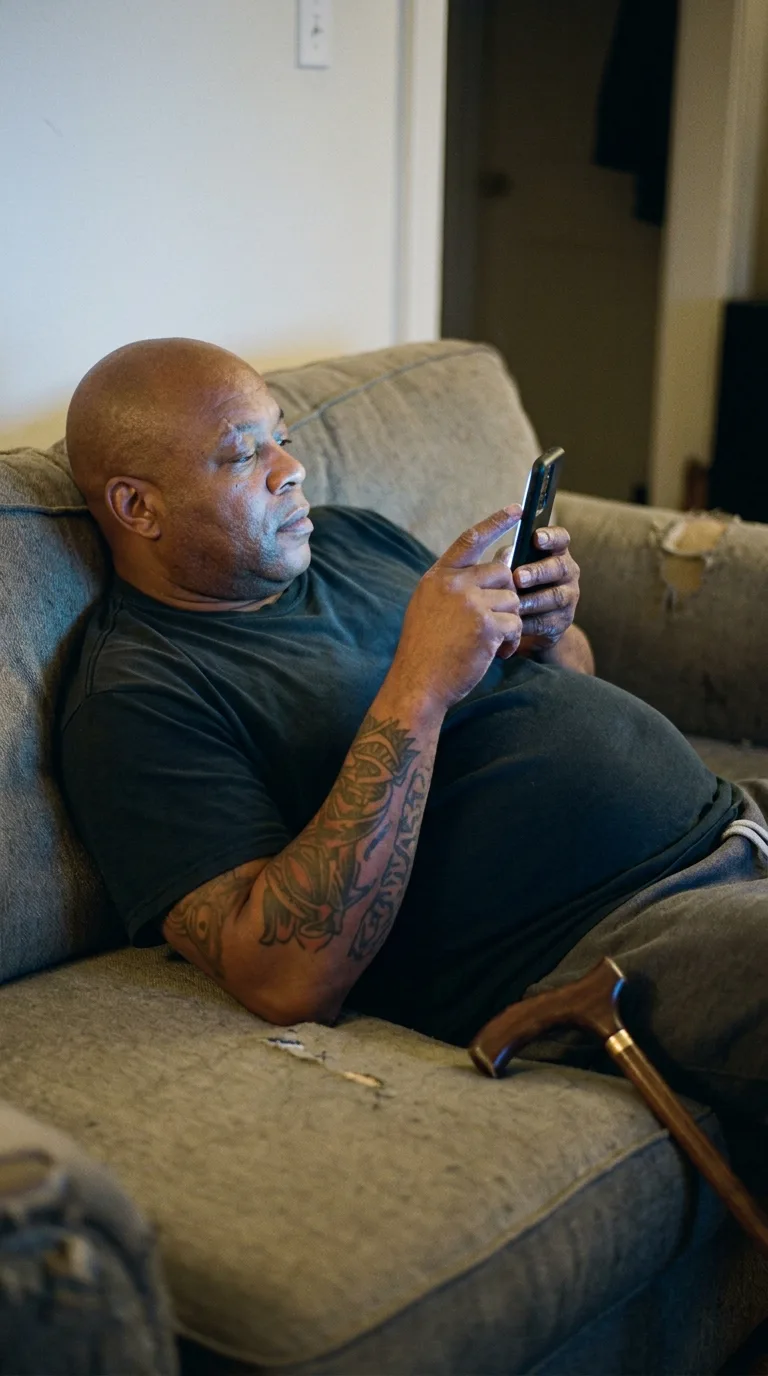
Rarest thing about him: A mobility limitation — epic, 1 in 157
Season 0seed 1987923686 · engine v10
Character card
lineage WV6PBZ
His body-swap story
@malik.overton, wearing Marlon Deese, rolled the wheel on and woke up as Terrence Boykins, spent under a minute in him, then spun the wheel and woke up as Malik Overton
You are Marlon Deese for less than a minute, and Marlon Deese does not fit right. You feel it the second you're standing in his kitchen: the barbershop smell still on his fingers, the ache in a knee that used to be somebody else's problem, twenty-four years old and skinny fat and small in a way that has nothing to do with size. You spent eight spins ago inside a man built like a door — Darius Kellerman, gray-haired, athletic, a house in Atlanta with a pool nobody used — and you left him sixteen minutes ago, real minutes, your minutes, after only three inside him. Long enough to open his medicine cabinet. Long enough to find the name Boykins in his phone, a hundred texts deep, a man who worked with him, painted his guest house, sat with him on the back steps some nights when the silver-haired knee was too swollen to stand. You didn't spin because Marlon bored you. You spin because you left something unfinished in a house you don't live in anymore, and the only way back into that thread is through the man who was standing next to it.
You reach for the phone still in Marlon's hand, still warm from his palm, and you spin.
The room is not a kitchen. It's dark and it's a couch, and there is weight on you that Marlon never carried — real weight, a gut pressing warm against a shirt, shoulders wider and older, a thumb already moving on a phone screen that isn't the one you were holding a second ago. Your eyes are open and they were already open, mid-blink cycle, and you stop blinking at his interval and start at yours. The light off the screen sits blue on one cheekbone. Six inches from your face. A thumb that had gone still starts again, faster than it was, flicking through things he'd stopped on and never will again.
The couch is what gives you the first flash: torn upholstery under your left leg, a rip he keeps meaning to fix and never does because fixing things around the house isn't the same anymore, not since the knee. A cane leans against the cushion by your calf, dark wood, brass-capped handle worn smooth in one spot from a grip that's been the same grip for six years. You didn't reach for it and already you know its weight, the particular give of the joint that makes stairs a negotiation, the physical therapy that helped some and not all the way.
The shirt against your back opens next — soft, thin, washed two hundred times, and under it the half sleeve on your right arm prickles like it remembers being drawn. A tattoo shop in the Mission, twenty-six years old, an eagle going in over three sessions with a guy named Nunes who talked too much and had good hands. Bold lines. The color's faded now the way everything on you has faded a little, softened, gone comfortable.
The overalls come back through the closet door across the room, off-white canvas gone the color of every job you've painted, and dressing this morning arrives whole: the strap over the left shoulder first because the right one's stiffer getting the clip through, the brush already tucked in the thigh pocket because you never remember to grab it off the truck bed, the fifteen seconds of standing at the bathroom mirror running a palm over the bald scalp before you left, checking the scar through your eyebrow like you always do, the one from a ladder that kicked out from under you in '09 doing a job in the Marina, before the knee, before any of the rest of it.
There's a woman's voice somewhere in the house — the girlfriend, and her name comes up warm through the couch cushions, through years of this same room, this same evening slouch after work — and behind that, further back, an ex-wife's voice from a different decade, sharper, and two kids' voices layered over both of them, a photo somewhere in this house of a birthday cake with too many candles for a six-year-old because nobody could find the right box. Two kids. Grown enough now to text instead of call.
And Darius. The name comes through the phone itself, still lit in your hand, a thread of texts scrolled past a hundred times — Darius Kellerman, the athlete's body you wore for three minutes sixteen minutes ago, the one who calls Terrence when the knee acts up bad enough that pride isn't worth much anymore, the one Terrence sits with on porch steps in Atlanta some weekends because that's just what you do for a man you painted a house for once and somehow never stopped knowing. You were inside Darius. You know what Darius keeps in his medicine cabinet, what he says about Terrence when Terrence isn't in the room. You are standing now in the body of the man on the other side of that friendship, and something in you — something that isn't quite curiosity and isn't quite guilt — wanted to see it from here.
Your hands won't sit still on the phone, tapping the case even after the screen goes dark under your thumb, a habit this body has always had, restless in a way that has nothing to do with nerves.
You look at them. Paint under one thumbnail, permanent, gray-green, never quite scrubs out. You turn the hand over once.
"Didn't feel a thing," you say, to no one, low, almost pleased with yourself, and your eyes come up off your palm and hold there, steady, waiting to see what happens next.