Terrence Boykins
Fictional. Generated by AI — not a real person, and no likeness of one is intended.
37, soldier in Houston · rolled by @colby.marchetti · card — no film
History
who has worn him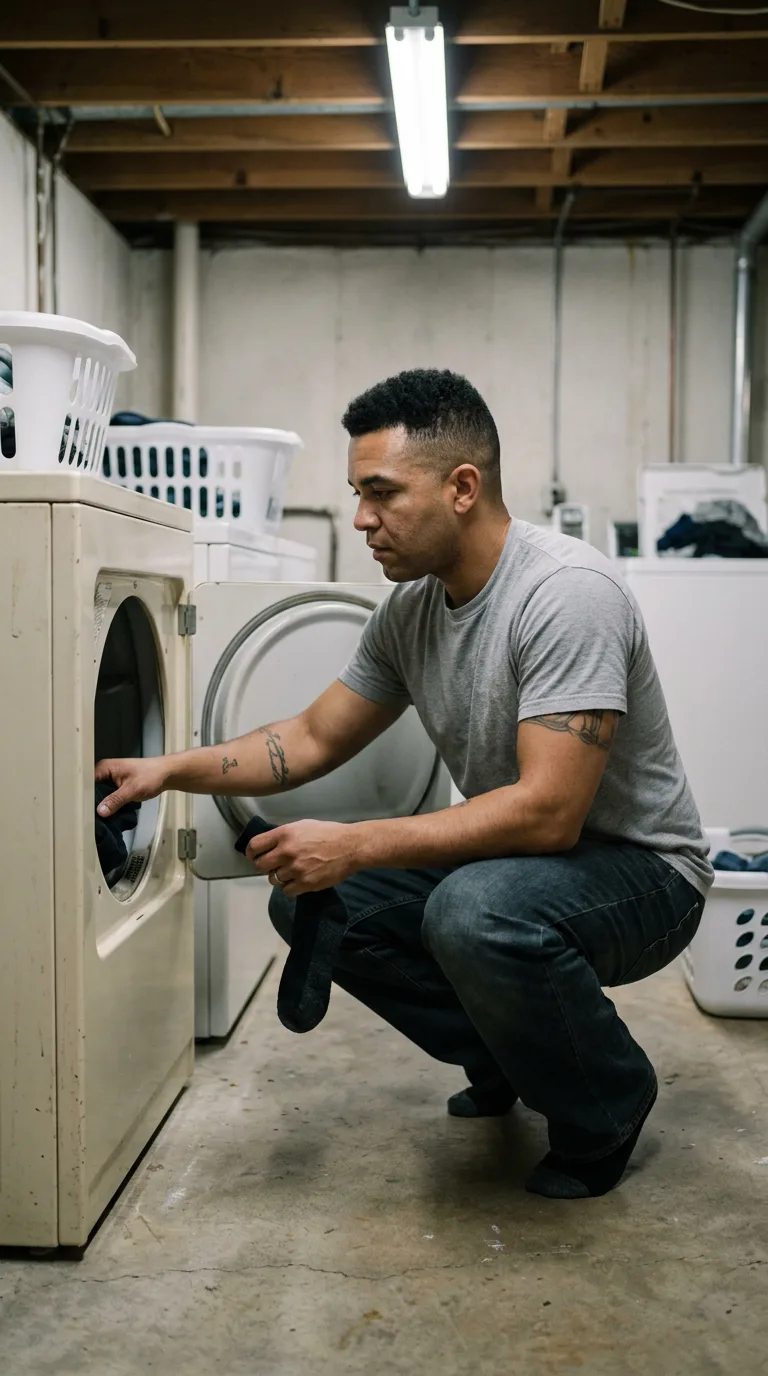
Rarest thing about him: Mixed — rare, 1 in 26
Season 0seed 1282334618 · engine v10
Character card
lineage OZ80W3
His body-swap story
@colby.marchetti, wearing Ernesto Lujan, rolled the wheel on and woke up as Terrence Boykins, spent 3 minutes in him, then spun the wheel and woke up as Aaron Dietz
The apron is still tied around your waist when the wanting comes back.
You are Ramiro Cifuentes tonight — fifty-three, thick through the middle in that soft settled way a body gets after decades of standing, bald head shining under the cooler's fluorescent hum, brown eyes tired at the corners. You have been him less than a minute, and already you know you are done with him. It isn't cruelty. It's the flowers. Ramiro loves the flowers — loved them, when he was the only one steering — and you can feel that love sitting in his chest like a held breath, patient, undemanding, and utterly uninteresting to you. You spun him for the size of his hands, thought there'd be something in the work, in the town, in the quiet. There wasn't. Western Kansas at midnight, a walk-in cooler ticking, a stripped ribbon spool on the counter. You want noise. You want something with a spine in it. You wipe his hands — your hands, for one more second — on the apron and go to the register, where the tablet is propped against a coffee can full of floral wire, the page already loaded because you never really closed it. vessel.cards. The wheel sits there mid-spin from muscle memory alone, colors bleeding into each other. You touch the screen.
The light comes out of Ramiro's mouth and eyes for one second, silent, and then you are not behind them anymore.
You are crouched. Fluorescent tube humming somewhere above and behind you, off-white light, concrete cold enough to feel through the soles of bare feet. There's a sock in your hand — someone's sock, black, damp-warm — and a dryer door open in front of you breathing heat into your face. Your knees are younger. Everything is younger. The body you're in has weight but it's held weight, muscle laid over a frame built for carrying things far, and for one disoriented second you are only an animal noticing that: taller, tighter, a tag against your sternum, cold metal, two of them.
Then the dryer's heat rolls up your forearms and Terrence comes in through the warmth of it, unbidden — not a name yet, just an ache of familiarity, the particular smell of fabric softener and hot lint that has meant *Sunday* to this body for as long as it can remember. You pull the load out into the basket, and folding takes over your hands before you've decided to fold: corners found without looking, sleeves crossed, a t-shirt collapsed into a rectangle in four motions. The precision isn't yours. It comes up through the terrycloth against your palms, and with it: a drill sergeant's voice from fifteen years back, *a rack is a mirror, Boykins, if it's crooked so are you*, and the muscle memory that outlasted the man who taught it.
The dog tags swing loose against your chest — bare, no shirt yet — and touching them brings a flash of the last formation, boots on gravel at 0530, breath fogging in Houston humidity that shouldn't fog but somehow does at that hour, a sergeant's stripes on a sleeve you're proud of and don't talk about being proud of. Your jaw is already tight, has been tight this whole time, some habit older than any of this — you feel the muscle in it working, releasing, working again, clenching around something that was never a fist. Anxiety with a name and a prescription and a therapist on Tuesdays who says *you carry it in your face, Terrence*, and he does, and here it is, doing it now, in a body that isn't asking permission.
You reach for the folded jeans on top of the basket and the denim gives you the morning — this exact morning, hours ago by his clock, the middle of the night by yours: him sitting on the edge of a bunk pulling them on one leg at a time, sleep-heavy, alone in a room that used to have someone else's things in it and doesn't anymore, an ex who mattered less than he expected her to when it ended. No malice in the memory. Just quiet. A man who quit drinking two years back because it wasn't fixing the tight jaw, who never smoked because his mother's brother didn't make it past sixty coughing, who tithes some Sundays and skips others and still calls it his church either way.
The basket handle is plastic, cool, familiar under your fingers — a hundred loads just like this one, corners squared, because a barracks habit doesn't know it's off duty. Thirty-seven years old and the body already knows: what strains in the lower back from carrying packs it shouldn't still be carrying at this rank, what's still strong in the shoulders from doing it anyway, the small persistent hum of tiredness that isn't sickness, just miles.
You straighten up out of the crouch. Somewhere above, the fluorescent tube keeps its flat, patient hum, indifferent to what just happened underneath it.
You look down at your hands — his hands — turning one over like you could read something new in the palm. The cleft in his chin, you can't see it, but you can feel where it sits when your jaw sets, a fault line in the bone.
You lift your eyes to nothing in particular, and you say, quiet, to the empty laundry room: "Whose Sunday is this."